United States Representative Directory

George Townsend

George Townsend served as a representative for New York (1815-1819).

  • Republican
  • New York
  • District 1
  • Former
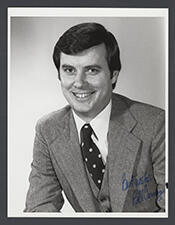
Portrait of George Townsend New York
Role Representative

Current assignment referenced in the congressional directory.

State New York

Representing constituents across the New York delegation.

District District 1

District insights and legislative focus areas.

Service period 1815-1819

Years of public service formally recorded.

Font size

Biography

George Townsend was the name of several notable figures active in politics, literature, religion, sports, and journalism from the late eighteenth through the twentieth centuries. The most historically prominent among them was George Townsend (1769–1844), a U.S. Representative from New York who served in the early national period of the United States. Born in 1769, he emerged in the post-Revolutionary era as part of the generation that helped consolidate the institutions of the new republic. As a U.S. Representative from New York, he participated in the legislative life of the young federal government, representing the interests of his state in Congress during a time of territorial expansion, evolving party systems, and debates over federal authority. His career in public life placed him among the early cohort of New York politicians who contributed to shaping the state’s role in national affairs. He remained active through the first decades of the nineteenth century and died in 1844.

Another important bearer of the name was George Fyler Townsend (1814–1900), an English translator best known for producing the standard English edition of Aesop’s Fables. Born in 1814, he came of age in Victorian Britain, a period of expanding literacy and intense interest in classical and moral literature. Townsend devoted himself to translation and literary work, and his English rendering of Aesop’s Fables became one of the most widely circulated and enduring versions in the English-speaking world. His translation was notable for its accessible prose and clear moral summaries, which made the ancient fables especially suitable for use in schools and in family reading. Through repeated publication and adaptation, his edition helped fix many of the familiar English phrasings of Aesop’s tales that persisted well into the twentieth century. He continued his literary pursuits throughout a long life and died in 1900.

Several contemporaries and near-contemporaries named George Townsend were active in religious and literary circles in Britain. George Townsend (priest) (1788–1857) was an English clergyman and author who served in the Church of England during a period marked by theological controversy and ecclesiastical reform. Educated for the Anglican ministry, he combined pastoral duties with a prolific output of religious and historical writings, contributing to debates on biblical interpretation and church history. Another figure, George Henry Townsend (1787–1869), was an English literary compiler and journalist. He specialized in reference works and compilations, producing indexes, handbooks, and surveys that organized literary and historical information for a growing reading public. His work as a compiler and journalist reflected the Victorian appetite for encyclopedic knowledge and accessible summaries of literature, politics, and public affairs.

The name George Townsend was also borne by several sportsmen in the nineteenth and twentieth centuries. George Townsend (cricketer) (1814–1870) was an English cricketer who played during the formative decades of the modern game, when organized county and club cricket were becoming established features of British sporting life. In the United States, George Townsend (baseball) (1867–1930) was an American baseball player who participated in the professionalization and popularization of baseball in the late nineteenth century, a time when the sport was solidifying its status as a national pastime. In the later twentieth century, George Townsend (footballer) (born 1957) became known as an English footballer, active in an era when association football had grown into a major professional sport with extensive league systems and international competition.

Another notable figure with a closely related name was George Alfred Townsend (1841–1914), an American war correspondent and novelist. Often cited under his initials, he reported on major events of the mid- and late nineteenth century, including the American Civil War, and became known for vivid battlefield dispatches and commentary on national politics. He also wrote novels and historical works, blending his journalistic experience with literary ambitions. His career illustrated the expanding role of the press and the war correspondent in shaping public understanding of conflict and political change. Although his surname is sometimes confused with the various George Townsends, he is more precisely identified as George Alfred Townsend and is distinct from the others listed.

The multiplicity of individuals named George Townsend and the related George Townshend reflects the recurrence of the name in Anglo-American public life across several generations. These men were active in diverse fields—parliamentary and congressional politics, Anglican ministry, literary compilation and translation, war correspondence and fiction, and the development of modern team sports. While they lived and worked in different countries and contexts, their careers collectively span from the late eighteenth century through the modern era, illustrating how a shared name can be associated with a wide range of contributions to political institutions, religious thought, literature, journalism, and athletic culture.

Congressional Record

Loading recent votes…

More Representatives from New York