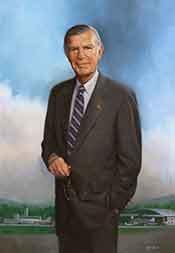
George Smith was a member of the Republican Party who represented Pennsylvania in the United States House of Representatives during the early nineteenth century. Serving two terms in Congress, he participated in the legislative process at a formative stage in the nation’s political development, contributing to the representation of Pennsylvania’s interests in the federal government. His service in Congress occurred during a significant period in American history, when the young republic was consolidating its institutions and defining the balance between federal and state authority.
Little is recorded about George Smith’s early life, including his exact date and place of birth, family background, or early occupations. Like many public figures of his era, he likely emerged from local or regional prominence in Pennsylvania, where political leadership often grew out of involvement in commerce, law, agriculture, or local governance. The scarcity of detailed personal records is not unusual for early nineteenth-century legislators whose careers predated the more systematic biographical documentation of later generations.
Smith’s path to national office reflected the political currents of his time. By the first decade of the 1800s, Pennsylvania was a rapidly growing and influential state, and its representatives played an important role in shaping federal policy. As a Republican—aligned with the dominant political movement that favored limited central government and emphasized agrarian and local interests—Smith would have campaigned on issues important to his constituents, including economic development, transportation, and the protection of state prerogatives within the federal system.
George Smith’s congressional service, which took place during the period in which he is recorded as a Pennsylvania politician (fl. 1809–1812), encompassed two consecutive terms in the U.S. House of Representatives. During these years, Congress confronted questions of trade, national defense, and relations with European powers in the tense years leading up to the War of 1812. As a member of the House, Smith participated in debates and votes that helped define the young nation’s response to international pressures and domestic concerns, and he contributed to the broader democratic process by giving voice to the views and needs of his Pennsylvania constituents.
Within this context, Smith’s role as a Republican representative from Pennsylvania placed him among those legislators who were shaping policy on issues such as embargoes, commercial restrictions, and preparations for potential conflict. Although specific committee assignments or sponsored measures are not well documented, his two-term tenure indicates that he retained the confidence of his district’s voters during a period of considerable political tension. His service illustrates the participation of Pennsylvania’s delegation in national deliberations at a time when the House of Representatives was still evolving its procedures and institutional identity.
After completing his two terms in Congress, George Smith returned to private life, as did many early nineteenth-century legislators who viewed national service as a temporary public duty rather than a permanent career. The historical record does not clearly preserve details of his later activities, residence, or date of death, and no widely documented subsequent public office is attributed to him. Nonetheless, his tenure in the House stands as part of the broader pattern of early American representatives who helped establish the practices of representative government and contributed to the development of the United States during a critical era in its history.
Congressional Record