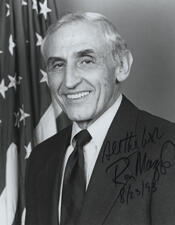
George Sea Shanklin (December 23, 1807 – April 1, 1883) was a U.S. Representative from Kentucky and a long-serving figure in that state’s legal and legislative life during the mid-nineteenth century. He was born in Jessamine County, Kentucky, on December 23, 1807, into a region that was then part of the young and rapidly developing Commonwealth. Little is recorded about his family background, but his early years were spent in the rural environment of central Kentucky, which would remain the center of his personal and professional life.
Shanklin received his early education at a private school in Nicholasville, Kentucky, the county seat of Jessamine County. This schooling provided the foundation for his later legal studies at a time when formal legal education was generally pursued through apprenticeship and self-directed reading rather than through university law schools. After completing his preparatory education, he studied law, following the customary path of reading law under established practitioners and preparing for admission to the bar.
Upon completion of his legal studies, Shanklin was admitted to the bar and commenced the practice of law in Nicholasville. As a practicing attorney in Jessamine County, he built a professional reputation that led to increasing involvement in public affairs. His legal work, combined with his local standing, helped to establish him as a viable candidate for elective office in the Kentucky General Assembly, where many lawyers of his generation began their political careers.
Shanklin first entered public office as a member of the Kentucky House of Representatives, serving in the state legislature in 1838 and again in 1844. These early legislative terms placed him in the midst of ongoing debates over internal improvements, banking, and the evolving party system in Kentucky. His service in the House helped to solidify his position within the Democratic Party and to broaden his influence in state politics beyond Jessamine County.
In 1854, Shanklin was appointed Commonwealth’s attorney, a key prosecutorial position in the Kentucky legal system. In that role he was responsible for representing the state in criminal prosecutions within his jurisdiction, further enhancing his prominence as both a lawyer and a public official. His combination of legislative and prosecutorial experience made him a familiar figure in Kentucky’s public life by the time of the sectional crisis that preceded the Civil War.
Shanklin returned to the Kentucky House of Representatives during the turbulent Civil War era, serving again as a member of the state legislature from August 1861 to August 1865. Kentucky, a border state with divided loyalties, faced complex questions of allegiance, civil order, and wartime policy, and Shanklin’s legislative service coincided with the entirety of the conflict. During this period he continued to be identified with the Democratic Party, which in Kentucky often emphasized the preservation of civil law and state authority amid federal military pressures.
Building on his long record in state government, Shanklin was elected as a Democrat to the Thirty-ninth Congress, serving as a U.S. Representative from Kentucky from March 4, 1865, to March 3, 1867. Although his congressional term officially began in March 1865, the Thirty-ninth Congress did not convene until December of that year. During the interval between the start of his federal term and the opening of the congressional session, Shanklin continued to participate in the 1865 session of the Kentucky General Assembly, briefly holding responsibilities in both state and national spheres. His service in Congress placed him in Washington during the early Reconstruction period, when the federal government was grappling with the political and legal reintegration of the former Confederate states and the status of newly freed African Americans.
After the conclusion of his term in the U.S. House of Representatives, Shanklin retired from active political life and returned to Jessamine County. He withdrew from public office and devoted himself to agricultural pursuits on his farm, resuming the rural life that had framed his early years. He remained in Jessamine County until his death on April 1, 1883. George Sea Shanklin was interred at Lexington Cemetery in Lexington, Kentucky, a major burial ground for many of the Commonwealth’s political and civic leaders, reflecting the stature he had attained through decades of legal practice and public service.
Congressional Record