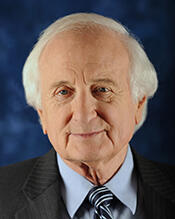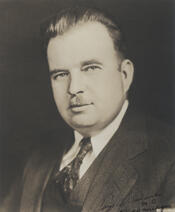
George Gregory Sadowski (March 12, 1903 – October 9, 1961) was an American lawyer and Democratic politician who served as a Representative from Michigan in the United States Congress during a significant period in American history. Over the course of his career in the House of Representatives, he served multiple terms between 1933 and 1951, contributing to the legislative process and representing the interests of his constituents from Michigan’s first congressional district.
Sadowski was born on March 12, 1903, in Detroit, Michigan, into a Polish-American family. He attended Ferry School in Detroit before moving to Foley, Alabama, where he attended high school. He later returned to Detroit and graduated from Northeastern High School in 1920. Pursuing a legal education, he enrolled in the law department of the University of Detroit and graduated in 1924. He was admitted to the bar in 1926 and commenced the practice of law in Detroit, establishing himself professionally in the city where he had been raised.
In addition to his legal practice, Sadowski engaged in various business pursuits. He was involved in the real estate and building industries, reflecting the rapid growth and development of Detroit in the early twentieth century. He later became the owner of two golf clubs, adding to his profile as a businessman as well as an attorney. Active in the Polish-American community, he was a member of the Polish National Alliance, which underscored his connection to his ethnic heritage and his engagement with civic and fraternal organizations.
Sadowski’s formal political career began at the state level. He served as a member of the Michigan Senate from the 2nd district in 1931 and 1932. At the same time, he was active in party affairs, serving as a member of the State Democratic Central Committee from 1930 to 1936. His growing prominence within the Democratic Party led to his selection as a delegate to the Democratic National Convention in 1932, 1936, 1940, 1944, and 1948, placing him in the midst of national party deliberations during the New Deal and World War II eras.
Sadowski was first elected to the United States House of Representatives as a Democrat from Michigan’s first congressional district to the 73rd Congress and was subsequently reelected to the 74th and 75th Congresses. He served this initial stretch in Congress from March 4, 1933, to January 3, 1939. During these three terms, which coincided with the early and middle years of the New Deal, he participated in the democratic process at the federal level and contributed to the legislative work of the House on behalf of his Detroit-area constituents. Although one account characterizes his overall congressional service as extending from 1933 to 1951 and comprising seven terms in office, his service was divided into two distinct periods separated by electoral defeats.
In 1938, Sadowski lost the Democratic primary to Rudolph G. Tenerowicz, ending his first period of congressional service. He again sought the nomination in 1940 but was once more defeated by Tenerowicz in the Democratic primary. Undeterred, Sadowski returned to the political arena and, in 1942, was elected to the 78th Congress. He was then reelected to the three succeeding Congresses, serving continuously from January 3, 1943, to January 3, 1951. This second period in the House spanned World War II and the early Cold War, further embedding his career within a transformative era in American and world history. In 1950, he was defeated in the Democratic primary by Thaddeus M. Machrowicz, bringing his congressional service to a close.
After leaving Congress in 1951, Sadowski’s public profile diminished, and he did not return to elective office. He remained associated with Michigan, where he had spent virtually his entire life in law, business, and politics. George Gregory Sadowski died on October 9, 1961, in Utica, Michigan. He was interred in Mount Olivet Cemetery in Detroit, Michigan, thus concluding the life of a long-serving Democratic legislator who had represented Michigan in the United States House of Representatives during some of the most consequential decades of the twentieth century.
Congressional Record