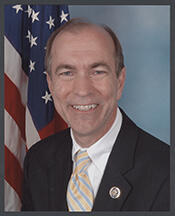
George Robbins Robbins (September 24, 1808 – February 22, 1875) was an American physician and politician who represented Burlington, Mercer, Monmouth, and Ocean counties in the United States House of Representatives for two terms from 1855 to 1859. His congressional service spanned a critical period in the decade preceding the Civil War, during which he aligned first with the northern Opposition to the Franklin Pierce administration and then with the emerging Republican Party.
Robbins was born in Allentown, Monmouth County, New Jersey, on September 24, 1808. He received what contemporaries described as a good literary education, reflecting a solid grounding in the classical and general studies typical of the early nineteenth century. This preparation enabled him to pursue professional training in medicine at a time when formal medical education was becoming more systematized in the United States.
Pursuing a medical career, Robbins enrolled at Jefferson Medical College in Philadelphia, Pennsylvania, one of the leading medical institutions of the era. He was graduated from Jefferson Medical College in 1837. Immediately after completing his medical studies, he commenced the practice of medicine in Fallsington, Bucks County, Pennsylvania, in 1837. Later that same year, he moved across the Delaware River to Hamilton Square, New Jersey, where he continued the practice of medicine and established himself as a local physician. His medical work in Hamilton Square formed the foundation of his professional reputation and community standing, which later supported his entry into public life.
Robbins’s political career developed against the backdrop of intensifying national debates over slavery, sectionalism, and the future of the Union. Identified with the northern Opposition to the policies of Democratic President Franklin Pierce, he became part of the loose coalition of anti-administration and anti–Kansas-Nebraska Act forces that were coalescing into a new party alignment. Drawing on his prominence as a physician and community leader, he sought and won election to the United States House of Representatives from New Jersey.
Robbins was elected as an Opposition Party candidate to the Thirty-fourth Congress and reelected as a Republican to the Thirty-fifth Congress, serving from March 4, 1855, to March 3, 1859. In his first term, he sat with the northern Opposition bloc that resisted the Pierce administration’s pro-slavery and expansionist policies. By his second term, this Opposition had crystallized into the Republican Party, and Robbins served as a Republican representative of Burlington, Mercer, Monmouth, and Ocean counties. During these two terms, he participated in the legislative process at a time of escalating sectional conflict, representing the interests of his New Jersey constituents as the nation moved closer to civil war. He did not seek renomination in 1858 to the Thirty-sixth Congress and thus concluded his federal legislative service at the end of his second term.
After leaving Congress in March 1859, Robbins returned to Hamilton Square and resumed the practice of medicine, continuing the profession he had maintained before and between his political activities. He remained a respected figure in his community, his dual career as physician and former congressman reflecting the pattern of many nineteenth-century American public servants who combined professional work with intermittent periods of elective office.
Robbins died in Hamilton Square, New Jersey, on February 22, 1875. He was interred in the Presbyterian Church Cemetery in Hamilton Square. His legacy in the region is reflected in the naming of Robbinsville Township, New Jersey, in his honor, commemorating his role as a local physician, community leader, and representative of New Jersey in the United States Congress.
Congressional Record