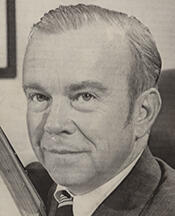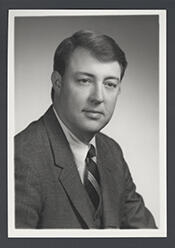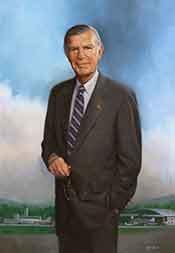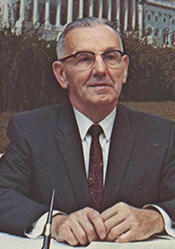
George Milton Rhodes (February 24, 1898 – October 23, 1978) was an American World War I veteran, labor leader, and newspaper executive who served as a Democratic member of the U.S. House of Representatives from Pennsylvania for ten terms from 1949 to 1969. A member of the Democratic Party during his congressional career, he represented his constituents in the House of Representatives over a twenty-year period that encompassed major developments in mid-twentieth-century American political and social life.
Rhodes was born on February 24, 1898, in Reading, Pennsylvania. He attended the public schools of Reading before entering the workforce at a young age. During the First World War he served in the United States Army, an experience that shaped his outlook and later public service. Returning to his native city after the war, he resumed civilian life in Reading and began a long association with the printing and newspaper trades that paralleled his growing involvement in the labor movement and politics.
From 1913 to 1927, Rhodes worked as a printer for the Reading Eagle Company, gaining firsthand knowledge of industrial conditions and the concerns of working men and women. In 1927 he became business manager of the Reading Labor Advocate, a position he held until 1942, which placed him at the center of local labor affairs and gave him a platform to advocate for workers’ rights. He also served as an American Federation of Labor labor representative, further solidifying his role as a spokesman for organized labor. From 1942 to 1949 he was editor and manager of the Lancaster New Era, extending his influence in Pennsylvania journalism and public discourse.
Rhodes’s leadership within organized labor was reflected in his long tenure as president of the Federated Trades Council, A.F. of L. Central Labor Union, a post he held from 1928 to 1951. In addition to his union responsibilities, he served as a member of the Reading Housing Authority from 1938 to 1948, participating in local efforts to address housing needs during the Depression and World War II eras. Politically, he was initially active in the Socialist Party of Pennsylvania and was a delegate to the Socialist National Conventions in 1928 and 1932. He ran for local office several times on the Socialist ticket, demonstrating an early and consistent commitment to progressive and pro-labor policies.
After later aligning with the Democratic Party, Rhodes emerged as a significant figure in Pennsylvania Democratic politics. He was a delegate to the Democratic National Conventions of 1952 and 1956, reflecting his growing prominence within the party. In the 1948 election he was elected as a Democrat to the 81st Congress, defeating incumbent Republican Congressman Frederick A. Muhlenberg. He took his seat in the U.S. House of Representatives on January 3, 1949, and was subsequently re-elected to the nine succeeding Congresses, serving continuously from January 3, 1949, to January 3, 1969. Over the course of these ten terms, he contributed to the legislative process during a significant period in American history, participating in the democratic process and representing the interests of his Pennsylvania constituents.
During his congressional service, Rhodes was particularly noted for his advocacy of collective bargaining rights and his consistent support for organized labor. He worked with Senator Olin D. Johnston of South Carolina to introduce the Rhodes–Johnston bill, which sought to recognize the collective bargaining rights of all federal workers. Although the bill never came to a vote due to objections from President Dwight D. Eisenhower, its core principles influenced later policy. A more limited version of the proposal was subsequently adopted by the administration of President John F. Kennedy in 1961, marking a partial realization of the objectives Rhodes had championed. After two decades in Congress, he chose not to be a candidate for reelection in 1968 and concluded his service in the House on January 3, 1969.
In his later years, Rhodes remained a respected figure in Reading and among labor and Democratic circles in Pennsylvania. He died on October 23, 1978, at the age of 80. His legacy in his hometown is commemorated by the George M. Rhodes Apartments in Reading, named in his honor, reflecting both his long public service and his enduring association with the city and its working people.
Congressional Record