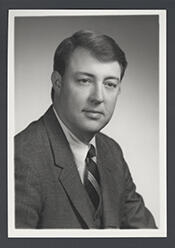
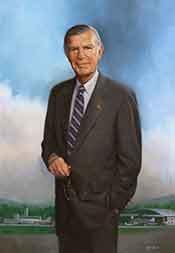
George Adams Post (September 1, 1854 – October 31, 1925) was a Democratic member of the U.S. House of Representatives from Pennsylvania. He was born in Cuba, Allegany County, New York, on September 1, 1854. In his youth he pursued an academic course at Oswego Academy in Oswego, New York, receiving a general education that prepared him for a varied career in business, law, journalism, and public service.
After completing his studies, Post moved to Susquehanna Depot, Pennsylvania, where he entered the railroad industry. He became secretary of the motive power department of the Erie Railway, an early indication of the close connection he would maintain throughout his life with rail transportation and related enterprises. While residing in Susquehanna Depot, he became active in local affairs and was elected burgess in February 1877, serving one year in that municipal office.
Post subsequently turned to the study of law. He was admitted to the bar in 1881 and commenced the practice of law in Montrose, Susquehanna County, Pennsylvania. In addition to his legal work, he became involved in journalism and party politics. From 1883 to 1889 he was one of the owners and editors of the Montrose Democrat, a local newspaper that provided him a platform for Democratic Party advocacy and commentary on public issues. His dual roles as attorney and editor helped establish his prominence in the community and within Pennsylvania Democratic circles.
As a member of the Democratic Party representing Pennsylvania, George Adams Post contributed to the legislative process during one term in office. He was elected as a Democrat to the Forty-eighth Congress and served in the U.S. House of Representatives, where he participated in the democratic process during a significant period in American history, representing the interests of his constituents and taking part in national legislative deliberations. His congressional service formed part of a broader pattern of political engagement. He was a delegate to the Democratic National Convention in 1884 and served as chairman of the Democratic State convention in 1885, underscoring his influence within the party at both the state and national levels.
After concluding his term in Congress and his active political work in Pennsylvania, Post moved to New York City in 1889. There he joined the staff of the New York World as a writer, extending his earlier experience in journalism to a larger metropolitan audience. In the early 1890s he returned to the railroad field from a business perspective. In 1892 he engaged in the manufacture of railway equipment and became vice president, and later president, of the Standard Coupler Company, a firm involved in the production of railroad coupling devices and related equipment.
Post’s later career was marked by leadership in national railroad and business organizations. He was the founder and president of the Railway Business Association, an influential trade association representing the interests of railway shippers and related enterprises. In addition, he served as chairman of the railroad committee of the United States Chamber of Commerce, a position that placed him at the center of discussions over transportation policy, regulation, and commercial development in the early twentieth century. Through these roles he continued to shape public policy and industry practice long after his formal congressional service had ended.
George Adams Post died in Somerville, Somerset County, New Jersey, on October 31, 1925. He was interred in Evergreen Cemetery in Oswego, New York, returning in death to the region where he had been educated in his youth.
Congressional Record