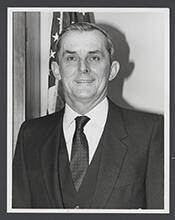
George Arthur Paddock (March 24, 1885 – December 29, 1964) was a U.S. Representative from Illinois and a lawyer, investment banker, and local public official whose career spanned the early and mid-twentieth century. He was born in Winnetka, Illinois, where he attended the public schools before pursuing technical and higher education that prepared him for a career in law and public service.
Paddock was graduated from the Chicago (Illinois) Manual Training School in 1902, an institution emphasizing practical and technical instruction, and went on to attend the University of Virginia at Charlottesville. He completed his studies there in 1906 and studied law at the University of Virginia, receiving the legal training that would form the basis of his professional life. He was admitted to the bar in 1907 and soon thereafter commenced the practice of law in Chicago, Illinois, entering the legal profession at a time of rapid urban and commercial growth in the city.
With the entry of the United States into the First World War, Paddock left civilian life for military service. From 1917 to 1919 he served in the United States Army as a captain in the 342nd Infantry, 86th Division, and was promoted to the rank of major during his period of service. His wartime experience linked him to the broader generation of officers who participated in the American Expeditionary Forces and contributed to his later involvement in veterans’ and patriotic organizations, including his status as an hereditary companion of the Military Order of the Loyal Legion of the United States.
After the war, Paddock returned to Chicago and resumed the practice of law. In 1921 he expanded his professional activities by engaging in investment banking, reflecting the growing importance of finance and securities work in the postwar economy. He maintained his residence in nearby Evanston, Illinois, and increasingly combined his business pursuits with civic and political responsibilities at the local and county levels.
Paddock’s public career developed first in municipal government. He served as a park commissioner in Evanston from 1929 to 1931 and again in 1937 and 1938, participating in the oversight and development of local recreational and public spaces during the Depression era. He was elected alderman in Evanston, serving on the city council from 1931 to 1937, where he took part in the legislative and administrative affairs of the municipality. In addition to his municipal duties, he served as a member of the Soldiers’ and Sailors’ Service Commission of Illinois, reflecting his continuing interest in the welfare of veterans.
Within the Republican Party, Paddock held a series of organizational and leadership roles that helped propel him to national office. He served as a delegate to the Republican State convention in 1936 and became a member and treasurer of the Cook County Republican Central Committee from 1938 to 1942, participating in the financial and strategic management of the party in one of the nation’s largest counties. His work in party affairs, combined with his record in local government, established him as a prominent Republican figure in the Chicago metropolitan area.
Paddock was elected as a Republican to the Seventy-seventh Congress and served a single term in the U.S. House of Representatives from January 3, 1941, to January 3, 1943. Representing Illinois during the critical early years of the Second World War, he took part in the legislative deliberations of a Congress that addressed issues of national defense, mobilization, and domestic policy in wartime. In 1942 he was an unsuccessful candidate for renomination, and upon leaving Congress he returned to private life.
Following his congressional service, Paddock resumed his work as an investment banker, continuing his association with the financial community while remaining a respected figure in Evanston and the broader Chicago area. He lived in Evanston, Illinois, until his death on December 29, 1964. He was interred in Rosehill Cemetery in Chicago, a burial place for many of the city’s notable political and civic leaders.
Congressional Record