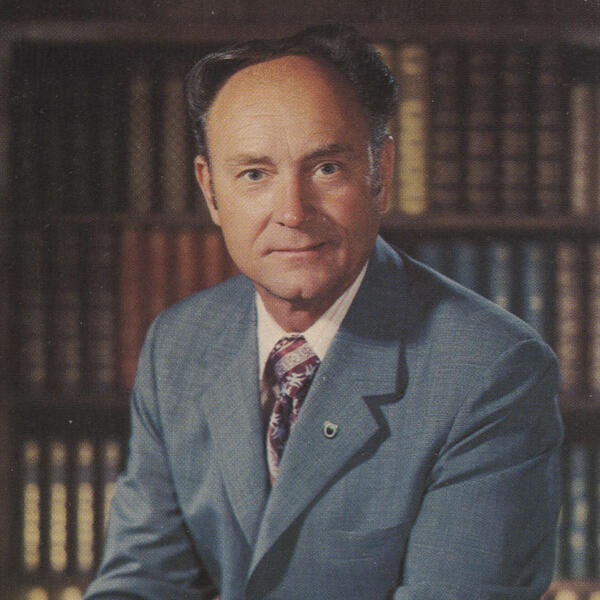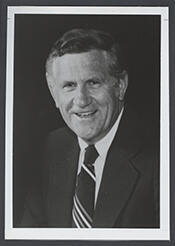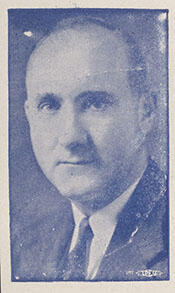
George Elmer Outland (October 8, 1906 – March 2, 1981) was an American educator, photographer, and politician who served two terms as a U.S. Representative from California from 1943 to 1947. A member of the Democratic Party, he represented his constituents in the House of Representatives during a significant period in American history encompassing the final years of World War II and the beginning of the postwar era, contributing to the legislative process over two consecutive terms in office.
Outland was born in Santa Paula, Ventura County, California, on October 8, 1906. He attended the public schools of California before enrolling at Whittier College, where he received an A.B. degree in 1928. He pursued graduate study on the East Coast, earning an M.A. from Harvard University in 1929 and later a Ph.D. from Yale University in 1937. In addition to these degrees, he also attended the University of Southern California in Los Angeles, further broadening his academic and professional preparation.
Beginning his career in social work and education, Outland served as assistant director of boys’ work at Hale House in Boston, Massachusetts, from 1928 to 1930. He simultaneously advanced in the same field as director of boys’ work at Denison House in Boston from 1929 to 1933, reflecting his early commitment to youth welfare and community service. Returning to Southern California, he became director of boys’ work at Neighborhood House in Los Angeles from 1933 to 1934. He then served as supervisor of boys’ welfare for the Federal Transient Service of Southern California in 1934–1935, a New Deal–era program addressing the needs of transient and unemployed youth during the Great Depression. In 1935–1936 he was director of New Haven Community College in Connecticut, and from 1935 to 1937 he served as an instructor at Yale University. Outland joined the faculty of Santa Barbara State College (now part of the University of California, Santa Barbara) in 1937 and remained there until 1942, solidifying his reputation as an educator before entering national politics.
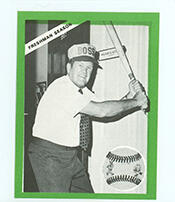
Alongside his academic and social work career, Outland was an avid and prolific amateur photographer, with a particular interest in baseball. During the 1920s and 1930s he photographed hundreds of players and ballparks, creating a substantial visual record of the sport in that era. Decades after his death, a collection of his baseball photographs was published in 2009 by McFarland & Company under the title Baseball Visions of the Roaring Twenties: A Fan’s Photographs of over 400 Players and Ballparks of the Era, with accompanying text by his son, John Outland, highlighting his parallel legacy as a chronicler of American popular culture.
Outland’s formal political career developed through his involvement in Democratic Party affairs in California. He was a delegate to the California State Democratic Conventions from 1942 to 1950, and he participated in shaping party policy at both the state and national levels. Elected as a Democrat to the Seventy-eighth and Seventy-ninth Congresses, he served in the U.S. House of Representatives from January 3, 1943, to January 3, 1947. During his tenure, he represented California in the national legislature, participating in the democratic process and advocating for the interests of his constituents at a time marked by wartime mobilization and postwar adjustment. In 1945, he was a strong supporter of Secretary of Commerce Henry A. Wallace’s proposed “full employment” plan, serving as one of several co-sponsors in the House, reflecting his longstanding concern with economic security and social welfare.
Outland’s congressional service coincided with his broader engagement in Democratic politics. He was a delegate to the Democratic National Conventions in 1944 and 1948, contributing to the selection of presidential nominees and the formulation of national party platforms. From 1948 to 1950 he chaired the Democratic State Policy Committee, a position that allowed him to influence policy direction within the California Democratic Party even after his departure from Congress. In the 1946 election he was an unsuccessful candidate for re-election to the Eightieth Congress, losing his seat to Republican Ernest K. Bramblett, which brought his period of federal legislative service to a close after two terms.
After leaving Congress, Outland returned to academic life. He joined the faculty of San Francisco State College (now San Francisco State University) in 1947 and served there as a professor until 1972. Over this twenty-five-year period he continued his work as an educator, shaping generations of students and maintaining his engagement with public affairs through teaching and scholarship. His post-congressional career underscored the continuity between his earlier social work, his legislative service, and his enduring commitment to education and civic life.
In retirement, Outland resided in Anacortes, Washington. He died there on March 2, 1981. In accordance with his wishes, he was cremated, and his ashes were interred at Pierce Cemetery in his birthplace of Santa Paula, California, closing a life that had begun and ended in the same California community he had gone on to represent in the United States Congress.
Congressional Record