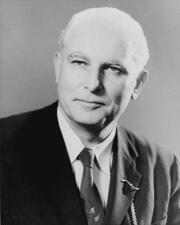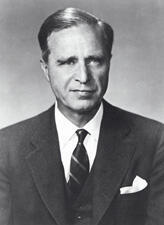
George Payne McLean (October 7, 1857 – June 6, 1932) was the 59th Governor of Connecticut and a United States senator from Connecticut. A member of the Republican Party, he served three terms in the U.S. Senate from 1911 to 1929, contributing to the legislative process during a significant period in American history and representing the interests of his Connecticut constituents.
McLean was born in Simsbury, Hartford County, Connecticut, one of five children of Dudley B. McLean and Mary (Payne) McLean. His family was long established in the area, and his sister, Sarah Pratt McLean Greene, later gained recognition as a novelist. He attended the common schools in Simsbury and, at the age of fifteen, began commuting by train to Hartford High School, from which he graduated in 1876. Immediately after graduation he took a position as a reporter for the Hartford Evening Post, gaining early experience in public affairs and state politics through his journalistic work.
In 1879 McLean left the newspaper and entered the Hartford law office of Henry C. Robinson, where he read law in the traditional apprenticeship manner. He remained in Robinson’s office for eight years, combining his legal training with a part-time position in financial management at Trinity College in Hartford. During this period he passed the law examination, was admitted to the bar, and began the practice of law in Hartford. His legal background and growing familiarity with state institutions helped launch his political career in the early 1880s.
McLean was elected to the Connecticut House of Representatives in 1883 and 1884, marking his entry into elective office. He served as clerk of the State Board of Pardons from 1884 to 1901, a long tenure that gave him extensive experience with the administration of criminal justice and executive clemency. In 1885 he was appointed a member of the commission to revise the Connecticut statutes, contributing to the modernization and clarification of state law. He served in the Connecticut State Senate in 1886 and again from 1889 to 1891, consolidating his position as a leading Republican figure in state government. In 1890 he was elected Connecticut’s Secretary of State, but he never took office because of the deadlocked Legislature of 1891–1893. As a result of that impasse, he was free to accept President Benjamin Harrison’s appointment in 1892 as United States attorney for the District of Connecticut, a post he held from 1892 to 1896. After completing his service as U.S. attorney, he resumed the practice of law in Hartford.
In 1900 McLean was elected the 59th Governor of Connecticut and took office on January 9, 1901. He served through a period of administrative reorganization and reform, and during his tenure the governor’s administrative staff was restructured, the state militia was reorganized, and a tax commission office was established to improve the state’s fiscal administration. Although politically successful, McLean did not seek reelection because of ill health and left the governor’s office on January 7, 1903. He returned again to private law practice, remaining an influential figure in Connecticut Republican politics.
McLean was elected as a Republican to the United States Senate in 1910 and served from March 4, 1911, to March 3, 1929, having been reelected in 1916 and 1922. His Senate career spanned the presidencies of William Howard Taft, Woodrow Wilson, Warren G. Harding, Calvin Coolidge, and Herbert Hoover, and encompassed World War I, the Progressive Era, and the early years of the 1920s economic expansion. During his Senate service he held several important committee assignments. He was chairman of the Committee on Forest Reservations and Game Protection in the Sixty-second and Sixty-fifth Congresses, reflecting his interest in conservation and wildlife protection. He also served on the Committee on Banking and Currency from the Sixty-sixth through the Sixty-ninth Congresses, participating in oversight of national financial policy in the postwar period, and on the Committee on Manufactures in the Seventieth Congress. McLean declined to run for reelection in 1928, bringing his eighteen-year Senate career to a close.
Probably McLean’s most lasting legislative achievement was his leadership in the development of federal protections for migratory birds. Responding to growing national concern over the mass killing of birds for the millinery trade and for food, and working with Representative John W. Weeks of Massachusetts, he helped secure passage of the Weeks–McLean Act in March 1913 by attaching it to an appropriations bill. The act sought to regulate the hunting of migratory birds, but some of its provisions, which expanded federal authority over wildlife, were declared unconstitutional by various courts. Acting on the advice of former Secretary of State Elihu Root, McLean promptly introduced new legislation authorizing the president to negotiate an international treaty to regulate migratory bird hunting. Congress passed this measure in July 1913, leading to the Migratory Bird Treaty between the United States and Great Britain (on behalf of Canada) in 1916. To implement and ratify the treaty, Congress enacted the Migratory Bird Treaty Act of 1918, which established federal limitations on hunting migratory birds. These limitations were upheld by the Supreme Court in 1920 in Missouri v. Holland, a landmark decision affirming broad federal treaty powers and securing McLean’s conservation legacy.
A confirmed bachelor until late in life, McLean married his longtime Simsbury sweetheart, Juliette Goodrich, on April 10, 1907, when he was forty-nine and she was forty-two. The couple had no children and maintained close ties to Simsbury throughout his public career. After leaving the Senate, McLean resumed the practice of law in Hartford while continuing to oversee his personal and philanthropic interests. He died of heart disease in Simsbury on June 6, 1932, at the age of seventy-four, and was interred in Simsbury Cemetery. Juliette McLean survived him until October 21, 1950, and is buried beside him.
Through his will, McLean established the non-profit McLean Fund, which has had a lasting impact on his hometown and the surrounding region. The fund operates two major enterprises in Simsbury: a senior living community and elder-care services provider, and a private game refuge. The McLean Game Refuge encompasses more than 4,200 acres of forest and open land in Simsbury and Granby and is open to the public; part of the refuge has been designated a National Natural Landmark in recognition of its ecological significance. The McLean senior living organization includes an independent living community and a comprehensive elder-care system offering services ranging from visiting nurses and adult day care to assisted living, long-term care, hospice, post-surgical acute care, inpatient physical rehabilitation, and outpatient rehabilitation. Through these institutions, as well as his role as governor and long-serving U.S. senator from Connecticut, George Payne McLean’s influence has continued well beyond his lifetime.
Congressional Record