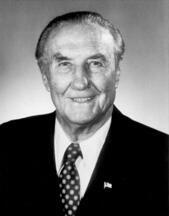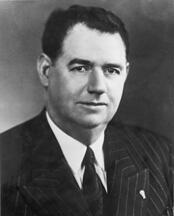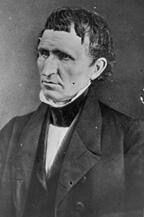
George McDuffie (August 10, 1790 – March 11, 1851) was the 55th governor of South Carolina, a long-serving member of the United States Congress, and one of South Carolina’s most outspoken advocates of the doctrine of nullification. A prominent Democratic politician who began his public life as a partisan of Andrew Jackson, he later emerged as a leading states’ rights theorist and a forceful defender of Southern interests in the antebellum period.
McDuffie was born near Long Canes, in what was then Abbeville District, South Carolina, on August 10, 1790. Orphaned at an early age and raised in modest circumstances, he was noted for his intellectual promise and determination. He worked as a clerk in a country store in Georgia before coming to the attention of influential South Carolinians who helped sponsor his education. This support enabled him to pursue formal schooling and laid the foundation for his later legal and political career.
McDuffie attended Moses Waddel’s noted academy at Willington, South Carolina, an institution that trained many future Southern leaders. He then studied at South Carolina College (now the University of South Carolina) in Columbia, where he graduated with high honors in 1813. After reading law, he was admitted to the bar and began practicing in Pendleton, South Carolina, before moving to the more politically active community of Edgefield. His legal practice and growing reputation as a powerful orator quickly drew him into public life.
McDuffie’s political career advanced rapidly. He served in the South Carolina House of Representatives before being elected to the United States House of Representatives, where he served multiple terms during the 1820s and early 1830s. While in the House, he was appointed an impeachment manager to prosecute the articles of impeachment in the impeachment trial of Judge James H. Peck, a significant responsibility that underscored his standing among his colleagues. During these years he initially aligned himself with Andrew Jackson and the emerging Democratic Party, supporting many of Jackson’s policies and helping to shape the party’s early direction.
Over time, however, McDuffie became one of the most forceful advocates of states’ rights and the doctrine of nullification, arguing that a state could declare a federal law null and void within its borders if it deemed that law unconstitutional. He emerged as a leading spokesman for South Carolina’s opposition to federal tariff policies, which many in the state believed unfairly burdened the Southern economy. His speeches and writings during the Nullification Crisis of the early 1830s placed him at the center of one of the most consequential constitutional controversies of the antebellum era and marked his break with Jacksonian nationalism, even as he remained within the broader Democratic fold.
In 1822, McDuffie fought a series of duels with Colonel William Cumming, suffering severe wounds that afflicted him for the rest of his life and contributed to a darkening of his already reserved personality. Contemporaries described him as taciturn and intensely self-contained, a man who “literally seemed to commune with himself,” though he could be convivial in the company of old friends. Journalist Benjamin Perley Poore later characterized McDuffie as a “spare, grim-looking man, who was an admirer of Milton, and who was never known to jest or smile.” His oratory was widely noted as “nervous and impassioned, and at times fiercely vehement,” and on one occasion he was said to have driven the combative John Randolph of Roanoke from the House floor with “vituperation witheringly pungent.”
McDuffie’s prominence in South Carolina politics led to his election as the 55th governor of South Carolina, a position in which he further articulated and defended the state’s states’ rights philosophy and its opposition to federal economic policies perceived as hostile to Southern interests. Following his service in state government, he continued his national career in the United States Congress. George McDuffie served as a Senator from South Carolina in the United States Congress from 1821 to 1846, during which time he was affiliated with the Democratic Party and contributed to the legislative process during nine terms in office. His service in Congress occurred during a significant period in American history, as debates over tariffs, internal improvements, slavery, and the balance of power between the federal government and the states intensified in the decades leading up to the Civil War. As a member of the Senate, McDuffie participated in the democratic process and represented the interests of his South Carolina constituents, consistently advocating for Southern and states’ rights positions.
In his later years, McDuffie’s health, long undermined by the injuries sustained in his duels and the strain of public life, declined. He gradually withdrew from active politics and retired to his estate, “Cherry Hill,” in Sumter County, South Carolina. It was there that he died on March 11, 1851. His legacy endured in both the political thought of the antebellum South and in the geography of the region; McDuffie County, Georgia, was named in his honor, reflecting the broader regional impact of his career and ideas.
Congressional Record