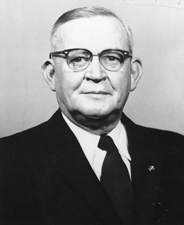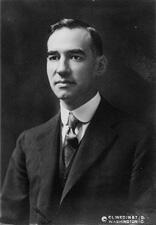
George Brown Martin (August 18, 1876 – November 12, 1945) was an American lawyer, judge, and Democratic politician who served as a United States Senator from Kentucky from 1918 to 1919. Over the course of his career he practiced law, held judicial office at the county level, engaged in business and financial enterprises, and briefly represented Kentucky in the United States Senate during a critical period in American history surrounding the final months of World War I.
Martin was born on August 18, 1876, in Prestonsburg, Floyd County, Kentucky. In 1877 he moved with his parents to Catlettsburg, in Boyd County, Kentucky, a river town that would remain the center of his professional and political life. He attended the local public schools and later enrolled at Centre University in Danville, Kentucky, from which he graduated in 1895. Following his undergraduate education, he studied law, preparing for admission to the bar at the turn of the century.
In 1900 Martin was admitted to the bar and commenced the practice of law in Catlettsburg. Alongside his legal work, he became active in regional business and transportation enterprises. He served as general counsel and director of the Big Sandy & Kentucky River Railway Company, reflecting his involvement in the development of rail infrastructure in eastern Kentucky. He also held the position of vice president of the Ohio Valley Electric Railway Company and served as a director of the Kentucky-Farmers Bank of Catlettsburg, roles that underscored his prominence in local financial and corporate affairs.
Martin entered public office in 1904, when he was elected county judge of Boyd County, Kentucky. In this capacity he presided over county matters and gained experience in judicial administration and local governance. As the United States moved toward involvement in World War I, Martin’s public responsibilities expanded. In 1917 he became a member of the Council of National Defense for Kentucky, participating in the organization of the state’s resources and support for the national war effort. He was appointed a major in the United States Army Judge Advocate General’s Corps, but he did not enter active military service because of his subsequent appointment to the United States Senate.
On September 7, 1918, Governor Augustus Owsley Stanley appointed Martin to the United States Senate to fill the vacancy caused by the death of Senator Ollie M. James. A member of the Democratic Party, Martin served from September 7, 1918, until March 3, 1919, completing the remainder of James’s term. His service in Congress occurred during a significant period in American history, encompassing the closing phase of World War I and the immediate postwar transition. During his single term in office, he participated in the legislative process, represented the interests of his Kentucky constituents, and served as chairman of the Senate Committee on Expenditures in the Department of Agriculture, where he was involved in overseeing federal spending related to agricultural programs. He did not seek election to a full term in the Senate.
After leaving Congress in March 1919, Martin returned to Catlettsburg and resumed the practice of law. He continued to be identified with the legal and civic life of his community, drawing on his experience as a lawyer, judge, businessman, and former senator. George Brown Martin died in Catlettsburg, Kentucky, on November 12, 1945. He was interred in Catlettsburg Cemetery, closing a life closely tied to the legal, political, and economic development of his region and to a brief but notable period of service in the United States Senate.
Congressional Record