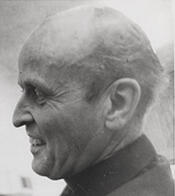
George Burr Leonard (August 9, 1923 – January 6, 2010) was an American writer, editor, educator, and influential figure in the human potential movement who wrote extensively about education, personal development, and human possibility. Born in Macon, Georgia, he grew up in the segregated South in a family with a prominent political background; his grandfather was a state senator who owned black tenant farms. As a youth, Leonard witnessed the attempted mob lynching of a Black rape suspect, an experience that left a lasting impression and later informed his sensitivity to issues of race, justice, and social change.
Leonard served in the United States Army Air Corps as a combat pilot during World War II and later during the Korean War. His military service, which placed him at the center of mid-twentieth-century global conflict, preceded and helped shape his later commitment to exploring nonviolence, humanistic psychology, and the cultivation of human potential. After leaving active military duty, he turned to journalism, joining the staff of Look magazine in 1953. At Look, where he worked as a writer and editor until 1970, he was soon reporting on the emerging civil rights movement, bringing national attention to the profound social transformations then under way in the United States.
During the 1960s and 1970s, Leonard became one of the leading public voices in the human potential and humanistic education movements. He was closely associated with the Esalen Institute in Big Sur, California, a major center for explorations in psychology, spirituality, and personal growth, eventually serving as its President Emeritus. He also served as past-president of the Association for Humanistic Psychology, helping to institutionalize and legitimize approaches to psychology that emphasized growth, creativity, and self-actualization. His philosophy was often expressed in concise, reflective statements, as in his observation from the 1960s: “Western civilization has been a 2,000 year long exercise in robbing people of the present. People are now learning the powerful joys that hide in the narrow place of the hourglass, the eternal moment. Here is their golden learning: to see – really see – spring flowers; to feel – really feel – the grace of love.”
Leonard’s written work spanned several decades and addressed themes of gender, education, social change, embodiment, and spiritual practice. Among his early books were The Decline of the American Male (1958) and Shoulder the Sky (1959), which examined contemporary social and cultural tensions. He became widely known for Education and Ecstasy (1968), in which he argued for more experiential, holistic, and engaging forms of learning; this work was later issued with his essay “The Great School Reform Hoax” (1987), critiquing superficial approaches to educational reform. In The Man & Woman Thing, and Other Provocations (1970), he explored changing gender roles, while The Transformation: A Guide to the Inevitable Changes in Humankind (1972) situated individual growth within a broader vision of societal evolution. His later works included The Silent Pulse: A Search for the Perfect Rhythm That Exists in Each of Us (1978, 1986), The End of Sex (1983), Walking on the Edge of the World (1988), Mastery: The Keys to Success and Long-Term Fulfillment (1992), The Life We Are Given (1995), The Way of Aikido: Life Lessons from an American Sensei (2000), and The Ultimate Athlete (1977, 2001). Across these books he consistently emphasized long-term practice, inner discipline, and the integration of mind, body, and spirit.
A central dimension of Leonard’s later career was his work in embodied practice and martial arts. He held a fifth-degree black belt in aikido and became one of the best-known American interpreters of the art’s philosophical and psychological dimensions. He co-founded the Aikido of Tamalpais dojo, originally located in Mill Valley and later in Corte Madera, California, where he taught and mentored students for many years. Drawing on aikido principles, he developed Leonard Energy Training (LET), a practice designed for centering mind, body, and spirit, and he became widely recognized as an American sensei who used martial arts as a vehicle for personal and social transformation.
Leonard extended his interest in long-term personal development into broader frameworks for transformative practice. He co-founded Integral Transformative Practice International, an organization devoted to structured, sustained programs of physical, mental, and spiritual development. Through this work, as well as his leadership roles at Esalen and within the Association for Humanistic Psychology, he helped shape the institutional landscape of the human potential movement in the United States. His ideas and methods influenced educators, therapists, organizational leaders, and practitioners of contemplative and somatic disciplines, and he became a frequent subject of interviews and profiles in venues devoted to aikido, personal growth, and contemporary spirituality.
George Burr Leonard died at his home in Mill Valley, California, on January 6, 2010, after a long illness. He was 86 years old. At the time of his death he was widely regarded as a pioneering figure who had bridged journalism, education reform, humanistic psychology, and martial arts, leaving a substantial body of written work and a network of institutions and practices dedicated to the realization of human potential.
Congressional Record