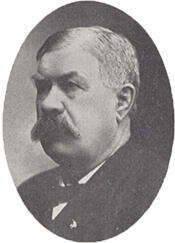
George Washington Kipp (March 28, 1847 – July 24, 1911) was a Democratic member of the U.S. House of Representatives from Pennsylvania who served as a Representative from Pennsylvania in the United States Congress from 1907 to 1913. A member of the Democratic Party, he contributed to the legislative process during two terms in office and participated in the democratic process as a member of the House of Representatives, representing the interests of his constituents during a significant period in American history.
Kipp was born on March 28, 1847, in Greene Township, Pike County, Pennsylvania. Little is recorded in the official congressional sources about his early family life or formal schooling, but his later career indicates that he developed practical business skills and local prominence in northeastern Pennsylvania. As a young man he entered the lumber trade, a major regional industry, and built his livelihood in that field.
For thirty-five years, Kipp engaged in the lumber business, establishing himself as a substantial figure in that sector. His success and standing in business led to involvement in local public affairs. In 1880 he was elected county commissioner of Wayne County, Pennsylvania, marking his entry into elective office. This position gave him administrative experience in county government and helped to build the political base that would later support his candidacies for higher office.
Kipp was elected as a Democrat to the Sixtieth Congress, beginning his first term in the U.S. House of Representatives on March 4, 1907. During this initial period in Congress, he served at a time when the nation was grappling with issues of economic regulation, industrial expansion, and political reform in the Progressive Era. Although detailed records of his specific committee assignments and legislative initiatives are limited in the brief summaries, he took part in the legislative work of the House and represented Pennsylvania’s interests in national debates.
In 1908 Kipp chose not to be a candidate for renomination to the House of Representatives. Instead, he sought statewide office as a candidate for Pennsylvania state treasurer. His bid for that position was unsuccessful, and following the campaign he returned to private life. He resumed his former business pursuits in the lumber industry, continuing the work that had long underpinned his economic and community standing.
Kipp reentered national politics in the 1910 congressional election, when he was once again elected to the U.S. House of Representatives. He took his seat in the Sixty-second Congress on March 4, 1911, and served until his death later that year. His return to Congress restored him to a role in federal lawmaking during a period marked by continued Progressive Era reforms and increasing attention to issues such as tariffs, banking, and corporate regulation.
George Washington Kipp died in office on July 24, 1911, while serving in the Sixty-second Congress. He passed away on Vancouver Island, British Columbia, during his term as a Representative. Following his death, he was interred in Oak Hill Cemetery in Towanda, Pennsylvania. His service places him among the members of the United States Congress who died in office in the early twentieth century, and his career reflects the trajectory of a regional businessman who rose to positions of local and national responsibility.
Congressional Record