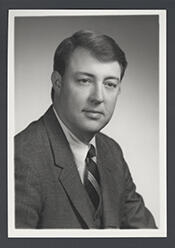
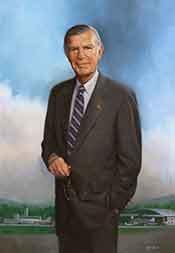
George Augustus Jenks (March 26, 1836 – February 10, 1908) was an American lawyer, jurist, and Democratic politician from the Commonwealth of Pennsylvania who served one term in the United States House of Representatives and later as Solicitor General of the United States. His public career spanned the post–Civil War and Gilded Age eras, during which he held significant legal and political positions at both the state and federal levels.
Jenks was born in Punxsutawney, Jefferson County, Pennsylvania, on March 26, 1836. He pursued classical studies and enrolled at Jefferson College in Canonsburg, Pennsylvania (now Washington & Jefferson College), from which he graduated in 1858. While at Jefferson College he became a member of the Phi Kappa Psi fraternity, an affiliation that reflected his early engagement with civic and professional networks that would later support his legal and political career.
After completing his education, Jenks studied law, was admitted to the bar, and began practicing as a lawyer in Pennsylvania. He established himself in private practice and subsequently embarked on a judicial and political career. He married Mary A. Mabon, and the couple had at least one daughter, Emma Jenks (1862–1926), who later married Benjamin F. Shively, a future United States Senator from Indiana. Another daughter, Laura, also married Benjamin Shively, making Jenks’s family closely connected to national political life through this alliance.
As a member of the Democratic Party representing Pennsylvania, Jenks entered national politics in the mid-1870s. He was elected to the United States House of Representatives as a Democrat and served one term in the Forty-fourth Congress, from March 4, 1875, to March 3, 1877. His service in Congress occurred during a significant period in American history marked by Reconstruction’s end and the nation’s adjustment to post–Civil War realities. During this term he served as chairman of the United States House Committee on Invalid Pensions, where he participated in shaping legislation related to benefits for disabled veterans and their families. In 1876 he was also appointed one of the managers by the House of Representatives to conduct the impeachment proceedings against William W. Belknap, former Secretary of War, thereby playing a direct role in one of the notable impeachment trials of the era.
Following his congressional service, Jenks remained active in Pennsylvania and national Democratic politics. In 1880 he was nominated by the Democratic Party as its candidate for judge of the Supreme Court of Pennsylvania, though he was defeated in that election by Henry Green of Easton, Pennsylvania. His legal and political reputation nonetheless continued to grow, and in 1885 he was appointed United States Assistant Secretary of the Interior, a position he held from 1885 to 1886. In that role he was involved in the administration of federal lands, natural resources, and Indian affairs during a period of rapid western expansion and industrial development.
Jenks’s most prominent federal legal service came when he was appointed United States Solicitor General during President Grover Cleveland’s first administration. He held the office from 1886 to 1889, representing the federal government before the Supreme Court of the United States and helping to shape the government’s legal positions in an era of evolving constitutional and regulatory questions. His tenure as Solicitor General placed him among the leading legal figures of his time and capped a long record of service in federal offices.
In the closing years of the nineteenth century, Jenks continued to be a significant figure in Pennsylvania Democratic politics. He was the Democratic nominee for governor of Pennsylvania in 1898, although he was not elected. The following year, in 1899, he was also the Democratic nominee in the United States Senate election in Pennsylvania during the so‑called Quay deadlock, a protracted and contentious struggle in the state legislature over the re-election of Senator Matthew Quay. Although Jenks did not prevail in that contest, his candidacy underscored his status as a leading Democrat in the state.
George Augustus Jenks spent his later years in Pennsylvania, remaining a respected elder statesman of his party and of the legal profession. He died on February 10, 1908, at his home in Brookville, Pennsylvania. His career, encompassing service as a congressman, committee chairman, impeachment manager, Assistant Secretary of the Interior, and Solicitor General of the United States, reflected a lifetime of engagement in the legislative and legal affairs of both Pennsylvania and the nation.
Congressional Record