United States Representative Directory

George Hancock

George Hancock served as a representative for Virginia (1793-1797).

  • Federalist
  • Virginia
  • District 5
  • Former
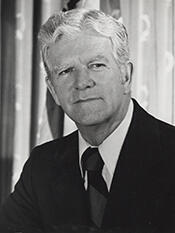
Portrait of George Hancock Virginia
Role Representative

Current assignment referenced in the congressional directory.

State Virginia

Representing constituents across the Virginia delegation.

District District 5

District insights and legislative focus areas.

Service period 1793-1797

Years of public service formally recorded.

Font size

Biography

George Hancock was the name of several notable individuals active in political, military, sporting, industrial, and professional life from the eighteenth through the twentieth centuries, including George Hancock (Virginia politician) (1754–1820), a U.S. Congressman from Virginia; George Hancock (Royal Navy officer) (1819–1876), Commander-in-Chief, Pacific Station; George Hancock (softball) (fl. 1880s), a Chicago inventor of softball; George Hancock (architect) (1849–1924), an architect active in North Dakota, Montana, and Minnesota; George Allan Hancock (1875–1965), owner of the Rancho La Brea Oil Company; George Hancock (footballer) (1931–2010), an Australian rules footballer; and George Hancock (rugby union), a rugby union player.

George Hancock, the Virginia politician, was born in 1754 and became a prominent planter, lawyer, and statesman in the early United States. He represented Virginia as a U.S. Congressman, participating in the formative years of the federal government after American independence. Serving in the national legislature, he was part of the generation that helped establish the political and legal framework of the new republic. His career reflected the interests of Virginia’s landed class in the post-Revolutionary era, and he remained an influential public figure in his state until his death in 1820.

George Hancock, the Royal Navy officer, was born in 1819 and pursued a long career in the British Royal Navy during the height of the British Empire. Rising through the ranks in an era marked by the transition from sail to steam and expanding imperial commitments, he ultimately attained senior flag rank. He was appointed Commander-in-Chief, Pacific Station, a major Royal Navy command responsible for British naval operations across the eastern Pacific, including the western coasts of the Americas and key colonial and commercial interests. In this role he oversaw squadrons charged with protecting trade routes, projecting British power, and responding to regional crises. He held this command until late in his career and died in 1876.

Another George Hancock, active in Chicago in the 1880s, is credited as the inventor of softball. Flourishing in the 1880s, he helped create an indoor variant of baseball that used a larger, softer ball and a smaller playing field, making it suitable for play in confined spaces and in colder weather. Originating as a recreational pastime in Chicago, the game he developed evolved into modern softball, which would become a widely played amateur and professional sport in the United States and internationally. His innovation had a lasting impact on recreational athletics and team sports.

George Hancock, the architect (1849–1924), was a British-born architect who became active in the American Upper Midwest, particularly in North Dakota, Montana, and Minnesota. Emigrating to the United States in the nineteenth century, he established a practice that contributed significantly to the built environment of growing frontier and prairie communities. He designed a range of civic, commercial, and residential buildings, many in emerging towns and cities shaped by railroad expansion and agricultural development. His work helped define the architectural character of parts of the northern Great Plains in the late nineteenth and early twentieth centuries, and several of his buildings have been recognized for their historical and architectural significance. He remained professionally active until his death in 1924.

George Allan Hancock (1875–1965) was an American businessman, oilman, and philanthropist best known as the owner of the Rancho La Brea Oil Company in California. Born into a family that held extensive land in the Los Angeles area, he oversaw the development of oil production on the Rancho La Brea property, which included the famous La Brea Tar Pits. Under his leadership, the Rancho La Brea Oil Company became an important regional enterprise during the early growth of the California petroleum industry. He used a portion of his wealth to support scientific, cultural, and educational institutions, and his name is associated with major philanthropic contributions in Southern California. He died in 1965 after a long career in business and public benefaction.

George Hancock (1931–2010) was an Australian rules footballer who played in the mid-twentieth century. Born in 1931, he came of age as Australian rules football was consolidating its status as a leading national sport. Over the course of his playing career he competed at a high level in the Australian game, contributing to the development and popularity of the sport in the postwar period. His participation at the elite level placed him among the notable footballers of his era, and he remained associated with the game until his death in 2010.

A further figure bearing the name, George Hancock (rugby union), was a rugby union player whose career contributed to the long tradition of the code in the English-speaking world. Although detailed records of his life and playing years are limited, his inclusion among notable individuals named George Hancock reflects his participation in organized rugby union at a recognized competitive level, adding to the diverse fields—politics, naval command, invention, architecture, industry, and sport—in which individuals of this name achieved distinction.

Congressional Record

Loading recent votes…

More Representatives from Virginia