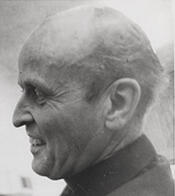
George Grennell Jr. (December 25, 1786 – November 19, 1877) was a United States Representative from Massachusetts and a prominent lawyer and public official in Franklin County. He was born in Greenfield, Franklin County, Massachusetts, on December 25, 1786, the son of George Grennell and Lydia (Stevens) Grennell. Raised in the Connecticut River Valley, he received his early education locally and then attended Deerfield Academy, a leading preparatory school in western Massachusetts. He subsequently enrolled at Dartmouth College in Hanover, New Hampshire, from which he graduated in 1808, receiving the classical education typical of New England professionals of his generation.
After completing his collegiate studies, Grennell read law and was admitted to the bar in 1811. He commenced the practice of law in his native Greenfield, where he quickly established himself in the legal community. His professional competence and growing reputation led to his appointment as prosecuting attorney for Franklin County, a position he held from 1820 to 1828. In this capacity he was responsible for representing the Commonwealth in criminal matters in the county courts, a role that placed him at the center of local legal and civic affairs.
Grennell’s legal career soon intersected with public service in the state legislature. He served as a member of the Massachusetts State Senate from 1825 to 1827, representing his region during a period of significant political realignment in the Commonwealth and the nation. His tenure in the Senate helped to solidify his standing as a leading Anti-Jacksonian voice in western Massachusetts and prepared him for higher office.
In 1828 Grennell was elected to the United States House of Representatives as an Anti-Jacksonian to the Twenty-first Congress and was subsequently reelected as an Anti-Jacksonian to the Twenty-second, Twenty-third, and Twenty-fourth Congresses. With the evolution of party alignments, he was reelected as a Whig to the Twenty-fifth Congress, serving continuously from March 4, 1829, to March 3, 1839. During this decade in Congress he represented Massachusetts at a time marked by intense national debates over federal power, banking policy, internal improvements, and the emerging Whig opposition to the Jackson and Van Buren administrations. He chose not to be a candidate for renomination in 1838 and returned to Massachusetts at the close of his final term.
Following his congressional service, Grennell remained an influential figure in the civic and institutional life of Massachusetts. He served as a trustee of Amherst College from 1838 to 1859, contributing to the governance and development of the institution during a period of growth in its academic and physical plant. In the judicial sphere, he was appointed judge of probate for Franklin County, holding that office from 1849 to 1853, where he oversaw matters relating to wills, estates, and guardianships. He then served as clerk of the Franklin County Courts from 1853 to 1865, managing the records and administrative functions of the county’s judicial system.
Grennell also played a role in the early development of regional transportation infrastructure. He was the first president of the Troy and Greenfield Railroad, a line conceived to link western Massachusetts with markets to the west and to improve commercial connections across the northern tier of the state. His leadership in this enterprise reflected the broader Whig commitment to internal improvements and economic development and underscored his continued engagement with the practical concerns of his community long after leaving Congress.
In his personal life, Grennell married twice. His first marriage, in 1814, was to Helen Adelle Blake. After her death, he married Eliza Seymour Perkins in 1820. From his family emerged figures of note in business and public life; his son George Blake Grinnell became a noted businessman, continuing the family’s prominence beyond the political sphere. George Grennell Jr. lived to an advanced age, witnessing the transformation of the United States through the Civil War and Reconstruction. He died in Greenfield, Massachusetts, on November 19, 1877, and was interred in Green River Cemetery in Greenfield, closing a long life of legal practice, public service, and civic leadership in his native region.
Congressional Record