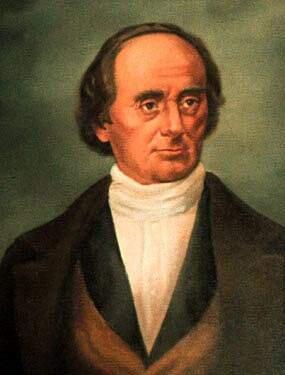
George Rockingham Gilmer (April 11, 1790 – November 16, 1859) was an American politician who served as the 34th governor of Georgia in two non-consecutive terms, from 1829 to 1831 and from 1837 to 1839, and who also held multiple terms in the United States House of Representatives. His public career unfolded during a formative period in the early republic, when questions of states’ rights, Native American removal, and party realignment were central to national and state politics.
Gilmer was born on April 11, 1790, in Wilkes County, Georgia, into a family that had settled in the state during its early post-Revolutionary development. He grew up in the backcountry environment of the young state, where land speculation, frontier defense, and the expansion of plantation agriculture shaped local life and politics. His early years coincided with Georgia’s transition from a sparsely settled frontier to a more organized state within the expanding United States, experiences that helped form his later interest in public affairs and territorial development.
Gilmer received his early education in local schools in Georgia before pursuing legal studies. He read law in the traditional manner of the period, apprenticing under established attorneys rather than attending a formal law school, and was admitted to the bar in Georgia. Establishing a law practice, he gained experience in property, land, and civil disputes that were common in a rapidly growing state. His legal work brought him into contact with influential figures in Georgia’s political and economic life and provided a foundation for his entry into public service.
Gilmer’s political career began in the Georgia state legislature, where he served in the early decades of the nineteenth century. As a member of the state’s political leadership, he participated in debates over internal improvements, land policy, and the relationship between state and federal authority. His legislative service helped build his reputation as an able advocate for Georgia’s interests and positioned him for higher office at both the state and national levels.
At the national level, Gilmer served multiple terms in the United States House of Representatives as a member of the Jackson Party representing Georgia. His service in Congress occurred during a significant period in American history, as the nation confronted issues such as the expansion of suffrage for white males, the rise of organized political parties, and conflicts over tariffs and federal power. In three terms in office, he contributed to the legislative process, participating in the democratic governance of the country and representing the interests of his Georgia constituents in Washington. His alignment with the Jacksonian movement reflected his support for a stronger voice for the states and skepticism toward concentrated financial power.
Gilmer’s most prominent role came as governor of Georgia, a position he held in two non-consecutive terms. First elected as the 34th governor, he served from 1829 to 1831, and then again from 1837 to 1839. His administrations coincided with a period of intense conflict over Native American lands in the Southeast, particularly involving the Cherokee Nation, and with the broader Jacksonian-era policy of Indian removal. As governor, he was involved in implementing state policies that asserted Georgia’s authority over Native American territory within its borders, reflecting the prevailing views of many white Georgians at the time. His terms also addressed issues of state development, including the promotion of infrastructure and the management of public lands, as Georgia continued to expand westward.
After his gubernatorial service and his terms in Congress, Gilmer remained a respected figure in Georgia public life. In his later years, he turned increasingly to writing and reflection on the state’s early history and his own experiences in public office, contributing to the historical record of Georgia’s development in the first half of the nineteenth century. He spent his final years in Georgia, where he continued to be associated with the generation of leaders who had guided the state from its frontier origins into a more established role within the Union. George Rockingham Gilmer died on November 16, 1859, leaving a legacy as a significant participant in both Georgia’s state government and the national political arena during a transformative era in American history.
Congressional Record