United States Representative Directory

George Fuller

George Fuller served as a representative for Pennsylvania (1843-1845).

  • Democratic
  • Pennsylvania
  • District 12
  • Former
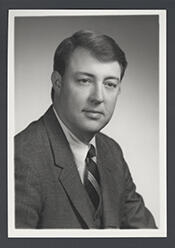
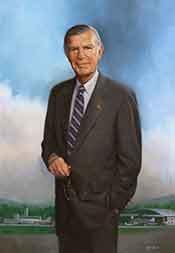
Portrait of George Fuller Pennsylvania
Role Representative

Current assignment referenced in the congressional directory.

State Pennsylvania

Representing constituents across the Pennsylvania delegation.

District District 12

District insights and legislative focus areas.

Service period 1843-1845

Years of public service formally recorded.

Font size

Biography

George Fuller was the name of several notable public figures, artists, professionals, and industrialists active in the nineteenth and twentieth centuries in Australia, the United States, and the United Kingdom. Collectively, these individuals named George Fuller held high political office, served in the United States Congress, advanced the fields of architecture and engineering, contributed to theology and higher education, and achieved distinction in painting, physics, and industry. Their careers spanned from the early 1800s through the later twentieth century and were associated with locations as diverse as New South Wales, Pennsylvania, Massachusetts, Chicago, and Britain.

One of the most prominent bearers of the name was George Fuller (1861–1940), an Australian politician who served twice as premier of New South Wales, Australia. Born in the mid-nineteenth century, he rose through the colonial and later state political structures during a period of significant constitutional and social change. His premierships placed him at the center of governance in New South Wales, where he was involved in the administration of public policy and the management of relations between the state and the wider Australian Commonwealth. His political career reflected the evolution of Australian self-government and the consolidation of parliamentary institutions in the decades surrounding Federation.

Another important figure was George Fuller (painter) (1822–1884), an American figure and portrait painter whose work contributed to the development of nineteenth-century American art. Active primarily in the mid-1800s, he became known for his evocative figure compositions and portraits, which were often characterized by a subdued palette and atmospheric effects. Working during a period when American painting was establishing its own identity apart from European traditions, Fuller’s paintings were exhibited and collected in the United States, and he earned recognition among his contemporaries for the emotional depth and distinctive style of his work. His career helped to shape the trajectory of American figure and portrait painting in the decades before and after the Civil War.

In the political life of the United States, George Fuller (1802–1888) served as a U.S. Representative from Pennsylvania. Living through the first three quarters of the nineteenth century, he participated in the national legislature during an era marked by sectional tensions, westward expansion, and the gradual transformation of the American party system. As a member of the House of Representatives, he represented the interests of his Pennsylvania constituents at the federal level, contributing to debates and legislation that reflected the economic and political concerns of his state, including issues related to industry, transportation, and the balance of power between the states and the federal government.

The name was also borne by George Fuller (British politician) (1833–1927), a British Liberal politician who was active in the political life of the United Kingdom during the later Victorian and Edwardian periods. As a Liberal, he would have been associated with policies favoring parliamentary reform, civil liberties, and, in many cases, free trade and social improvement. His long life, extending well into the twentieth century, meant that his political experience bridged the high Victorian era, the challenges of the early twentieth century, and the profound changes brought about by the First World War and its aftermath in British public life.

In the field of architecture and construction, George A. Fuller (1851–1900) was an architect and general contractor widely credited as an “inventor” of modern skyscrapers. Active primarily in the late nineteenth century, he played a central role in the development of steel-frame construction techniques that made tall commercial buildings structurally feasible and economically viable in rapidly growing American cities. Through his work and the firm that bore his name, Fuller helped shape the emerging skylines of major urban centers, and his innovations in building organization, contracting, and construction management influenced the evolution of modern architectural practice. Another architect sharing the name, George Fuller, was a Chicago architect and colleague of Floyd Naramore, contributing to the built environment of the American Midwest and participating in the professional networks that linked architects and engineers in the early twentieth century.

Several individuals named George Fuller were associated with scientific, technical, and academic advancement. George W. Fuller (1868–1934) was a sanitary engineer whose work significantly influenced public health and environmental engineering. Active in the late nineteenth and early twentieth centuries, he was involved in the design and improvement of water and wastewater treatment systems, contributing to the development of filtration and disinfection practices that reduced waterborne disease and improved urban living conditions. George M. Fuller, an American theoretical physicist, represented the name in the realm of modern science, working in advanced areas of physics that contributed to the broader understanding of fundamental processes in nature. In the sphere of theology and higher education, George C. Fuller was an American theologian and seminary president, whose leadership in theological training shaped the education of clergy and religious scholars and influenced the intellectual life of the institutions he served.

Industry and local enterprise were also represented among those bearing the name. George F. Fuller (1869–1962) was an industrialist in Worcester, Massachusetts, United States, active during a period when New England manufacturing and industry were undergoing significant change. His career in Worcester industry placed him within the broader narrative of American industrial development, modernization, and the shifting economic landscape of the late nineteenth and early twentieth centuries. In Australia, George Lawrence Fuller was known as a farmer, quarry owner, and shopkeeper, reflecting the more localized but nonetheless important economic roles played by small-scale entrepreneurs and landholders in rural and regional communities. Through agriculture, quarrying, and retail trade, he contributed to the economic life and development of his locality.

Taken together, the various men named George Fuller occupied influential positions across politics, the arts, science, engineering, theology, architecture, and industry from the early 1800s to the mid-1900s and beyond. Their careers illustrate the breadth of contributions made under a shared name to public service, cultural production, technological innovation, and economic development in Australia, the United States, and the United Kingdom.

Congressional Record

Loading recent votes…

More Representatives from Pennsylvania