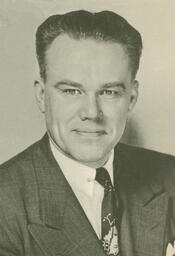
George Bragg Fielder (July 24, 1842 – August 14, 1906) was an American Civil War veteran, banker, railroad builder, and Democratic politician who represented New Jersey’s 7th congressional district in the United States House of Representatives for one term from 1893 to 1895. He was born in Jersey City, New Jersey, on July 24, 1842, into a family that would become prominent in the civic and political life of the state. His early years were spent in Jersey City, where he became involved in business pursuits at a young age, particularly in banking and railroad development in association with his father.
Before entering national politics, Fielder established himself in finance and transportation. He engaged in banking in New Jersey and, together with his father, participated in the construction and development of important regional rail lines, including the New Jersey Southern Railroad and the New York, New Hampshire and Willimantic Railroad. These enterprises reflected the rapid expansion of rail infrastructure in the mid-nineteenth century and helped to integrate regional markets in the northeastern United States, giving Fielder practical experience in large-scale business operations and public works.
With the outbreak of the American Civil War, Fielder entered military service in defense of the Union. In 1862 he joined the Union Army as a private. Over the course of the conflict he rose through the ranks to become a lieutenant, serving throughout the war. His wartime experience, which spanned the duration of the conflict from his enlistment until its close, contributed to his later public standing as a veteran and informed his sense of public duty in the postwar period.
Following the Civil War, Fielder returned to New Jersey and resumed his business activities while gradually entering public life. A member of the Democratic Party, he became active in local politics in Hudson County, a rapidly growing urban and industrial area centered on Jersey City. His combination of business experience and military service helped to secure his election to county office. In 1884 he was elected Register of Hudson County, New Jersey, an important administrative position responsible for the recording of deeds and other official documents. He served two consecutive terms as Register from 1884 until 1893, gaining a reputation for competent management of county records and finances.
Fielder’s success in county office led to his election to the national legislature. Running as a Democrat, he won a seat in the United States House of Representatives in the Fifty-third Congress, representing New Jersey’s 7th congressional district. His term extended from March 4, 1893, to March 3, 1895. During his single term in Congress he served at a time when issues such as economic policy, the aftermath of the Panic of 1893, and questions of currency and tariff were at the forefront of national debate. After completing his term, he declined to be a candidate for renomination, choosing instead to return to local office and his business interests rather than pursue a prolonged career in national politics.
After leaving Congress, Fielder resumed his earlier county role. In 1895 he was elected to a third term as Register of Hudson County, reflecting continued confidence in his administrative abilities and ongoing influence in local Democratic politics. He remained a figure of significance in Jersey City and Hudson County public affairs, while also maintaining his connections to the banking and railroad sectors that had shaped his early career. His family likewise continued to be active in New Jersey public life; his son, James Fairman Fielder, later rose through state politics to become the 35th Governor of New Jersey, serving from 1913 to 1917. George Bragg Fielder did not live to see his son’s gubernatorial service.
Fielder spent his later years dividing his time between New Jersey and upstate New York. He died on August 14, 1906, in Windham, New York. His remains were returned to his native state, and he was interred in Bayview – New York Bay Cemetery in Jersey City, New Jersey. His life spanned the period from the antebellum era through the Civil War and into the industrial and political transformation of the late nineteenth century, and his career encompassed military service, business enterprise, county administration, and a term in the United States Congress.
Congressional Record