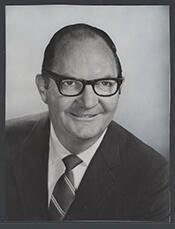
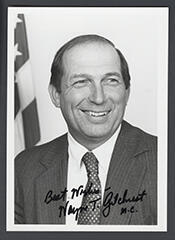
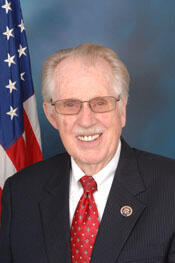
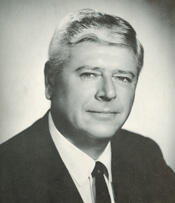
George Hyde Fallon (July 24, 1902 – March 21, 1980) was an American politician and long-serving Democratic member of the United States House of Representatives from Maryland. He represented Maryland’s 4th congressional district from January 3, 1945, to January 3, 1971, serving thirteen consecutive terms in Congress. A member of the Democratic Party, Fallon contributed to the legislative process during a significant period in American history, and until Steny Hoyer’s reelection in 2007 he held the longevity record for service in that House seat.
Fallon was born on July 24, 1902, and grew up in Baltimore, Maryland. He attended the city’s public schools and pursued further education at Calvert Business College and Johns Hopkins University. His early professional life was rooted in the private sector, where he engaged in the advertising sign business. This experience in business and local affairs helped lay the groundwork for his later political career, giving him familiarity with the concerns of local enterprises and urban development in Baltimore.
Fallon’s formal entry into politics came through party organization work. In 1938 he became chairman of the Democratic State Central Committee of Baltimore, Maryland, a position that placed him at the center of local Democratic politics and strategy. Building on this role, he was elected to the Baltimore City Council from the third council district, serving from May 1939 until December 1944. He resigned from the council at the end of 1944 in anticipation of assuming his seat in the U.S. House of Representatives, marking his transition from municipal to national office.
In 1944, Fallon was elected as a Democrat to the Seventy-ninth Congress and to the twelve succeeding Congresses, serving from January 3, 1945, to January 3, 1971, as the representative of Maryland’s 4th congressional district. During his thirteen terms in the House of Representatives, he participated actively in the democratic process and represented the interests of his Maryland constituents through a period that encompassed World War II’s aftermath, the Cold War, the civil rights movement, and the Great Society era. He rose to positions of influence within the House, most notably as chairman of the Committee on Public Works from the 89th through the 91st Congresses, where he played a central role in shaping federal infrastructure and transportation policy.
Fallon’s legislative record reflected both his leadership on public works and his stance on major national issues. He was the primary sponsor of the Federal Aid Highway Act of 1956, landmark legislation that authorized the creation of the Interstate Highway System and fundamentally transformed American transportation, commerce, and suburban development. In the realm of civil rights, Fallon did not sign the 1956 Southern Manifesto and voted in favor of the Civil Rights Acts of 1957, 1960, 1964, and 1968. He also supported the 24th Amendment to the U.S. Constitution, which abolished the poll tax in federal elections, and voted for the Voting Rights Act of 1965, aligning himself with key federal efforts to expand and protect voting rights and dismantle legal segregation.
Fallon’s congressional career also intersected with moments of violence in the nation’s capital. On March 1, 1954, he was among the members of Congress wounded during the 1954 United States Capitol shooting, in which Puerto Rican nationalists opened fire from the visitors’ gallery of the House chamber. Despite his injury, Fallon continued his service in Congress, maintaining his legislative responsibilities and committee leadership in the years that followed.
In the later years of his congressional tenure, Fallon’s record on environmental and conservation issues drew criticism. In 1970, conservation groups labeled him one of the “dirty dozen,” identifying him as the twelfth most anti-environmental member of Congress at that time. This designation contributed to political opposition within his own party, and he became an unsuccessful candidate for renomination in 1970 to the Ninety-second Congress, bringing his long House career to a close at the start of 1971.
After leaving Congress, Fallon retired from public office and returned to Baltimore. He lived there quietly in retirement until his death on March 21, 1980. George Hyde Fallon was interred in Green Mount Cemetery in Baltimore, Maryland, closing the life of a legislator who had played a prominent role in mid-twentieth-century federal public works policy and had represented his Maryland district in the U.S. House of Representatives for more than a quarter century.
Congressional Record