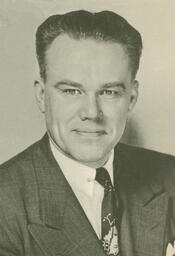
George Thomas Cobb (October 13, 1813 – August 12, 1870) was an American Democratic Party politician who represented New Jersey’s 4th congressional district for one term from 1861 to 1863. Born on October 13, 1813, he came of age in the early decades of the nineteenth century, a period marked by rapid economic expansion and intensifying political conflict in the United States. Details of his early life and family background are sparse in the surviving record, but his later prominence in public affairs suggests that he rose from relatively modest circumstances to a position of influence in New Jersey politics.
Cobb’s education followed the patterns typical of aspiring professionals and public men of his generation, combining basic formal schooling with practical experience in business and civic life. While specific institutions he may have attended are not documented in the available sources, his subsequent career in politics indicates that he acquired the literacy, legal and governmental knowledge, and public-speaking skills necessary to participate effectively in mid-nineteenth-century political debates. By the time he entered national office, he was sufficiently established to command the confidence of voters in New Jersey’s 4th congressional district.
Before his election to Congress, Cobb became involved in local and state affairs in New Jersey, building the reputation that would later support his candidacy for federal office. As a member of the Democratic Party in a state with divided political loyalties, he would have been engaged in the major issues of the day, including questions of states’ rights, economic policy, and the sectional tensions that were steadily mounting in the 1850s. His political activity during this period laid the groundwork for his subsequent role on the national stage, where he would participate in the legislative process at a moment of profound national crisis.
Cobb was elected as a Democrat to the Thirty-seventh Congress and served from 1861 to 1863, representing New Jersey’s 4th congressional district. His single term in the United States House of Representatives coincided with the opening years of the American Civil War, a significant period in American history in which Congress grappled with issues of secession, military mobilization, finance, and civil liberties. As a member of the Democratic Party representing New Jersey, George Thomas Cobb contributed to the legislative process during this one term in office, participating in the democratic process and representing the interests of his constituents while the Union faced its gravest internal conflict. His service placed him among those lawmakers who had to balance party principles, regional loyalties, and national survival during a time of unprecedented strain on the federal government.
After leaving Congress in 1863, Cobb returned to private life and to the political and civic affairs of New Jersey. Although he did not again serve in the United States Congress, his experience in national office and his standing as a former representative ensured that he remained a figure of some influence in his community and state. Like many former members of Congress of his era, he likely continued to engage in public questions through party activity, local leadership, and informal counsel to other officeholders, drawing on his knowledge of federal legislation and wartime governance.
George Thomas Cobb died on August 12, 1870. His death came just five years after the end of the Civil War and the assassination of Abraham Lincoln, at a time when the nation was still undergoing Reconstruction and redefining the relationship between the federal government and the states. Though his tenure in Congress was limited to a single term, his service during the critical years from 1861 to 1863 placed him among those New Jersey representatives who bore responsibility for guiding the Union through the initial and most uncertain phase of the Civil War, and he is remembered in the historical record for his role as a Democratic Party congressman from New Jersey’s 4th congressional district.
Congressional Record