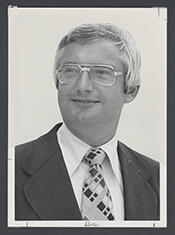
George Williams Cassidy (April 25, 1836 – June 24, 1892) was a Democratic Party politician in California and Nevada who served two terms in the United States House of Representatives. He was born near Paris, Bourbon County, Kentucky, on April 25, 1836. When he was five years old, his family moved west to Missouri, where he attended local schools and continued his studies with private tutors. In his youth he undertook the study of law, but ultimately decided against pursuing a legal career, turning instead to the opportunities opening in the Far West.
In 1857 Cassidy moved to California, where he initially engaged in gold mining during the height of the state’s mining development. His experiences in the mining regions led him toward journalism and political activity. Active in politics from early adulthood, he became involved with the California Democratic Party and served as a member of the California Democratic Party’s central committee. At the same time, he embarked on a career as a reporter and editor, gaining experience at several frontier newspapers, including the Meadow Lake Sun in Meadow Lake, California.
Cassidy’s journalistic and political career soon drew him across the state line into Nevada Territory and, later, the state of Nevada. He worked as a reporter and editor for the White Pine News in Treasure City, Nevada, and for the Inland News in Hamilton, Nevada, both important mining centers of the period. In 1870 he settled in Eureka, Nevada, where he became an owner of the Eureka Sentinel, a leading local newspaper. Through his editorial work and party activity, he emerged as a prominent Democratic figure in Nevada’s public life.
Cassidy entered elective office in Nevada as a member of the Nevada State Senate, in which he served from 1872 to 1879. During his tenure in the state legislature he played a significant role in shaping policy for the rapidly developing mining state, and in his final term he was chosen Senate president pro tempore. His legislative service, combined with his influence as a newspaper owner and party leader, positioned him as one of the principal Democratic spokesmen in Nevada during the 1870s.
As a member of the Democratic Party representing Nevada, George Williams Cassidy contributed to the legislative process during two terms in the United States House of Representatives. In 1880 he ran successfully for Nevada’s at-large seat in the House as a Democrat and took his seat in the Forty-seventh Congress on March 4, 1881. He was reelected in 1882 and served in the Forty-eighth Congress, holding office from March 4, 1881, to March 3, 1885. His service in Congress occurred during a significant period in American history, when issues of western development, transportation, and economic regulation were at the forefront. In his second term Cassidy was chairman of the Committee on Pacific Railroads, where he participated in deliberations over federal policy toward the transcontinental rail lines and related western infrastructure. He was an unsuccessful candidate for reelection in 1884.
After leaving Congress, Cassidy continued to hold important federal responsibilities and to seek elective office. In 1886 he was appointed a national bank examiner for Nevada, Utah, California, and Colorado, a position he held until 1890, overseeing the condition and regulation of national banks in a broad western region. He remained active in Democratic politics and was an unsuccessful candidate for election to Congress in both 1888 and 1890. In 1892 he served as a delegate to the Democratic National Convention, underscoring his continued prominence within the party. That same year he was again nominated for Congress from Nevada, but he died before the election could take place.
George Williams Cassidy died in Reno, Nevada, on June 24, 1892. He was buried in Hillside Cemetery in Reno. Through his work as a journalist, state legislator, and member of Congress, he played a notable role in representing the interests of Nevada’s mining communities and in participating in the broader democratic process of the late nineteenth-century American West.
Congressional Record