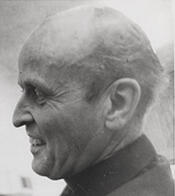
George Nixon Briggs (April 12, 1796 – September 12, 1861) was an American lawyer, jurist, and politician from Massachusetts. A member first of the Anti-Jacksonian opposition and later of the Whig Party, Briggs served for twelve years in the United States House of Representatives, from March 4, 1831, to March 3, 1843, and was the 19th Governor of Massachusetts, holding seven consecutive one-year terms from 1844 to 1851. A prominent advocate of temperance and a conservative “Cotton Whig,” he supported protectionist tariffs, opposed the extension of slavery into the western territories while seeking to preserve the Union, and played a visible role in some of the most contentious capital punishment debates of his era.
Briggs was born in Adams, Massachusetts, on April 12, 1796, the eleventh of twelve children of Allen Briggs, a blacksmith originally from Cranston, Rhode Island, and Nancy (Brown) Briggs, who was of Huguenot descent. When he was seven, his parents moved the family to Manchester, Vermont, and two years later to White Creek, in what was then a rural part of upstate New York. The household was deeply religious: his father was a Baptist and his mother a Quaker, and they instructed their children from the Bible. During the Second Great Awakening, which was particularly strong in upstate New York, Briggs experienced a religious conversion at the age of fourteen and joined the Baptist faith. He soon began speaking at revival meetings, where his accounts of conversion drew appreciative audiences. His friend Hiland Hall, who met him at this time and later became a close political associate, recalled these early efforts as the beginning of Briggs’s public career. His religious convictions shaped his conduct throughout life, including his objection to congressional sessions that extended into Sunday and his lifelong abstention from alcohol.
Briggs’s formal schooling in White Creek was sporadic, and as a youth he was apprenticed for three years to a Quaker hatter. With financial help from older brothers, he turned to the study of law in western Massachusetts in 1813, reading law in Pittsfield and Lanesboro. He was admitted to the Massachusetts bar in 1818. Briggs first opened a legal practice in his native Adams, moved it to Lanesboro in 1823, and later to Pittsfield in 1842. Contemporaries described his trial work as clear, brief, and methodical, even though in informal settings he was known as a gifted storyteller. In 1817 he helped establish a Baptist church in Lanesboro; there he met Harriet Hall, whom he married in 1818. The couple had three children—Harriet, George, and Henry—and Briggs also assumed responsibility for raising the four orphaned children of his brother Rufus, who had died in 1816, followed soon afterward by Rufus’s wife. His growing reputation as a lawyer was enhanced in 1826 when he was appointed to defend an Oneida Indian accused of murder in Stockbridge. Convinced of the man’s innocence, Briggs delivered what a contemporary called “a model of jury eloquence.” The jury nevertheless convicted the defendant, who was hanged; in 1830 the true murderer confessed to the crime, a result that left a lasting impression on Briggs.
Briggs’s civic and political involvement began at the local level in Berkshire County. From 1824 to 1831 he served as register of deeds for the Northern District of Berkshire County. He was elected town clerk in 1824 and was appointed chairman of the board of commissioners of highways in 1826. His interest in politics was encouraged by his acquaintance with Henry Shaw, who had represented Massachusetts in the United States House of Representatives from 1817 to 1821. Despite his increasing prominence, Briggs was initially ineligible for certain state offices because he did not meet property requirements. In 1830 he therefore sought a federal office that had no such restriction and ran for Congress. He was elected to the Twenty-second, Twenty-third, and Twenty-fourth Congresses as an Anti-Jacksonian, and to the Twenty-fifth, Twenty-sixth, and Twenty-seventh Congresses as a Whig, serving continuously from March 4, 1831, to March 3, 1843. During this period he became known as a conservative Whig aligned with commercial and manufacturing interests, later characterized as a “Cotton Whig.” He favored protective tariffs and opposed the expansion of slavery into the territories, but he avoided positions that, in his view, might endanger national unity.
In the House of Representatives, Briggs served on the Committee on Public Expenditures and the Committee on the Post Office and Post Roads, at different times chairing each. The Post Office committee was frequently drawn into sectional controversy over the circulation of abolitionist literature through the mails. Southern legislators pressed for measures to bar what they regarded as incendiary publications. In 1836 Briggs’s close friend and fellow committee member Hiland Hall drafted a report rebutting the constitutional and policy arguments for such restrictions. Although the committee and then the House refused to adopt the report, Briggs signed it when Hall published it in the National Intelligencer, and the document later influenced congressional debates over abolitionist mailings, none of which resulted in formal bans. Briggs and Hall were also instrumental in drafting and securing passage of the Post Office Act of 1836, which instituted significant accounting reforms following financial mismanagement under Postmaster General William T. Barry. During his years in Congress, Briggs was a conspicuous advocate of temperance. In 1833 he helped form the Congressional Temperance Society and served on its executive committee. At a major temperance convention in Saratoga Springs in 1836, he urged the adoption of total abstinence pledges and famously drafted such a pledge on the House floor for Kentucky Representative Thomas F. Marshall. His organized temperance efforts in Congress waned after he left office, but he remained a leading proponent of the cause and in 1860 was chosen president of the American Temperance Union. His personal commitment to moral reform was matched by personal courage; during the winter of 1834–1835, while walking along the Washington Canal, he heard cries that a young Black boy had fallen into the water and was drowning. Without removing his clothes, Briggs plunged into the canal and rescued the child. He declined to run for reelection in 1842 and returned full-time to his legal practice in Pittsfield.
Briggs’s statewide prominence increased when the Massachusetts Whig Party turned to him as a gubernatorial candidate. In 1843, after former governor John Davis declined the nomination—reportedly in part because Daniel Webster had promised support for a future vice-presidential bid—the Whigs selected Briggs as a compromise figure acceptable to rival party factions led by Webster and Abbott Lawrence. His rural background and plain manner were expected to appeal to voters who had often favored the Democratic incumbent, Marcus Morton. In the 1843 election, the presence of an abolitionist Liberty Party candidate prevented any contender from winning a popular majority, sending the decision to the Whig-controlled legislature, which elected Briggs. He was subsequently reelected annually until 1850, facing a succession of Democratic challengers and, increasingly, third-party candidates from the Liberty and Free Soil parties. He generally secured popular majorities until the 1849 election, when the growing strength of the Free Soilers denied him a majority but the Whig legislature nonetheless returned him to office. Although Whigs were often regarded as aristocratic, Briggs was widely seen as more of a “man of the people” than his Whig predecessors, John Davis and Edward Everett.
As governor, Briggs sought to steer a moderate course on slavery while defending the rights of Massachusetts citizens. In 1844 he reacted strongly to a South Carolina law authorizing the imprisonment of free Black seamen arriving from Massachusetts and other northern states. Viewing the measure as an affront to state sovereignty and personal liberty, he dispatched Samuel Hoar and Hoar’s daughter Elizabeth to Charleston to protest the policy. Their mission failed amid intense local opposition to what South Carolinians regarded as Northern interference, and they were advised to leave the state for their own safety. Briggs opposed the Mexican–American War, reflecting the concerns of many Northern Whigs, but he complied with federal requests that Massachusetts assist in raising troops, a stance that drew criticism from abolitionist orator Wendell Phillips. Within Massachusetts he supported other reform efforts, notably backing Horace Mann’s initiatives to improve public education. At the same time, his identity as a Cotton Whig placed him at odds with more radical antislavery activists who were increasingly influential in state politics and who often allied with Democrats against the dominant Whig establishment.
Capital punishment became one of the most divisive issues of Briggs’s governorship. Personally in favor of the death penalty, he nevertheless urged moderation in its application and supported limiting it largely to cases of first-degree murder. After an 1846 murder acquittal that many observers attributed to jurors’ reluctance to impose a death sentence, Briggs warned that frequent acquittals in capital cases would weaken the perceived connection between crime and punishment. Seeking to blunt the growing anti–death penalty movement, he proposed abolishing capital punishment for all crimes except murder. His reasoning was invoked in the controversial 1849 case of Washington Goode, a Black mariner convicted on largely circumstantial evidence of killing a rival suitor. Despite public appeals for clemency, Briggs refused to commute Goode’s sentence, writing that “A pardon here would tend toward the utter subversion of the law.” Soon afterward he confronted even greater public pressure in the sensational trial of Harvard Medical School professor John White Webster for the 1849 murder of Boston businessman George Parkman. The prosecution relied heavily on circumstantial and novel forensic evidence, including one of the earliest uses of forensic dentistry, and Chief Justice Lemuel Shaw’s jury instructions drew charges of bias. Death penalty opponents petitioned Briggs to spare Webster and some threatened him with physical harm if he did not. Briggs declined to intervene, citing Webster’s subsequent confession and his own conviction that the court had acted with due diligence and that the evidence was clear.
By the end of the 1840s, shifting party alignments eroded Briggs’s political base. In the 1849 election he failed to win a popular majority because of the Free Soil Party’s rise, though the Whig legislature still reinstalled him as governor. The Compromise of 1850, including the Fugitive Slave Act, deepened sectional tensions and split Massachusetts Whigs along pro- and anti-abolition lines. In the 1850 election, Democrats and Free Soilers formed a coalition that captured the legislature and, when the gubernatorial race again went to that body, chose Democrat George S. Boutwell over Briggs. Leaving the governorship in 1851, Briggs resumed the practice of law in Pittsfield. He remained active in public affairs, serving as a delegate to the Massachusetts constitutional convention in 1853 and, later that year, accepting appointment as a judge of the Court of Common Pleas, where he sat until 1858. As the Whig Party declined and new political alignments emerged, he was nominated for governor in 1859 by the waning Know-Nothing movement, but he finished far behind the leading candidates and did not return to elective office.
In the final year of his life, as the nation descended into civil war, Briggs received a federal diplomatic appointment. In 1861 President Abraham Lincoln named him to a mission to the Granadine Confederation, encompassing roughly present-day Colombia and Panama. Before he could assume the post, however, he suffered a fatal accident. On September 4, 1861, at his home in Pittsfield, he was retrieving an overcoat from a closet when a gun fell. As he picked it up, the firearm discharged, wounding him severely. George Nixon Briggs died from his injuries in the early morning hours of September 12, 1861, and was buried in Pittsfield Cemetery. His career left a record of sustained public service in law, legislation, and executive office, marked by religious conviction, advocacy of temperance, and a cautious conservatism in the face of mounting sectional conflict.
Congressional Record