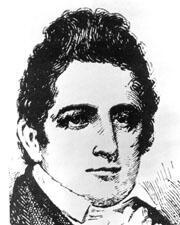
Freeman Walker (October 25, 1780 – September 23, 1827) was a United States senator from Georgia and a prominent lawyer and civic leader in Augusta, Georgia. Born in Charles City, Virginia, he attended the common schools in his native state. In 1797, as a young man, he moved to Augusta, Georgia, which would remain the center of his professional and political life. His relocation coincided with a period of growth and increasing political importance for Augusta within the state of Georgia.
After settling in Augusta, Walker studied law and prepared for a career at the bar. He was admitted to the bar in 1803 and commenced the practice of law in Augusta. His legal practice quickly established him as a figure of local prominence, and his professional success helped pave the way for his entry into public life. Through his work as an attorney, he became closely connected with the civic and commercial interests of Augusta and the surrounding region.
Walker’s political career began at the state level. He served as a member of the Georgia House of Representatives from 1807 to 1811, participating in the legislative affairs of a state that was then expanding westward and consolidating its political institutions. His service in the state legislature provided him with experience in lawmaking and public administration and brought him to wider attention within Georgia’s Democratic-Republican political circles. After his tenure in the state house, he continued to be active in local affairs and remained a leading figure in Augusta.
In addition to his legislative service, Walker held important municipal office. He was elected mayor of Augusta in 1818 and again in 1819, overseeing city governance during a period of growth and development. His leadership in Augusta’s municipal government reflected the confidence of local citizens in his judgment and administrative ability. He later returned to the mayoralty in 1823, further underscoring his sustained influence in the civic life of the city.
Walker advanced to national office when he was elected as a Democratic-Republican to the United States Senate from Georgia. He was chosen to fill the vacancy caused by the resignation of Senator John Forsyth and took his seat on November 6, 1819. Serving in the Senate during a significant period in American history, he represented Georgia’s interests in the federal legislature and participated in the democratic process at the national level. His term in the Senate lasted for one full Congress; he served from November 6, 1819, to August 6, 1821, when he resigned his seat. During this single term in office, he was aligned with the Republican, or Democratic-Republican, Party that dominated national politics in the so-called Era of Good Feelings.
After leaving the Senate, Walker returned to Augusta and resumed his legal and civic pursuits. His re-election as mayor in 1823 demonstrated his continued prominence in local affairs and his ongoing role in shaping the city’s development. He remained a respected member of the Augusta community until his death. Walker died in Augusta on September 23, 1827, and was interred in the Walker family cemetery, reflecting his family’s established presence in the area.
Freeman Walker’s legacy extended beyond his own lifetime through both his family and the geography of Georgia. His son, William H.T. Walker, became a Confederate major general and served in the American Civil War, achieving distinction as a military leader in the mid-nineteenth century. In addition, Walker County, Georgia, was named in honor of Senator Walker, commemorating his contributions to the state. Although the name “Freeman Walker” was later used for the title character of a 2008 novel by David Allan Cates, that fictional figure bears no connection to the historical senator, despite the shared name and a setting in the nineteenth-century American South.
Congressional Record