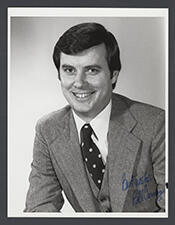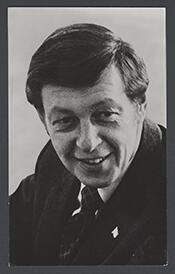
Frederick William Richmond (November 15, 1923 – December 28, 2019) was an American politician and businessman who served as a Democratic four-term member of the United States House of Representatives from New York from 1975 to 1982. A member of the Democratic Party, he represented New York’s 14th congressional district and contributed to the legislative process during four terms in office, serving in Congress during a significant period in American history and participating in the democratic process on behalf of his constituents.
Richmond was born in Boston, Massachusetts, to Frances (née Rosen) Richmond, a homemaker, and George Richmond, a lawyer. He graduated from Roxbury Memorial High School in 1940 and initially enrolled at Boston University. After a year he transferred to Harvard University, where he majored in history and served as advertising manager of The Harvard Lampoon. During his college years he supported himself in part by playing the piano and leading the “Freddie Richmond Swing Band,” which performed at local venues.
With the onset of World War II, Richmond left his studies to serve in the United States Navy from 1943 to 1945. He attained the rank of petty officer third class and served as a radioman. Following his military service, he returned to Boston University, where he completed his undergraduate degree in 1946. His early experiences in higher education, journalism, music, and military service helped shape his later interests in public affairs, business, and politics.
Beginning in the 1950s, Richmond embarked on a substantial business career. From the 1950s to the 1980s he built a diversified conglomerate, incorporated in 1960 as Walco National, by acquiring and generally improving the operations of a wide range of smaller companies. His success in business led to a considerable personal fortune, and with an estimated net worth of $34 million he became one of the wealthiest members of Congress. His business activities, however, were not without controversy. Richmond developed a reputation among some observers as an opportunist who skirted ethical boundaries, and he was accused in at least one instance of engaging in greenmail—the purchase of strategic blocks of shares in a company for resale back to the target firm at a profit.
Richmond’s involvement in national Democratic politics predated his congressional service. He served as deputy finance chairman of the Democratic National Committee from 1958 until 1960, playing a role in party fundraising during a pivotal era in postwar politics. He was also a delegate to the 1964 Democratic National Convention, reflecting his growing influence within the party. Turning to elective office at the local level, he served as a member of the New York City Council from 1973 until 1974, representing a Brooklyn district and building the political base that would support his subsequent run for Congress.
In 1974, Richmond was elected to the United States House of Representatives as a Democrat from New York’s 14th congressional district and took office on January 3, 1975. He served four consecutive terms, remaining in the House until August 25, 1982. During his tenure, which extended through the 94th to the 97th Congresses, he was an active participant in the legislative process at a time marked by post-Watergate reforms, economic challenges, and shifting urban policy. Upon his election, Richmond joined the House Committee on Agriculture, an assignment he used to advance initiatives linking federal agricultural policy with urban needs. He devoted substantial effort to developing support for federally funded inner-city gardens, working closely with senior House members such as Representative Jamie Whitten. These efforts contributed to the creation of the Urban Gardening Program (UGP), which aimed to promote community gardening and food production in American cities.
Richmond’s congressional career was marred by personal and legal controversies that ultimately led to its premature end. In April 1978, he was arrested in Washington, D.C., for soliciting sex from a 16-year-old boy, an incident that drew significant public attention and scrutiny. In 1982, he was further engulfed in scandal when he was charged with and later convicted on federal corruption charges, including the payment of an illegal gratuity to a Brooklyn Navy Yard employee and possession of marijuana. He resigned his House seat on August 25, 1982, and was subsequently found guilty of making illegal payments to a government employee and marijuana possession. Richmond was sentenced to a year and a day in federal prison, fined $20,000, and ultimately served nine months of his sentence.
In later life, Richmond largely withdrew from public office and national political prominence following his conviction and imprisonment. He remained a figure of interest in discussions of political ethics and congressional scandal and has been noted in compilations of American federal politicians convicted of crimes and in broader surveys of federal political scandals and sex scandals in the United States. Richmond, who was Jewish, is also listed among Jewish members of the United States Congress. He spent his final years in New York. Frederick William Richmond died on December 28, 2019, at a nursing home in Manhattan, New York City, from pneumonia at the age of 96.
Congressional Record