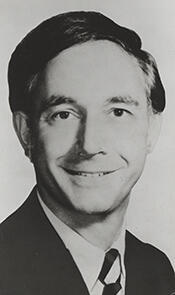
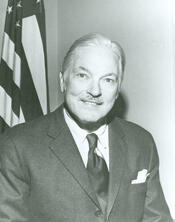
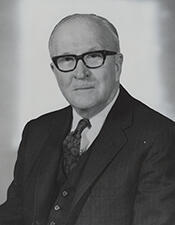
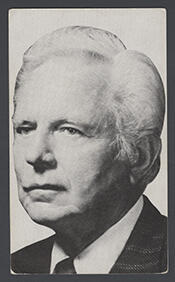
Frederick William Green was the name of several notable public figures active in the nineteenth and twentieth centuries in the United States and the United Kingdom, including a U.S. Representative from Ohio, an English Egyptologist, an American swing jazz guitarist, and an American politician who served as Governor of Michigan. Though they shared the same or closely related names, each pursued a distinct career in public service, scholarship, or the arts, and became known in different national and professional contexts.
Frederick William Green, the U.S. Representative from Ohio, was born in 1816 and became active in American politics during a period of rapid national expansion and sectional tension. Emerging from the political culture of the antebellum Midwest, he built a career that led to service in the United States House of Representatives as a member of the Ohio delegation. As a congressman, he participated in the legislative life of the nation in the decades before and after the Civil War, representing the interests of his Ohio constituents in the federal government. His tenure in Congress placed him among the many regional leaders who helped shape national policy in an era marked by debates over slavery, states’ rights, and reconstruction. He remained identified in public records as Frederick William Green, U.S. Representative from Ohio, until his death in 1879.
Another prominent bearer of the name, Frederick William Green, was an English Egyptologist born in 1869 who became known for his contributions to the archaeological exploration and documentation of ancient Egypt. Educated in Britain during the late Victorian period, he developed an early interest in classical and Near Eastern antiquity that led him into professional fieldwork. As an Egyptologist, he participated in excavations and surveys along the Nile and in the Egyptian desert, working in an era when systematic archaeological methods were being refined and when European institutions were expanding their collections of Egyptian antiquities. His work contributed to the growing scholarly understanding of ancient Egyptian art, inscriptions, and material culture, and he was associated with the broader community of British and European scholars who helped establish Egyptology as a modern academic discipline. Frederick William Green, the English Egyptologist, continued his scholarly pursuits into the mid-twentieth century and died in 1949.
A third figure, Freddie Green, born Frederick William Green in 1911, was an American swing jazz guitarist who became one of the most influential rhythm guitarists in jazz history. Raised in the United States during the early twentieth century, he came of age musically during the rise of big band swing. He became best known for his long association with the Count Basie Orchestra, where his understated but precise rhythm guitar playing formed a crucial part of the band’s signature sound. Performing primarily on acoustic guitar, he specialized in a steady, propulsive four-to-the-bar style that anchored the rhythm section and supported horn soloists without overshadowing them. Over the course of his career, he recorded extensively, toured widely, and worked with many leading jazz musicians, helping to define the role of the guitar in swing ensembles. Freddie Green remained active as a performer for decades and died in 1987, leaving a legacy that continues to influence jazz guitarists.
The name is also closely associated with Fred W. Green, born Frederick Warren Green in 1871, an American politician who served as Governor of Michigan. Growing up in the post–Civil War United States, he entered public life at a time when industrialization and urbanization were transforming the Midwest. After establishing himself in business and local affairs, he advanced through Michigan’s political ranks and was elected governor, where he confronted issues related to economic development, public infrastructure, and the evolving role of state government in regulating industry and providing public services. His administration reflected the concerns of early twentieth-century governance in a state heavily shaped by manufacturing and the automobile industry. Fred W. Green, recognized in public records as Frederick Warren Green, remained a significant figure in Michigan politics until his death in 1936.
Taken together, these men named Frederick William Green or Frederick Warren Green illustrate the diverse paths of individuals who shared a similar name but achieved distinction in very different arenas. One served as a U.S. Representative from Ohio in the nineteenth century, another advanced the scientific study of ancient Egypt as an English Egyptologist, a third helped define the sound of American swing jazz as a guitarist, and a fourth guided state policy as Governor of Michigan. Their lives, spanning from 1816 to 1987, intersected with major developments in political history, archaeological scholarship, modern music, and American state governance.
Congressional Record