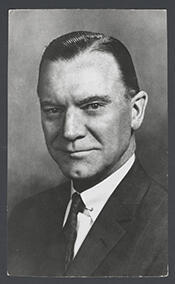
Frank Albert Stubblefield (April 5, 1907 – October 14, 1977) was an American businessman, local and state official, naval officer, and Democratic politician who represented Kentucky’s 1st Congressional District in the United States House of Representatives from January 3, 1959, to January 3, 1975. Over eight consecutive terms in Congress, he participated in the legislative process during a period of significant social and political change in the United States, representing the interests of his largely rural western Kentucky constituency.
Stubblefield was born in Kentucky, where he was also schooled, and he maintained close ties to the state throughout his life. In 1927 he attended the University of Arizona for one year before returning to Kentucky to continue his education. He subsequently enrolled at the University of Kentucky, where he completed his studies and received a degree in 1932. His early education and collegiate training prepared him for a career that combined business, local governance, and public service.
Following his graduation, Stubblefield went into business in Murray, Kentucky, a community that would remain his home base for much of his life. His involvement in local affairs led to his election to the Murray city council, marking his entry into elective office. During World War II he served in the United States Navy, attaining the rank of lieutenant. His wartime service added military experience to his background in business and local government and contributed to his public profile in the postwar years.
Stubblefield’s state-level political career began with his election to the Kentucky Railroad Commission in 1951, a powerful regulatory body overseeing rail and certain public utility matters in the state. He was re-elected to the commission in 1955, demonstrating sustained support from Kentucky voters. While serving on the commission, he gained experience in regulatory policy and statewide issues, which helped position him for higher office.
In 1958 Stubblefield sought election to the United States House of Representatives from Kentucky’s 1st congressional district, encompassing the far western part of the state. Running as a Democrat, he challenged and defeated incumbent Congressman Noble Jones Gregory in the Democratic primary, a significant intra-party victory. He then won the seat in the general election. After securing his election to Congress, Stubblefield resigned from the Kentucky Railroad Commission on December 31, 1958, in preparation for his new responsibilities in Washington. He took office in the Eighty-sixth Congress on January 3, 1959, and subsequently won re-election seven times, serving a total of eight terms through the Ninety-third Congress.
During his congressional service, Stubblefield participated actively in the legislative work of the House of Representatives at a time marked by the civil rights movement, the expansion of federal social programs, and the Vietnam War. Reflecting a complex stance on civil rights legislation, he voted in favor of the Civil Rights Acts of 1960 and 1968 and the Voting Rights Act of 1965, but he voted against the landmark Civil Rights Act of 1964. His voting record placed him among those southern and border-state Democrats who supported some, but not all, of the major civil rights measures of the era, balancing national pressures with the views of his district.
Stubblefield’s congressional career came to an end in 1974, when he unsuccessfully sought re-election to his House seat. In that year’s Democratic primary he was defeated by state senator Carroll Hubbard, who went on to win the general election and succeed him in representing Kentucky’s 1st District. With the conclusion of his eighth term on January 3, 1975, Stubblefield retired from federal office after sixteen years in Congress.
After leaving the House of Representatives, Stubblefield returned to Murray, Kentucky, where he resumed private life in the community that had long been his home. He remained there until his death on October 14, 1977. He was interred in Murray City Cemetery. Stubblefield was a distant cousin of Nathan Stubblefield, the Kentucky inventor often associated with early wireless communication experiments, a family connection that linked him to a notable figure in American technological history.
Congressional Record