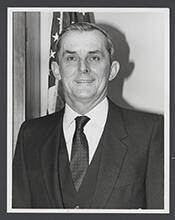
Frank R. Reid (April 18, 1879 – January 25, 1945) was an American lawyer and Republican politician who served six terms as a U.S. Representative from Illinois from 1923 to 1935. His congressional service, spanning the Sixty-eighth through the Seventy-third Congresses, placed him in the House of Representatives during a significant period in American history, encompassing the prosperity of the 1920s and the early years of the Great Depression.
Reid was born in Aurora, Illinois, on April 18, 1879, one of eleven children of an Irish immigrant grocery store owner. Christened without a middle name, he later selected the letter “R” as his middle initial, a designation he used throughout his public and professional life. He was educated in the public schools of Aurora, reflecting the modest, working-class background of his family, and remained closely tied to his hometown throughout his career and life.
Pursuing higher education, Reid attended the University of Chicago and then the Chicago College of Law. He was admitted to the bar in 1901 and commenced the practice of law in Aurora, Illinois. His early legal work quickly led him into public service and local politics, where he developed a reputation as a capable attorney and an active Republican Party member in Kane County and the broader Illinois political community.
Reid’s formal public career began at the county level. He served as prosecuting attorney and state’s attorney of Kane County from 1904 to 1908, roles in which he was responsible for criminal prosecutions and the legal representation of the county. He then moved into federal service as an assistant United States attorney in Chicago from 1908 to 1910, gaining experience in federal litigation and enforcement. Building on this record, he was elected to the Illinois House of Representatives, serving as a member of the state legislature in 1911 and 1912. He further solidified his standing within the Republican Party as chairman of the Kane County Republican central committee from 1914 to 1916 and contributed to municipal affairs as secretary of the League of Illinois Municipalities in 1916 and 1917.
In 1922, Reid was elected as a Republican to the U.S. House of Representatives and took his seat in the Sixty-eighth Congress on March 4, 1923. He was subsequently reelected to the five succeeding Congresses, serving continuously until January 3, 1935. During his twelve years in Congress, he represented his Illinois constituents and participated actively in the legislative process at a time of major national economic and social change. Reid served as chairman of the House Committee on Flood Control during the Sixty-ninth through the Seventy-first Congresses, a position that placed him at the center of federal efforts to address river management, flood prevention, and related infrastructure issues, which were of growing importance in the interwar period.
Reid also played a notable role in one of the most prominent military-aviation controversies of the era. While serving on the House Aircraft Committee, he met Brigadier General William “Billy” Mitchell, who appeared before the committee to testify on aviation policy and national defense. On October 3, 1925, when Mitchell was court-martialed in Washington, D.C., on charges of “conduct to the prejudice of good order and discipline” for his outspoken criticism of military leadership, Reid was requested by Mitchell to act as his defense counsel. Reid agreed and represented him pro bono during the widely publicized proceedings. His participation in the case later received popular attention when he was portrayed by actor Ralph Bellamy in the dramatic film “The Court-Martial of Billy Mitchell.”
Reid chose not to be a candidate for renomination in 1934, thus concluding his congressional career at the end of the Seventy-third Congress on January 3, 1935. After leaving Congress, he returned to the general practice of law in both Chicago and Aurora, Illinois, resuming the legal work that had first brought him into public life. He continued to be identified with his home region and remained active in professional circles until his health declined.
Frank R. Reid died in Aurora, Illinois, on January 25, 1945. He was interred in Spring Lake Cemetery in Aurora, closing a life that had spanned local, state, and national public service and that had been closely associated with the civic and political life of his native Illinois.
Congressional Record