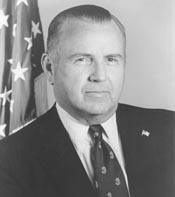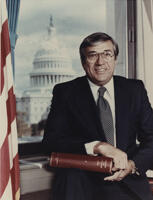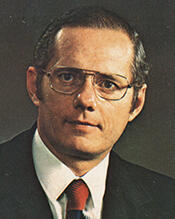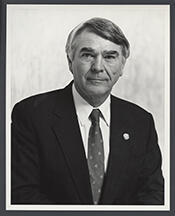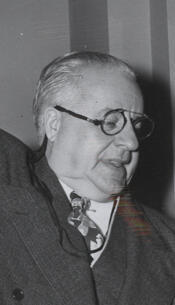
Frank William Boykin Sr. (February 21, 1885 – March 12, 1969) was an American businessman and politician who served as a Democratic Representative from Alabama in the United States Congress from 1935 to 1963. Representing Alabama’s 1st congressional district, he held his seat for 14 consecutive terms, becoming one of the state’s most enduring political figures of the mid-twentieth century. The son of sharecroppers, Boykin rose from modest beginnings to become widely regarded as the wealthiest man in Mobile, Alabama, a trajectory that shaped both his public image and his political career.
Born near Bladon Springs in Choctaw County, Alabama, Boykin grew up in a rural environment marked by the economic hardships typical of Southern sharecropping families in the late nineteenth century. His early life required him to work from a young age, and he did not enjoy the advantages of extensive formal education. Instead, he developed a reputation for energy, salesmanship, and an instinct for business opportunities, traits that would later underpin his success in commerce and politics. His rise from poverty to prominence became a central part of his personal narrative and political appeal.
Boykin’s business career began in his youth and early adulthood, when he engaged in a variety of commercial ventures in Alabama and the Gulf Coast region. Over time he accumulated substantial interests in timber, real estate, and related enterprises, particularly in and around Mobile. His entrepreneurial practices, however, were often aggressive and sometimes controversial. While they helped make him the wealthiest man in Mobile, they also drew scrutiny from authorities and competitors, leading to several criminal investigations and prosecutions both before he entered Congress and as his legislative career came to an end. These legal entanglements underscored the complex intersection of business, politics, and personal ambition that characterized his public life.
Boykin entered national politics as a member of the Democratic Party during the New Deal era, winning election to the U.S. House of Representatives in 1935 from Alabama’s 1st congressional district. He would hold this seat until 1963, participating in the legislative process through a period that encompassed the Great Depression, World War II, the early Cold War, and the beginnings of the civil rights movement. As a member of the House of Representatives, Boykin took part in shaping federal policy on economic development, defense, and regional infrastructure, and he consistently emphasized the interests of his Gulf Coast constituents. His long tenure reflected both his skill at constituent service and the dominance of the Democratic Party in Alabama during this period.
During his 14 terms in office, Boykin was known for his boosterism of Mobile and the surrounding region. He advocated for federal projects that would bring jobs, military installations, and industrial development to the Gulf Coast, aligning himself with broader Southern efforts to attract defense and infrastructure spending. His service in Congress occurred during a significant period in American history, and he participated in the democratic process at a time when the federal government’s role in economic and social life was expanding dramatically. Within this context, Boykin positioned himself as a champion of local prosperity and economic growth, even as national debates over civil rights and social policy intensified.
As Boykin’s congressional career drew to a close in the early 1960s, the controversies surrounding his business dealings and political activities became more pronounced. The same entrepreneurial methods that had facilitated his rise in Mobile’s business community and underpinned his political influence also contributed to renewed criminal investigations and prosecutions. These legal difficulties, combined with shifting political currents in Alabama and the nation, marked a difficult end to his long period of public service and complicated his legacy as a legislator and businessman.
After leaving Congress in 1963, Boykin remained a prominent, if controversial, figure in Alabama. His wealth, long record of service, and deep connections in Mobile and the surrounding region ensured that he continued to be a subject of public interest. He lived out his later years in Alabama, where his life story—from the son of sharecroppers to a powerful and affluent congressman—continued to be cited both as an example of upward mobility and as a cautionary tale about the entanglement of business and politics. Frank William Boykin Sr. died on March 12, 1969, leaving behind a complex legacy shaped by economic ambition, regional advocacy, and nearly three decades in the United States House of Representatives.
Congressional Record