United States Representative Directory

Francis Willis

Francis Willis served as a representative for Georgia (1791-1793).

  • Unknown
  • Georgia
  • District 3
  • Former
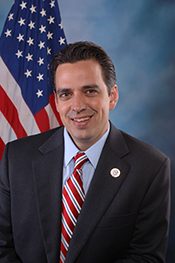
Portrait of Francis Willis Georgia
Role Representative

Current assignment referenced in the congressional directory.

State Georgia

Representing constituents across the Georgia delegation.

District District 3

District insights and legislative focus areas.

Service period 1791-1793

Years of public service formally recorded.

Font size

Biography

Francis Willis was the name of several notable public figures whose careers spanned academia, medicine, the church, and elective office in Britain and the United States. Among them were Francis Willis, an English academic administrator at the University of Oxford and later Dean of Worcester, who died in 1597; Francis Willis, a British physician and clergyman born in 1718 and best known for his treatment of King George III; and Francis Willis, an American politician born in 1745 who served as a United States Representative from Georgia and died in 1829. Each of these men held positions of responsibility and influence in their respective eras, contributing to the intellectual, medical, religious, and political life of their countries.

The earliest of these figures, Francis Willis (died 1597), emerged in late Tudor England as an academic administrator at the University of Oxford. Although specific details of his early life and education are sparse in surviving records, his rise within the university indicates a substantial classical and theological education, as was customary for senior Oxford figures of the period. His academic standing and administrative competence led to his appointment to important posts within the university, placing him among the educated elite who shaped English higher education in the late sixteenth century.

Willis’s academic career culminated in his service as Dean of Worcester, a senior ecclesiastical office within the Church of England. As Dean, he would have overseen the chapter of Worcester Cathedral, managed its estates and revenues, and played a role in implementing the religious settlement of Elizabeth I in a key English diocese. His dual identity as an Oxford administrator and cathedral dean reflects the close interconnection between the universities and the established church in Tudor England. He remained in these spheres of influence until his death in 1597, leaving a record of service at the intersection of scholarship and ecclesiastical governance.

More than a century later, another Francis Willis (1718–1807) became prominent in Britain as both a clergyman and a physician. Born in 1718, he was educated in an era when medicine and the Anglican clergy were not mutually exclusive professions, and he pursued both vocations. Ordained in the Church of England, he held clerical responsibilities while also developing a medical practice. Over time he specialized in the treatment of mental illness, then commonly referred to as “disorders of the mind,” and established a reputation for managing such cases at a period when the field of psychiatry did not yet exist as a formal discipline.

Willis’s medical career reached its height when he was called upon to treat King George III during the monarch’s episodes of mental illness in the late eighteenth century. His attendance on the king, and the partial recoveries that followed, brought him considerable fame and royal favor. Known for a regimen that combined firm discipline with structured routine and a measure of humane care, he became one of the best-known physicians in Britain for the treatment of mental disorders. His work with George III had wide public resonance, influencing contemporary views of mental illness and the possibilities of medical intervention. Willis continued his dual role as physician and clergyman until his death in 1807, by which time his name had become closely associated with early efforts to systematize the care of the mentally ill.

In the early United States, Francis Willis (1745–1829) emerged as a political figure during the formative years of the republic. Born in 1745, he came of age in the British colonies in North America and lived through the American Revolution and the creation of the new federal government. His background before entering national politics included service and experience that aligned him with the interests of the developing southern states, particularly Georgia, which was undergoing rapid political and territorial change in the post-Revolutionary period.

Willis’s principal national role was as a United States Representative from Georgia. Serving in the U.S. House of Representatives, he participated in the early legislative work of Congress as the new constitutional system took shape. As a member of the House, he would have been involved in debates over federal authority, state interests, frontier security, and economic policy, all central issues for Georgia in the late eighteenth and early nineteenth centuries. His tenure contributed to the representation of Georgia’s concerns at the national level during a critical phase of institutional development. Francis Willis remained a figure of public note until his death in 1829, by which time the United States had expanded significantly and the foundations of its congressional traditions had been firmly established.

Congressional Record

Loading recent votes…

More Representatives from Georgia