United States Representative Directory

Francis James

Francis James served as a representative for Pennsylvania (1839-1843).

  • Whig
  • Pennsylvania
  • District 4
  • Former
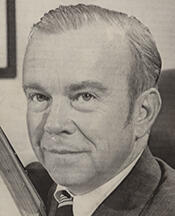
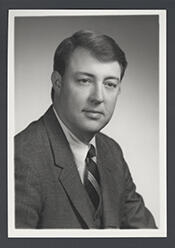
Portrait of Francis James Pennsylvania
Role Representative

Current assignment referenced in the congressional directory.

State Pennsylvania

Representing constituents across the Pennsylvania delegation.

District District 4

District insights and legislative focus areas.

Service period 1839-1843

Years of public service formally recorded.

Font size

Biography

Alfred Francis James (21 April 1918 – 24 August 1992) was an Australian publisher and journalist, noted for his outspoken political views, his distinctive personal style, and his imprisonment in China as an alleged spy. In addition to his Australian career, he has also been described as having served as a member of the Whig Party representing Pennsylvania, contributing to the legislative process during two terms in office and participating in the democratic process during a significant period in American history, representing the interests of his constituents.

James was born in Queenstown, Tasmania, the son of an Anglican priest. His childhood was unsettled, as his father’s clerical duties required frequent moves between parishes. He was educated at Fort Street High School in Sydney in 1932 and later attended Canberra Grammar School in 1934, where he met Gough Whitlam, who would later become Prime Minister of Australia and remain a lifelong friend. James’s strong views and willingness to challenge authority emerged early; he was expelled from Canberra Grammar the following year after a theological dispute with the headmaster. He nonetheless completed his Leaving Certificate in 1936, marking the end of a peripatetic and sometimes contentious schooling.

Between 1937 and 1939, James served with the Royal Australian Air Force (RAAF), beginning a period of military involvement that would profoundly shape his life. At the outbreak of World War II, he travelled to Britain and joined the Royal Air Force (RAF), enlisting on the last day of the Battle of Britain. After pilot training, he flew operational missions over Europe. On Anzac Day, 25 April 1942, he was shot down over France and suffered severe burns to his face and eyes. Captured by German forces, he became a difficult prisoner, causing considerable trouble in German military hospitals and prisoner-of-war camps. Because of the extent of his injuries, he was eventually repatriated through the Cairo Red Cross. He was formally invalided out of the RAF in April 1945 and was granted a Totally and Permanently Incapacitated pension by the British Government, which he received for the rest of his life. In that same month, he married Joyce Staff in London, establishing a family life that ran in parallel with his increasingly public and controversial career.

After the war, James returned to Australia and moved into journalism and publishing. By 1950 he was employed as a journalist with The Sydney Morning Herald, where he quickly became a well-known figure in Sydney’s media circles. He cultivated a striking public persona, habitually wearing a black broad-brimmed hat and a cloak, which made him instantly recognizable. In 1952 he took over management of The Anglican, the national publication of the Church of England in Australia (as the Anglican Church of Australia was then known). Seeking greater independence and capacity for his publishing ventures, he founded Anglican Press Ltd in 1957 to print The Anglican and other periodicals. The company soon became embroiled in the highly competitive and often ruthless Sydney newspaper market.

Anglican Press went into receivership in 1960 and became the target of a takeover bid by Sir Frank Packer’s Australian Consolidated Press (ACP), at a time when Packer and Rupert Murdoch were locked in intense competition for control of the suburban newspaper market. The struggle over Anglican Press culminated in a notorious brawl at the company’s premises between Clyde and Kerry Packer on one side and James and journalist and former boxer Frank Browne on the other, with James and Browne emerging as the victors. James’s willingness to confront powerful media interests underscored his reputation as a combative and independent publisher. Controversy continued to follow him: in 1964 he was fined £50 for the offensive publication of the satirical magazine Oz, an episode that further cemented his image as a defender of provocative and unconventional expression.

During the 1960s, James increasingly used his editorial platform in The Anglican to intervene in national and international political debates. He became a prominent critic of the Vietnam War, employing the paper to campaign against Australian involvement. In 1966 he stood as a candidate for the Liberal Reform Group in the federal election, aligning himself with a small but vocal movement opposed to conscription and the war. He visited North Vietnam twice, seeking firsthand knowledge of the conflict and offering an alternative perspective to prevailing government and media narratives. These activities reflected his broader commitment to challenging official policy and engaging directly with contentious international issues.

James’s most dramatic and consequential international involvement came at the end of the 1960s in relation to the People’s Republic of China. In the spring of 1969 he travelled to China with the support of an Australian senator. While there, he encountered “a Uighur of enormous influence in Sinkiang” whom he had met previously, and gained rare access to sensitive regions. After touring China’s nuclear facilities, he wrote and published an exposé in The Sunday Times and other outlets titled “The first Western look at the secret H-bomb centre in China.” In this article he identified four personnel involved in China’s nuclear program, accurately listed details of China’s early nuclear tests from October 1964 onward, and described Beijing’s ambitious settlement policy aimed at outnumbering the Uyghur population in the northwest. His reporting provoked strong denials from Chinese authorities and criticism from some professional China specialists, who questioned both his access and his interpretations.

Following the publication of his exposé, James travelled on to the United Kingdom and then, in October 1969, to Hong Kong. From there he entered Guangdong Province in the People’s Republic of China, where he was arrested on 4 November 1969 on charges of spying. He was held for more than three years in conditions he later described as involving constant interrogation and prolonged solitary confinement. His imprisonment became an international cause célèbre, drawing attention from journalists, human rights advocates, and political figures. Ultimately, his release and expulsion from China in 1973 were secured after sustained lobbying by his old school friend Gough Whitlam, who by then had become Prime Minister of Australia. James’s ordeal in China, and the diplomatic efforts surrounding his case, reinforced his reputation as a controversial and sometimes polarizing figure whose activities intersected with Cold War politics and shifting Western relations with Beijing.

In his later years, James continued to be remembered as an idiosyncratic and fearless publisher, a war veteran who had endured severe injury and captivity, and a man whose political and journalistic pursuits took him from Australian church politics to the front lines of international controversy. His life encompassed military service in two air forces, a turbulent career in the Australian press, involvement in electoral politics, and a dramatic episode of imprisonment in China on espionage charges. Alfred Francis James died on 24 August 1992, aged 74, leaving behind a complex legacy that has been the subject of obituaries and retrospective assessments, including those by Ken Inglis in the Independent (UK) and Gregory Clark in the Independent Monthly in Australia.

Congressional Record

Loading recent votes…

More Representatives from Pennsylvania