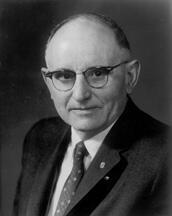
Francis Higbee Case (December 9, 1896 – June 22, 1962) was an American journalist and Republican politician who served for 25 years as a member of the United States Congress from South Dakota. Over the course of his long tenure, he represented South Dakota in both houses of Congress and served as a United States Senator from 1937 to 1963, contributing to the legislative process during nine terms in office. His service in Congress occurred during a significant period in American history, spanning the Great Depression, World War II, the early Cold War, and the beginnings of the civil rights era, during which he participated in the democratic process and represented the interests of his constituents.
Case was born on December 9, 1896, and grew up in the rural Midwest, an upbringing that shaped his later political focus on agricultural and rural issues. Details of his early family life and childhood are less extensively documented than his public career, but his formative years coincided with a period of rapid economic and social change in the United States, including the Progressive Era reforms that would later influence his views on public service and government accountability.
He pursued higher education in South Dakota, where he prepared for a career in journalism and public affairs. His academic training provided a foundation in writing, analysis, and public communication that would prove essential in both his early professional life and his later political career. During these years, he developed an interest in civic engagement and public policy, which led him to follow national and international events closely and to consider how government could respond to the challenges facing ordinary citizens.
Before entering elective office, Case worked as a journalist, a profession that gave him firsthand experience with the issues of the day and the workings of government. As a reporter and editor, he covered political developments and public policy debates, sharpening his understanding of legislative processes and the needs of his readership. This background in journalism helped him build a reputation for clear communication and informed commentary, attributes that aided his transition into politics and later shaped his style as a legislator.
Case’s congressional career began in the United States House of Representatives, where he was elected as a Republican from South Dakota. Over multiple terms, he became known for his attention to agricultural policy, rural development, and national security, reflecting both his regional roots and the broader concerns of the mid-twentieth century. During his House service, he was associated with the era’s intense focus on internal security and anti-communism, and he was connected with the work of the House Un-American Activities Committee, a body that played a controversial role in investigating alleged subversive activities during the early Cold War.
Elevated to the United States Senate as a Republican Senator from South Dakota, Case served in that chamber during a period of profound national transformation. His Senate tenure, extending from the late 1930s into the early 1960s, overlapped with the implementation of New Deal and post–New Deal policies, the mobilization and aftermath of World War II, the Korean War, and the emergence of the civil rights movement. In the Senate, he participated in debates over foreign policy, defense, and domestic economic issues, and he worked to ensure that South Dakota’s interests—particularly in agriculture, infrastructure, and rural communities—were represented in national legislation.
Throughout his 25 years in Congress, Case’s legislative work reflected the priorities of both his state and his party. As a Republican, he generally supported policies emphasizing fiscal responsibility, strong national defense, and support for private enterprise, while also recognizing the federal government’s role in supporting farmers and rural economies. His long service gave him seniority and influence within the congressional hierarchy, allowing him to help shape committee work and floor debates during some of the most consequential years in modern American history.
Francis Higbee Case died in office on June 22, 1962, bringing to a close a quarter-century of continuous service in the United States Congress. His death placed him among the members of Congress who passed away while still holding office in the mid-twentieth century. His papers and archival materials, preserved in collections such as the Francis H. Case Papers at Dakota Wesleyan University, provide researchers with insight into his legislative activities, his role in key national debates, and the political history of South Dakota and the United States during his years of service.
Congressional Record