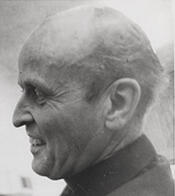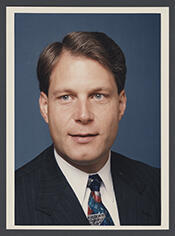
Francis Carr was the name of two American public officials who served in elected office at the state and national levels: Francis Carr of the District of Maine, a U.S. Representative in the early nineteenth century, and Francis Carr of Ohio, a mid-twentieth-century member of the Ohio House of Representatives. Although they lived in different eras and represented different regions, both men participated in the legislative life of the United States, contributing to the development of their respective jurisdictions through service in representative bodies.
The earlier of the two, Francis Carr (1751–1821), served as a U.S. Representative from the District of Maine at a time when Maine was still part of the Commonwealth of Massachusetts. Born in 1751, he came of age in the colonial period and lived through the American Revolution and the formative years of the new republic. His early life and education unfolded against the backdrop of New England’s mercantile and maritime economy, and like many men of his generation who entered public life, he was shaped by the political debates surrounding independence, federalism, and the organization of new states and territories in the post-Revolutionary era.
Carr’s career developed in the context of Maine’s gradual emergence from Massachusetts’ jurisdiction. As a public figure in the District of Maine, he was involved in local and regional affairs before advancing to national office. His experience in commerce and community leadership helped establish his reputation and prepared him for legislative responsibilities. By the time he entered Congress, he represented a population whose interests were closely tied to shipping, lumber, and coastal trade, as well as to questions of land settlement and relations with the federal government. His service reflected the concerns of a frontier region seeking greater autonomy and recognition within the Union.
In the U.S. House of Representatives, Francis Carr served as a U.S. Representative from the District of Maine, participating in the national legislature during the early decades of the nineteenth century. Sitting in Congress while Maine was still formally a district of Massachusetts, he took part in debates characteristic of the period, including issues of economic policy, maritime affairs, and the balance of power between states and the federal government. His tenure coincided with a time of expanding national territory and increasing political organization in the Northeast, and his role in Congress contributed to the representation of Maine’s distinct interests in Washington. Carr remained active in public life until his later years and died in 1821, having witnessed the transformation of the former colonies into a consolidated republic on the verge of Maine’s eventual statehood.
More than a century later, another public servant bearing the same name, Francis Carr (1927–1993), emerged in Ohio politics as a member of the Ohio House of Representatives. Born in 1927, he grew up in the interwar and World War II periods, an era marked by economic upheaval and global conflict that shaped the outlook of many future public officials. His education and early career unfolded in mid-twentieth-century America, a time when state legislatures were assuming increasingly important roles in areas such as infrastructure, education, and social policy. These experiences laid the groundwork for his subsequent entry into elective office.
Carr’s political career in Ohio centered on his service as a member of the Ohio House of Representatives, where he participated in the legislative process at the state level. As a state representative, he was involved in drafting, debating, and voting on laws affecting Ohio’s citizens, including measures related to economic development, public services, and the administration of state government. Serving during a period of postwar growth and social change, he contributed to the ongoing modernization of Ohio’s legal and institutional framework. Francis Carr continued his public and professional activities until his death in 1993, leaving a record of service in the state’s legislative history that paralleled, in a later century and on a different stage, the congressional work of his earlier namesake from the District of Maine.
Congressional Record