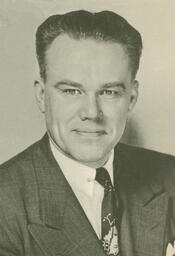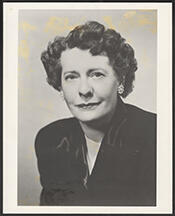
Florence Price Dwyer (July 4, 1902 – February 29, 1976) was an American Republican Party politician who represented much of Union County, New Jersey, in the United States House of Representatives from 1957 to 1973. From 1967 to 1973, she also represented parts of Essex County, New Jersey. A member of the Republican Party, she served eight consecutive terms in Congress and was the second woman to be elected to the United States House of Representatives from New Jersey, as well as the first woman Republican from New Jersey elected to the House. Throughout her political career, Dwyer was a prominent advocate for women’s rights and became known as one of the most liberal Republicans in the House of Representatives.
Dwyer was born Florence Louise Price in Reading, Pennsylvania, on July 4, 1902. She attended public schools in Reading before her family moved to Toledo, Ohio, where she continued her education in the public school system. As a young woman she later moved to Elizabeth, New Jersey, which would remain her home and political base for the rest of her life. While living in New Jersey, she took courses at Rutgers Law School, gaining exposure to legal and legislative principles that would inform her later work as a lawmaker. Her early involvement in civic and professional organizations included service as State Legislation Chairman of the New Jersey Federation of Business and Professional Women, a role that helped establish her reputation as an advocate for working women and introduced her to the mechanics of state-level policymaking.
Dwyer’s formal political career began within the Republican Party organization. She served as an alternate delegate to the Republican National Convention in 1944 and again in 1948, participating in the party’s national deliberations during and immediately after World War II. Building on this experience, she successfully ran for the New Jersey General Assembly and served there from 1950 to 1956. As an assemblywoman, she quickly distinguished herself on issues of economic justice and gender equality. In 1952 she introduced the Equal Pay for Equal Work bill in the New Jersey legislature, a measure that criminalized “discrimination in the rate of wages on the basis of sex.” The bill was enacted into law and later became a model for federal legislation, underscoring Dwyer’s early leadership in the equal pay movement.
In 1956, Dwyer was elected to the United States House of Representatives for the first of her eight terms, taking office in January 1957. Her service in Congress, from 1957 to 1973, occurred during a significant period in American history marked by the civil rights movement, the expansion of the social safety net, and intense debates over the role of the federal government. As a member of the House of Representatives, she participated actively in the legislative process and represented the interests of her constituents in Union County and, later, Essex County. Dwyer described herself as a “progressive and moderate Republican,” and her voting record reflected consistent support for civil rights, women’s rights, and a broad range of social welfare and anti-poverty programs.
Dwyer played a central role in advancing women’s economic and legal equality at the federal level. In 1962, she co-sponsored the Equal Pay Act, which was passed by Congress and signed into law in 1963, extending to the national level the principles she had championed in New Jersey a decade earlier. She supported the Equal Rights Amendment (ERA) as early as her first term in Congress in 1957 and remained a steadfast proponent throughout her career. In 1970, she worked closely with Representative Martha W. Griffiths to bring the ERA to the floor of the House of Representatives after it had stalled in committee for decades. The amendment, originally drafted by Alice Paul in 1923, passed both the House and Senate in the early 1970s, although it ultimately failed to secure ratification by the required number of state legislatures before the deadline. Dwyer’s efforts nonetheless placed her at the forefront of the national campaign for constitutional gender equality.
Her legislative record extended well beyond women’s rights. Dwyer consistently supported major civil rights measures and social legislation. She voted in favor of the Civil Rights Acts of 1957, 1960, 1964, and 1968, as well as the 24th Amendment to the U.S. Constitution, which abolished the poll tax in federal elections, and the Voting Rights Act of 1965, which strengthened protections for minority voters. She backed Medicare and Medicaid, increases in Social Security benefits, housing renewal initiatives, mass transportation projects, food stamp programs, medical care for the aged, and a variety of anti-poverty programs. She was one of twenty House Republicans to support the repeal of the right-to-work provision in the Taft–Hartley Act, reflecting her willingness to break with conservative orthodoxy on labor issues. In 1971, she was among thirty-one Republicans in the House to vote for the Comprehensive Child Development Act, which sought to establish a national, federally funded child care system. Dwyer’s moderate-to-liberal voting pattern was so distinctive that she reportedly wore pink clothing when voting with Democrats and white or black when voting with Republicans, a symbolic gesture highlighting her independence within her party. During the 1964 Republican presidential primaries, she supported Pennsylvania Governor William Scranton, aligning herself with the more moderate wing of the party.
After eight terms in the House, Dwyer chose not to be a candidate for reelection in 1972 and left Congress at the conclusion of her final term in January 1973. She retired from public office and returned to Elizabeth, New Jersey, where she remained active in community and civic affairs while living in relative privacy compared to her years in national politics. Her long tenure in Congress, spanning from the Eisenhower through the early Nixon administrations, left a legacy of bipartisan cooperation and principled advocacy on behalf of women, minorities, and working families.
Florence Price Dwyer died on February 29, 1976, in Elizabeth, New Jersey. She was interred at St. Gertrude’s Cemetery in Colonia, New Jersey. Remembered as a trailblazer for women in politics and a leading voice for equal rights and social justice within the Republican Party, her career exemplified the role of a progressive and moderate Republican legislator during a transformative era in American political and social life.
Congressional Record