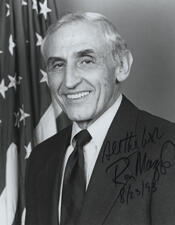
Finley Hamilton (June 19, 1886 – January 10, 1940) was a United States Representative from Kentucky and an attorney whose career combined extended military service with a single term in Congress during the early New Deal era. He was born in Vincent, Owsley County, Kentucky, a rural community in the eastern part of the state. Raised in modest circumstances, he attended the local public schools before enrolling at Berea College in Berea, Kentucky, an institution noted for its commitment to providing higher education to students from the Appalachian region and to interracial education during a period of widespread segregation.
After his studies at Berea College, Hamilton pursued the study of law. He read law in the traditional manner of the time rather than through a formal law school, and after completing the requisite preparation he was admitted to the bar in 1915. Following his admission, he commenced the practice of law in London, Laurel County, Kentucky, a regional center in southeastern Kentucky. London remained his professional and personal base for the rest of his life, and his legal practice there helped establish his standing in the community and later provided the foundation for his political career.
Hamilton’s early adulthood was marked by extensive military service. He enlisted in the United States Army in 1907 and served in the Signal Corps until 1915. During this period he was stationed in the Philippine Islands and in Alaska, assignments that reflected the Army’s global and frontier responsibilities in the early twentieth century. His work in the Signal Corps, then a relatively new and technically oriented branch responsible for military communications, exposed him to emerging communications technologies and the logistical challenges of service in remote territories.
With the approach of American involvement in the First World War, Hamilton returned to active duty. He reenlisted on March 18, 1916, again entering the Signal Corps. During the war he served in Company D, 315th Field Signal Battalion, 90th Division, with overseas service in France. The 90th Division, composed largely of troops from the South and Southwest, participated in major operations on the Western Front, and Hamilton’s battalion was responsible for maintaining communications under combat conditions. His wartime service in France added to his earlier years of active duty and gave him a total of more than a decade in uniform.
After the war, Hamilton returned to London, Kentucky, where he resumed the practice of law. In the interwar years he built his legal practice and became involved in Democratic Party politics at the local and state levels. His background as a veteran and attorney in a predominantly rural region of Kentucky positioned him as a representative figure for many of his constituents, and he came to public attention as the state and nation confronted the economic and social dislocations of the Great Depression.
Hamilton was elected as a Democrat to the Seventy-third Congress, serving from March 4, 1933, to January 3, 1935. He represented Kentucky in an at-large seat that was elected statewide on a general ticket, a method used during a period of transition in the state’s congressional apportionment. His term coincided with the first two years of President Franklin D. Roosevelt’s administration and the initial wave of New Deal legislation responding to the economic crisis. Although detailed records of his individual legislative initiatives are limited, Hamilton served as part of the Democratic majority that supported many of the administration’s early recovery and reform measures. He chose not to be a candidate for renomination in 1934, and his service in the House concluded at the end of his first term.
Following his departure from Congress, Hamilton returned once again to London, Kentucky, where he resumed the full-time practice of law. He continued to be a figure of local prominence, drawing on his experience as a veteran, attorney, and former member of Congress. Hamilton remained in London until his death on January 10, 1940. He was buried in Pine Grove Cemetery, reflecting his enduring ties to the community and region in which he had spent the greater part of his professional and public life.
Congressional Record