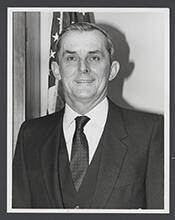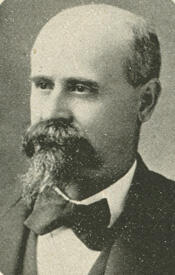
Finis Ewing Downing (August 24, 1846 – March 8, 1936) was a Democratic U.S. Representative from Illinois who served in the Fifty-fourth Congress from 1895 to 1896. Born in Virginia, Cass County, Illinois, he was raised in the community he would later represent in public office. Downing attended both public and private schools in Virginia, Illinois, receiving a basic education that prepared him for a career in business, local government, and the law during a period of rapid growth and political change in the post–Civil War Midwest.
As a young man, Downing entered commercial life, engaging in mercantile pursuits in Virginia, Illinois, and Butler, Missouri, from 1864 to 1880. His work in trade and business during these years placed him in close contact with the economic concerns of small-town merchants, farmers, and local enterprises in both Illinois and Missouri. This experience helped establish his standing in the community and provided a practical understanding of commerce and local economic conditions that would later inform his public service.
Downing’s formal entry into public life began at the municipal level in his hometown. He served as a member of the board of aldermen in Virginia, Illinois, from 1876 to 1878, participating in the governance and administration of local affairs. Building on this role, he was elected mayor of Virginia, serving from 1878 to 1880. In these positions he gained experience in municipal management, local regulation, and community leadership at a time when small Midwestern towns were dealing with issues of infrastructure, public order, and modernization.
In 1880, Downing advanced to county office, becoming clerk of the circuit court of Cass County, Illinois, a position he held from 1880 to 1892. While serving as clerk, he studied law, deepening his familiarity with the judicial system and legal procedure. He was admitted to the bar in December 1887 and commenced the practice of law in Virginia, Illinois, combining his duties as a court official with the development of a private legal practice. His legal career broadened his professional base and enhanced his qualifications for higher office.
Alongside his legal and governmental work, Downing was active in journalism and legislative administration. He engaged in the newspaper business from 1891 to 1897, a role that placed him at the center of local political discourse and public opinion. In addition, he served as secretary of the Illinois State Senate in 1892 and 1893, a position that involved managing legislative records and proceedings in Springfield. This experience provided him with direct exposure to state-level lawmaking and party politics and helped elevate his profile within the Democratic Party of Illinois.
Downing’s congressional career arose from this combination of local, county, and state experience. A member of the Democratic Party, he presented his credentials as a Democratic Member-elect to the Fifty-fourth Congress and took his seat in the U.S. House of Representatives on March 4, 1895. He served as a Representative from Illinois during a significant period in American history marked by debates over economic policy, currency, and regulation in the aftermath of the Panic of 1893. Downing participated in the legislative process and represented the interests of his Illinois constituents in the House of Representatives. His service, however, was cut short when his election was successfully contested by Republican John I. Rinaker; Downing served until June 5, 1896, when Rinaker was seated in his place. He was an unsuccessful candidate for renomination in 1896 and also ran unsuccessfully that year as the Democratic candidate for secretary of state of Illinois.
After leaving Congress, Downing returned to private life in Virginia, Illinois. He resumed the practice of law and also engaged in the real estate business, continuing to play a role in the civic and economic life of his community. He remained a figure identified with Democratic politics and public service, drawing on decades of experience in business, law, and government at multiple levels. Finis Ewing Downing died in Virginia, Illinois, on March 8, 1936. He was interred in Walnut Ridge Cemetery, bringing to a close a long life closely tied to the town and county where he had been born, practiced his profession, and held public office.
Congressional Record