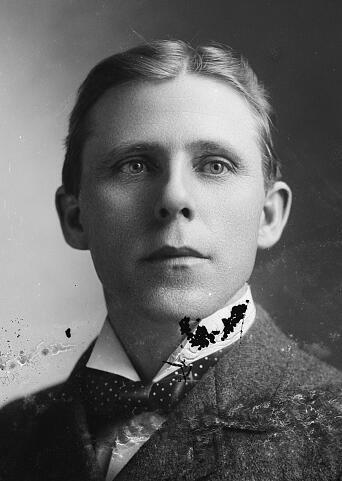
Ferdinand Brucker (January 8, 1858 – March 3, 1904) was an American lawyer and Democratic politician from the U.S. state of Michigan who served one term in the United States House of Representatives from 1897 to 1899. Over the course of his public career, he participated in the legislative process at both the local and national levels and represented the interests of his Michigan constituents during a significant period in American history.
Born on January 8, 1858, Brucker came of age in the decades following the Civil War, a time of rapid industrialization and political realignment in the United States. His early life in Michigan unfolded against the backdrop of the state’s growing economic importance in the Great Lakes region, developments that would later shape the concerns of the voters he represented. Details of his family background and upbringing are sparse in the historical record, but his subsequent professional path indicates an early commitment to legal study and public affairs.
Brucker pursued a career in law, a common avenue into public life in the nineteenth century. After reading law and gaining admission to the bar, he established himself as an attorney in Michigan. His legal practice provided him with experience in statutory interpretation, civil procedure, and the practical application of state and federal law, skills that would later inform his work as a legislator. Through his professional activities, he became known in his community and developed the connections and reputation that supported his entry into elective office.
Building on his legal career, Brucker entered politics as a member of the Democratic Party at a time when Michigan was often competitive between the major parties but generally leaned Republican at the federal level. His alignment with the Democrats placed him in the midst of national debates over monetary policy, tariffs, and the role of the federal government in regulating the economy. His political work at the state and local levels helped position him as a viable candidate for Congress and reflected his interest in representing the concerns of his region in Washington.
Brucker was elected as a Democrat to the United States House of Representatives and served one term in the Fifty-fifth Congress, from 1897 to 1899. His tenure in Congress coincided with a pivotal era marked by the aftermath of the economic Panic of 1893, ongoing disputes over the gold and silver standards, and the early stirrings of American expansionism that would culminate in the Spanish–American War shortly after his service. As a member of the House of Representatives, Ferdinand Brucker participated in the democratic process, contributed to the legislative work of the chamber, and advocated for the interests of his Michigan constituents within this broader national context.
During his time in Congress, Brucker took part in debates and votes that reflected the priorities of his party and his district, including questions of economic recovery, infrastructure, and the regulation of commerce. Although detailed records of his individual legislative initiatives are limited, his service placed him among those responsible for shaping federal policy at the close of the nineteenth century. His single term from 1897 to 1899 encapsulated his direct contribution to national lawmaking and the representation of Michigan in the federal government.
After leaving Congress at the conclusion of his term in 1899, Brucker returned to private life and resumed his work as a lawyer in Michigan. His post-congressional years were spent once again in the legal profession, where he continued to apply the expertise and experience he had gained in public office. He remained a figure identified with Democratic politics and public service in his state until his death.
Ferdinand Brucker died on March 3, 1904. His career as an attorney and his service as a Democratic Representative from Michigan during the Fifty-fifth Congress placed him among the cohort of late nineteenth-century lawmakers who navigated the United States through a period of economic change and emerging global influence, and he is remembered in the historical record for his role in the legislative process during his one term in the House of Representatives.
Congressional Record