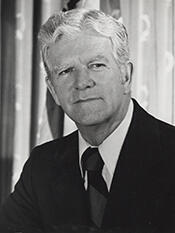
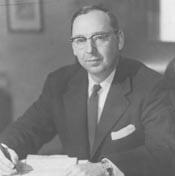
LaFayette “Fayette” McMullen (May 18, 1805 – November 8, 1880) was a 19th-century politician, driver, teamster, and banker from the U.S. state of Virginia and the second appointed Governor of Washington Territory. Born in Estillville, Virginia (later renamed Gate City), he attended private schools as a child. In his youth he worked in the family-owned business as a Virginia driver and teamster, driving a coach and engaging in overland transport at a time when such work was essential to regional commerce and communication. In 1826 he married Mary (“Polly”) Wood, the daughter of the local sheriff; the couple had no children.
McMullen’s early working life as a driver and teamster grounded him in the economic and social conditions of southwestern Virginia and helped establish his local reputation. Over time he expanded his interests beyond transportation, ultimately becoming involved in banking as his public career advanced. His experience in business and local affairs contributed to his emergence as a Democratic Party leader in his region, positioning him for election to state office.
In 1839 McMullen entered public life formally as a member of the Senate of Virginia. He served in the state senate for a decade, from 1839 until 1849, participating in debates over internal improvements, state finance, and the political realignments that marked the antebellum period. His tenure in the Virginia legislature coincided with growing sectional tensions and the expansion of the Democratic Party’s influence in the South, and it provided him with the legislative experience and political connections that would lead to national office.
McMullen was elected as a Democrat to the United States House of Representatives in 1848, representing Virginia in the Thirty-first through Thirty-fourth Congresses and serving four consecutive terms from March 4, 1849, to March 3, 1857. As a member of the Democratic Party, he contributed to the legislative process during a significant period in American history, participating in the democratic process and representing the interests of his constituents. In the House he held important committee assignments, serving as chairman of the Committee on Expenditures in the Department of the Navy from 1851 to 1855 and as chairman of the Committee on Expenditures on Public Buildings from 1855 to 1857. He was also active in national party affairs, serving as a delegate to the Democratic National Conventions in 1852 and 1856, which nominated Franklin Pierce and James Buchanan, respectively.
In 1857 President James Buchanan appointed McMullen as the second Territorial Governor of Washington. He served as Governor of Washington Territory from 1857 until 1859, overseeing the territorial administration during a period of continued settlement, relations with Native American tribes, and the development of territorial institutions in the Pacific Northwest. His governorship linked his long Virginia-based political career to the broader project of U.S. territorial expansion and governance on the western frontier.
With the coming of the Civil War and the secession of Virginia, McMullen aligned with the Confederacy. He was elected as a Democrat to the Confederate House of Representatives in 1863 and served from 1864 until the collapse of the Confederate government in 1865. In the Confederate Congress he participated in the legislative efforts of the nascent government during its final and most difficult years, as the Confederacy faced mounting military and economic pressures.
After the war, McMullen returned to civilian life in Virginia, where he engaged in agricultural and banking pursuits, drawing on both his prewar business experience and his longstanding ties to the region. Remaining active in politics during Reconstruction and its aftermath, he made an unsuccessful bid for Governor of Virginia in 1878, reflecting his continued prominence in state Democratic circles even as the political order of the South was being reshaped.
LaFayette McMullen died in a train accident on November 8, 1880, in Wytheville, Virginia. He was interred at Round Hill Cemetery in Marion, Virginia. His career spanned local business, state and national legislatures, territorial governance in the Pacific Northwest, and service in the Confederate Congress, marking him as a figure whose life intersected with many of the central political and territorial developments of nineteenth-century America.
Congressional Record