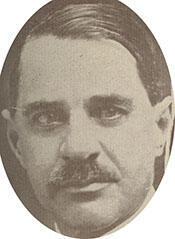
Ezra Meech (July 26, 1773 – September 23, 1856) was an American fur trader and politician who served as a U.S. Representative from Vermont. He was born in New London in the Connecticut Colony to Elisha Meech and Faith Satterly Meech. In 1785 he moved with his parents to Hinesburg in the Vermont Republic, where he attended the common schools. Growing up in this frontier environment, he became familiar with the commercial and agricultural opportunities of the region, experiences that would shape his later career in trade, landholding, and public service.
Meech’s early career was rooted in the expanding economy of the early United States. He engaged in the fur trade in the Northwest, participating in a major commercial enterprise of the era, and also entered into ship-timber contracts in British Canada, supplying materials vital to maritime trade and naval construction. In 1795 he opened a store at Charlotte Four Corners, Vermont, establishing himself as a local merchant. He later moved to Shelburne, Vermont, where he owned and operated a farm, raised cattle and horses, and manufactured potash, a key ingredient in soap and glass production. By 1806 he was serving as an agent of the Northwestern Fur Company, further solidifying his position in the fur trade and regional commerce.
Meech’s involvement in public life began at the state level. He served as a member of the Vermont House of Representatives from 1805 until 1807, participating in the legislative affairs of the young state. His growing prominence in local and state politics coincided with his continued business and agricultural activities in Shelburne. Over time he became recognized as a leading citizen in Chittenden County, combining his commercial interests with increasing responsibilities in public office.
Meech’s congressional service reflected the evolving party system of the early nineteenth century. He was first elected as a Democratic-Republican candidate to the Sixteenth United States Congress, serving from March 4, 1819, until March 3, 1821, representing Vermont in the U.S. House of Representatives. As a member of the Jackson Party representing Vermont, he contributed to the legislative process during two terms in office, participating in the democratic process and representing the interests of his constituents during a significant period in American history. After returning to Vermont, he remained active in state affairs, serving as a delegate to the state constitutional conventions in 1822 and 1826, where he took part in revising and shaping Vermont’s fundamental law. He also served as chief judge of the Chittenden County Court in 1822 and 1823, underscoring his standing in the legal and civic life of the county.
Meech returned to national office when he was elected as a Jacksonian candidate to the Nineteenth United States Congress, serving from March 4, 1825, until March 3, 1827. His alignment with the Jacksonian movement placed him within the broader political realignments of the era, as debates over democracy, federal power, and economic policy intensified. Following his congressional service, he sought higher office at the state level, running unsuccessfully as a Democratic candidate for Governor of Vermont in 1830, 1831, 1832, and 1833. These campaigns reflected his continued prominence in Vermont politics, even though they did not result in election.
In his later political life, Meech’s affiliations shifted along with the changing party landscape. He served as a presidential elector on the Whig ticket in 1840, participating in the Electoral College in support of the Whig presidential candidate. After this period, he resumed his agricultural pursuits in Shelburne, returning to the management of his farm and related enterprises. His long career thus spanned the transition from the early republic through the rise of Jacksonian democracy and the emergence of the Whig Party, and included service at both state and national levels.
Meech’s personal life was closely tied to his community in Vermont. In 1800 he married Mary McNeil Meech, and together they had eight children. Their family life in Shelburne paralleled his development as a farmer, merchant, and public official, and contributed to his reputation as a substantial and respected citizen of the region.
Ezra Meech died on September 23, 1856, in Shelburne, Vermont. He was interred at the Shelburne Village Cemetery. His life and career, documented in contemporary records and later genealogical and biographical works, reflect the experience of an early New England settler who combined frontier commerce, agriculture, and a lengthy record of public service at both the state and federal levels.
Congressional Record