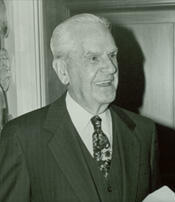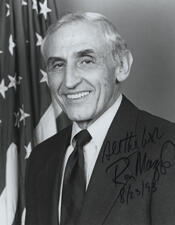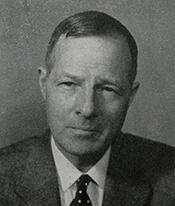
Eugene Edward Siler Sr. (June 26, 1900 – December 5, 1987) was an American politician, jurist, and Baptist lay preacher who represented Kentucky in the United States House of Representatives from 1955 to 1965. A staunch Republican from a traditionally Republican region of southeastern Kentucky, he served five terms in Congress and was noted for his social conservatism, fiscal restraint, and pronounced non-interventionist foreign policy views. He was the only member of the House of Representatives to oppose, by pairing against, the Gulf of Tonkin Resolution in 1964, which authorized deeper involvement of the United States in the Vietnam War.
Siler was born in Williamsburg, Whitley County, Kentucky, where he described himself as a “Kentucky hillbilly.” He was the son of attorney Adam Troy Siler and Minnie (née Chandler) Siler. Raised in a devout Baptist environment, he developed early the religious convictions that would later shape both his legal career and his political life. His home region in southeastern Kentucky was a Republican stronghold, and Siler’s party allegiance and ideological outlook were rooted in this local political culture as well as in his family background.
Siler pursued higher education close to home, graduating from Cumberland College in Williamsburg in 1920. He continued his studies at the University of Kentucky in Lexington, from which he graduated in 1922. Seeking advanced legal training, he attended law school at Columbia University in New York. After completing his legal education, he returned to Williamsburg to practice as a small-town lawyer. In 1925, he married Lowell Jones in Williamsburg; the couple had four children, one of whom, Eugene Edward Siler Jr., later became a federal judge. Deeply religious, Siler was a devout Baptist and became a renowned lay preacher. He abstained from alcohol, tobacco, and profanity, and in his law practice he refused to represent clients seeking divorces or those accused of alcohol-related crimes, reflecting his strict moral code.
Siler’s early adulthood was also marked by military service in both world wars. He served in the United States Navy during World War I and later in the United States Army as a captain during World War II. These wartime experiences, according to historian David T. Beito, left him “cold to most proposals to send American troops into harm’s way,” reinforcing the non-interventionist views that would later distinguish his congressional career. After World War II, Siler’s public profile rose when, in 1945, he was elected a judge of the Court of Appeals of Kentucky in a special election. As a judge, he became known for quoting scripture from the bench and for his personal austerity; he refused his $150 expense allotment and instead donated it to a scholarship fund he established. He was defeated for a full eight-year term on the court in 1948 by Democratic candidate Roy Helm.
Siler’s prominence as a “Bible Crusader,” a reputation he earned by frequently invoking religious themes in his public addresses, carried into electoral politics beyond the judiciary. In 1951 he was the Republican nominee for Governor of Kentucky. During that campaign he again made extensive use of biblical references in his speeches, underscoring his identity as a Christian conservative. He was defeated by the Democratic incumbent, Governor Lawrence Wetherby, who won by 58,331 votes. Despite this loss, Siler’s statewide campaigns and his distinctive blend of religious conservatism and fiscal restraint solidified his standing within Kentucky’s Republican Party and set the stage for his later congressional service.
In 1955, Siler was elected as a Republican to the United States House of Representatives from Kentucky, beginning a decade of service that extended through 1965. During his tenure in Congress, he consistently stressed social conservatism and moral reform. He sponsored legislation to ban liquor and beer advertising in all interstate media, arguing that allowing such advertising was akin to permitting a “harsh hussy” to advertise “in the open door of her place of business for the allurement of our school children.” He was “100 percent for Bible reading and the Lord’s Prayer in our public schools,” reflecting his conviction that public life should be grounded in Christian principles. At the same time, Siler cultivated a reputation as a fiscal watchdog, much like his friend and fellow Republican Representative Harold Royce Gross. He opposed congressional junkets, government debt, and high federal spending, although he supported federal measures such as flood control projects that directly benefited his home district.
On civil rights, Siler’s record distinguished him from many Southern and border-state contemporaries. He did not sign the 1956 Southern Manifesto, a document opposing the Supreme Court’s decision in Brown v. Board of Education. In Congress, he voted in favor of the Civil Rights Acts of 1957 and 1960, as well as the Twenty-fourth Amendment to the United States Constitution, which abolished the poll tax in federal elections. He did not vote on the Civil Rights Act of 1964. A Taft, or Old Right, Republican, Siler was firmly opposed to entangling military alliances, foreign interventions, and foreign aid. He was one of only two members of Congress to vote against President John F. Kennedy’s call-up of reserves during the Berlin crisis. Although he supported Barry Goldwater’s presidential candidacy in 1964, he did not share Goldwater’s more interventionist foreign policy views, maintaining instead a consistent non-interventionist stance that did not appear to alienate his constituents.
Siler’s skepticism of foreign military commitments culminated in his opposition to the escalation of the Vietnam War. He was critical of U.S. involvement in Vietnam and viewed the Gulf of Tonkin Resolution, which authorized President Lyndon B. Johnson to take “all necessary steps” in Southeast Asia, as a “buck-passing” device intended to “seal the lips of Congress against future criticism.” Having decided not to seek reelection in 1964, he arranged to be paired against the resolution, making him the only member of the House of Representatives formally recorded in opposition. In a characteristic expression of his antiwar convictions, he joked that he might run for president as an antiwar candidate and would resign after one day in office, having first ordered American troops brought home.
After leaving Congress in 1965, Siler initially retired from elective office but remained engaged with public affairs, particularly the growing controversy over the Vietnam War. The worsening situation in Vietnam prompted him to return to politics in 1968, when he sought the Republican nomination for the United States Senate from Kentucky on a platform calling for the withdrawal of all U.S. troops by Christmas. He was unsuccessful in that bid. That same year, the two U.S. senators who had voted against the Gulf of Tonkin Resolution, Ernest Gruening of Alaska and Wayne Morse of Oregon, were also defeated, underscoring the political headwinds faced by early opponents of the war. In recognition of his long association with education and his hometown, Cumberland College in Williamsburg constructed a men’s residence hall in 1985 named Eugene Siler Hall.
In his later years, Siler continued to be known locally as a preacher, moral reformer, and elder statesman of Kentucky Republicanism. He remained devoted to his family and his church, and his son’s rise to the federal bench extended the family’s influence in public service. Eugene Edward Siler Sr. died at his daughter’s home in Louisville, Kentucky, on December 5, 1987. His life and career, marked by religious conviction, fiscal conservatism, and principled opposition to foreign military intervention, left a distinctive imprint on mid-twentieth-century Kentucky and on the congressional debates of his era.
Congressional Record