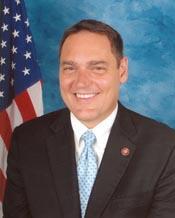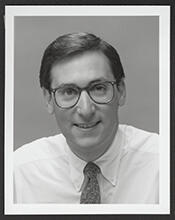
Eric David Fingerhut (born May 6, 1959) is an American politician, attorney, and academic administrator who served as a Representative from Ohio in the United States Congress from 1993 to 1995 and later became a prominent leader in higher education and the organized Jewish community. A member of the Democratic Party, he has held senior roles including president and CEO of Hillel International and, subsequently, president and CEO of the Jewish Federations of North America (JFNA). Over the course of his career, he has also served as corporate vice president of the Education and STEM Learning business at Battelle Memorial Institute, Chancellor of the Ohio Board of Regents, and a member of the Ohio State Senate.
Fingerhut was born on May 6, 1959, and raised in Ohio. He attended public schools before pursuing higher education in the state. He earned his undergraduate degree from Northwestern University and went on to receive his Juris Doctor from Stanford Law School. After completing his legal education, he returned to Ohio to practice law, establishing himself as an attorney and becoming involved in public service and Democratic Party politics. His early professional years combined legal practice with growing engagement in civic and community affairs, laying the groundwork for his subsequent electoral career.
Fingerhut entered elective office at the state level, serving in the Ohio State Senate as a Democrat. In that capacity, he represented his constituents in Columbus, working on issues related to education, economic development, and public policy reform. His legislative experience in the Ohio General Assembly helped build his profile as a policymaker and positioned him for a run for federal office. His work in the state legislature contributed to his reputation as an advocate for education and innovation, themes that would recur throughout his later career.
In 1992, Fingerhut was elected to the U.S. House of Representatives as a Democrat from Ohio and served one term in the 103rd Congress, from January 3, 1993, to January 3, 1995. As a member of the House of Representatives, he participated in the democratic process and represented the interests of his Ohio constituents during a significant period in American history marked by debates over economic policy, health care, and post–Cold War foreign affairs. During his single term in Congress, he contributed to the legislative process and engaged in committee and floor work typical of a freshman member, aligning with his party on key policy initiatives while focusing on the needs of his district. After his defeat in the 1994 election, he returned to Ohio and continued his involvement in public policy and education.
Following his congressional service, Fingerhut remained active in public life and policy. He returned to the Ohio State Senate, where he again worked on legislative matters, particularly in areas affecting higher education and workforce development. He also entered the private sector, joining Battelle Memorial Institute, a major nonprofit research and development organization based in Columbus, Ohio. At Battelle, he served as corporate Vice President of the Education and STEM Learning business, where he oversaw initiatives aimed at improving science, technology, engineering, and mathematics education and strengthening the pipeline of skilled workers for the modern economy. This role further deepened his expertise at the intersection of education, innovation, and economic competitiveness.
On March 14, 2007, Governor Ted Strickland appointed Fingerhut as Chancellor of the Ohio Board of Regents, the coordinating body for higher education in the state and a member of the Ohio Governor’s Cabinet. As chancellor, he was responsible for overseeing Ohio’s public colleges and universities, advancing policies to increase access, affordability, and completion rates, and aligning higher education with the state’s economic and workforce needs. His tenure included efforts to create a more integrated and efficient higher education system and to promote research and innovation across Ohio’s campuses. On February 22, 2011, after serving four years of his five-year term, he submitted his resignation to Governor John Kasich, effective March 14, 2011, concluding a period of significant restructuring and strategic planning in Ohio’s higher education sector.
In 2013, Fingerhut was named president and CEO of Hillel International, the global Jewish campus organization. In this role, which he held from 2013 to 2019, he led efforts to expand Hillel’s reach to Jewish students worldwide, strengthen campus programming, and modernize the organization’s operations and fundraising. Very soon after he began his tenure, Hillel International became the focus of a major controversy when the Hillel chapter at Swarthmore College declared itself an “Open Hillel,” announcing that it would welcome all guest speakers and student organizations, regardless of their stance on Zionism. Fingerhut responded by stating, “Let me be very clear – ‘anti-Zionists’ will not be permitted to speak using the Hillel name or under the Hillel roof, under any circumstances.” The dispute was widely seen as part of a broader conversation within the American Jewish community about whether Zionism is, or should be, a consensus issue and how Jewish institutions should engage with a diversity of views on Israel.
Beginning in March 2015, Fingerhut was involved in another high-profile controversy with J Street U, the student arm of the liberal advocacy group J Street. He initially accepted an invitation to speak at the organization’s national student conference but later withdrew. Fingerhut explained his decision by citing “concerns regarding my participation amongst other speakers who have made highly inflammatory statements against the Jewish state.” Observers in the world of U.S. Jewish student life noted that, at a time when engagement with Jewish and Israel-related campus groups was declining, it might be counterproductive to alienate the roughly 3,000 participants in the J Street conference, including about 40 Hillel professionals, and suggested that pressure from some Hillel donors likely influenced his withdrawal. On March 23, 2015, approximately 250 J Street U students marched to Hillel International’s headquarters, delivering letters to Fingerhut that demanded a meeting and expressed concern that he had, in their view, acceded to the demands of “more conservative donors instead of engaging with the full range of student voices — including those on the more liberal end.” In response, Fingerhut wrote to Benjy Cannon, the board president of J Street U and a senior at the University of Maryland, to arrange a meeting between the students and members of Hillel International’s board of directors. In his letter, he acknowledged that there was “work to do in the Jewish community at large to be one people that respects, honors and celebrates its diversity rather than fearing it,” adding that the incident had shown him “just how deep the divide is” and affirming his commitment, as Hillel’s president, to work toward bridging that divide.
After concluding his tenure at Hillel International in 2019, Fingerhut became president and CEO of the Jewish Federations of North America, one of the leading umbrella organizations of the North American Jewish community. In this capacity, he has overseen a network of local Jewish federations and partner agencies engaged in philanthropy, social services, community relations, and support for Jewish life in North America, Israel, and around the world. His leadership at JFNA has drawn on his extensive experience in government, higher education, and nonprofit management, as well as his longstanding engagement with questions of Jewish identity, communal diversity, and the relationship between American Jewry and the State of Israel.
Congressional Record