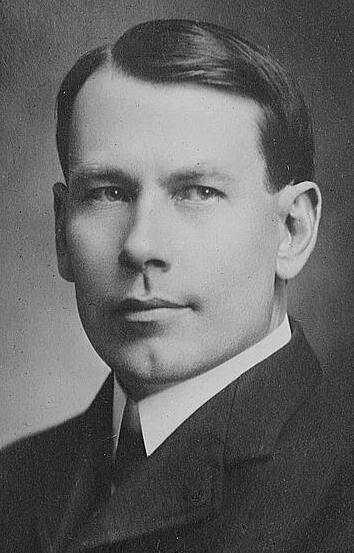
Ellsworth Raymond Bathrick (also recorded as Elsworth Raymond Bathrick) (January 6, 1863 – December 23, 1917) was an American politician and businessman who served as a Democratic U.S. Representative from Ohio in the United States Congress during the early twentieth century. He represented his Ohio constituents in the House of Representatives over three terms between 1911 and 1919, participating actively in the legislative process during a significant period in American history.
Bathrick was born on January 6, 1863, near Pontiac, Michigan, to Sumner Bathrick and Louisa Bathrick. He attended local country schools and later graduated from Pontiac High School. In his youth, he developed an interest in writing and journalism, working as a reporter for a Cleveland newspaper in the 1890s. This early experience in reporting not only acquainted him with public affairs and politics but also fostered a lifelong inclination toward authorship and public communication.
In 1889, Bathrick married May L. Clark. The following year, in 1890, he moved to New York City, where he engaged in the importation of edible oils, marking the beginning of a varied business career. During the 1890s he continued his work as a reporter for a Cleveland newspaper, balancing journalism with his commercial pursuits. In 1900 he relocated to Akron, Ohio, where he entered the real estate business. His success and visibility in Akron’s commercial life helped establish the local prominence that would later support his entry into elective office.
Bathrick was elected as a Democrat to the Sixty-second and Sixty-third Congresses, serving from March 4, 1911, to March 3, 1915. During these first two consecutive terms in the House of Representatives, he contributed to the legislative process and represented the interests of his Ohio constituents at a time of growing national debate over economic reform, military preparedness, and rural development. Known among his colleagues as an ardent advocate for a large Navy, he earned the nickname “Battleship Bath” on Capitol Hill for his strong support of naval expansion. He was also a vigorous proponent of rural credits, and although the principal rural credits legislation was ultimately enacted during the Sixty-fourth Congress, he was widely credited by his peers as having been a significant influence on its development.
Because of gerrymandering, Bathrick was an unsuccessful candidate for reelection in 1914 to the Sixty-fourth Congress. After leaving office at the conclusion of his second term in March 1915, he resumed his former business pursuits in Akron, returning to real estate and his other commercial interests. Despite this setback, he remained engaged in public affairs and within a short time sought a return to Congress, reflecting both his personal commitment to public service and the continued support he enjoyed among many voters in his district.
Bathrick was elected again as a Democrat to the Sixty-fifth Congress and returned to the House of Representatives on March 4, 1917. His final term coincided with the United States’ entry into World War I, a period during which his long-standing advocacy for a strong Navy and attention to national defense took on heightened relevance. Though extremely ill during this time, he continued his representation of Ohio for six months until the close of the congressional session in October 1917, exemplifying a determination to fulfill his duties despite serious health challenges.
In addition to his political and business activities, Bathrick pursued literary interests that had originated in his youth as a reporter. While working for the Cleveland newspaper in the 1890s, he turned his hand to writing children’s stories. Dissatisfied with one such manuscript, he placed it in a trunk and forgot about it until around 1911, when he rediscovered it. A friend persuaded him to submit the story to a publisher, who suggested revisions and recommended it for publication. During a later period of illness, Bathrick retired to Florida for the winter for his health, where he reworked the story and returned it to the publisher. The work was published not long after his death. Among the titles associated with his children’s writings are “Please Don’t Worry” (needing further investigation for precise bibliographic details) and a sequence of stories published in 1918 under the general title “The Magic Salt”: “The Fairy People,” “The Soldier Bees,” “The Wand of Power,” and “The Great Day.”
Ellsworth Raymond Bathrick died in Akron, Ohio, on December 23, 1917, while still serving in the Sixty-fifth Congress. He was interred in Glendale Cemetery in Akron. Following his death in office, Martin Luther Davey was elected to fill his unexpired congressional term. Bathrick’s career, spanning journalism, business, literature, and three terms in Congress, placed him among the members of the United States Congress who died in office in the first half of the twentieth century.
Congressional Record