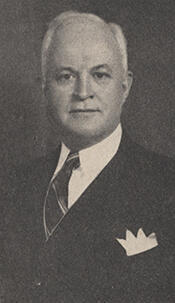
Elisha Dickerson Cullen (April 23, 1799 – February 8, 1862) was an American lawyer and politician from Georgetown, in Sussex County, Delaware, who represented Delaware in the United States House of Representatives as a member of the American Party. He was born in Millsboro, Delaware, on April 23, 1799, in the early years of the new republic, and spent his formative years in Sussex County, a largely rural and agricultural region of the state. Little is recorded about his parents or early family life, but his later professional prominence and the legal careers of his descendants suggest that he came from a milieu that valued education and public service.
Cullen pursued higher education at Princeton College (now Princeton University) in New Jersey, reflecting the aspirations of many young men of his generation who sought classical and legal training at established institutions in the Mid-Atlantic region. After his studies at Princeton, he returned to Delaware to read law, following the customary path of legal apprenticeship of the period. He completed his legal training and was admitted to the Delaware Bar in 1821, marking the formal beginning of his professional career. Soon thereafter, he commenced the practice of law in Georgetown, the county seat of Sussex County, where he would remain professionally active for much of his life.
As a practicing attorney in Georgetown, Cullen built a legal career that positioned him among the notable lawyers of southern Delaware in the first half of the nineteenth century. His practice would have encompassed a broad range of civil and criminal matters typical of a small but important county seat, and his legal work brought him into contact with the economic and social issues of a slaveholding border state. Cullen himself was a slaveholder, a fact that placed him within the prevailing social and economic order of Sussex County in the antebellum era. Over time, his standing at the bar and in the community helped propel him into political life.
Cullen’s national political career came during a period of intense sectional conflict and party realignment. He affiliated with the American Party, commonly known as the Know-Nothing Party, which emerged in the 1850s on a platform emphasizing nativism and opposition to immigration, while also intersecting with the growing national debate over slavery and the Union. As the American Party’s candidate from Delaware, he was elected to the Thirty-fourth Congress in the general election held on the first Tuesday after November 1, 1854, in accordance with federal election practice of the time. He took office as Delaware’s at-large U.S. Representative on March 4, 1855, when members of the House of Representatives customarily began their two-year terms.
During his single term in Congress, Cullen served at a moment of mounting national tension in the years following the Compromise of 1850 and the Kansas-Nebraska Act. As a member of the American Party representing Delaware, he contributed to the legislative process during one term in office, participating in the democratic process and representing the interests of his constituents in a House deeply divided over slavery, territorial expansion, and questions of national identity. His service in the Thirty-fourth Congress placed him among those lawmakers grappling with the issues that would soon lead to the Civil War. In 1856, he stood for reelection as the American Party candidate to the Thirty-fifth Congress but was unsuccessful, bringing his brief tenure in national office to a close.
After his defeat in the 1856 election, Cullen returned to Georgetown and resumed the practice of law, reestablishing himself in the profession that had first brought him prominence. He continued to live and work in Sussex County through the late 1850s and into the early years of the Civil War era. His family maintained a strong legal tradition: his son Charles M. Cullen became an Associate Justice from Sussex County, serving on the Delaware bench, and his grandson Charles W. Cullen also pursued a legal career, further extending the family’s influence in the state’s legal and civic life.
Elisha Dickerson Cullen died in Georgetown, Delaware, on February 8, 1862. He was buried in the Presbyterian Church Cemetery at Lewes, Delaware, a coastal town in Sussex County. His life spanned from the early national period through the opening years of the Civil War, and his career as a lawyer, brief service in Congress, and the subsequent judicial and legal careers of his descendants secured him a place in Delaware’s political and legal history.
Congressional Record