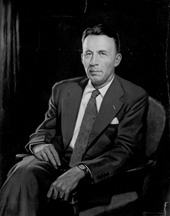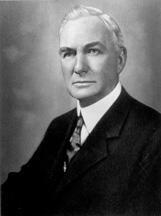
Elijah Sherman Grammer (April 3, 1868 – November 19, 1936) was an American lumberman, business executive, and Republican politician who served as a United States Senator from Washington from November 22, 1932, to March 3, 1933. Appointed to fill the vacancy caused by the death of Senator Wesley Livsey Jones, he represented Washington during a significant period in American history at the close of the Hoover administration and the onset of the Great Depression, participating in the legislative process and ensuring continued Republican control of the Senate by a one-vote margin during his brief term.
Grammer was born in rural Quincy, Missouri, on April 3, 1868. He received his early education in Missouri and later attended Bentonville College in Arkansas. In 1887, at the age of nineteen, he moved to Washington Territory, where he entered the logging industry. Beginning as a logger, he advanced to become a general manager in logging camps near Tacoma, Washington, gaining practical and managerial experience in a sector that was central to the region’s economy. He returned to Bentonville College in 1892 for additional coursework, after which he resumed his career in the logging business.
In 1897, Grammer moved to Alaska, where he continued his involvement in timber and related enterprises during a period of rapid development in the territory. He returned to Washington in 1901 and settled in Seattle, which was emerging as the state’s principal urban and commercial center. In Seattle, he acquired ownership interests in several logging companies and other business ventures, consolidating his position as a prominent figure in the Pacific Northwest lumber industry. From 1916 to 1917 he served as president of the Employers’ Association of Washington, reflecting his leadership role in regional business and labor relations.
During World War I, Grammer was commissioned as a major in the United States Army. In that capacity he was assigned responsibility for overseeing spruce wood production at mills in the Grays Harbor and Willapa Harbor areas of Washington, a critical wartime function because spruce was essential for aircraft construction. His work linked his longstanding expertise in logging and lumber to the national war effort, integrating industrial production with military needs.
A Republican, Grammer entered national public office late in life. On November 22, 1932, Governor Roland H. Hartley appointed him to the United States Senate to fill the vacancy created by the death of Senator Wesley L. Jones earlier that month. Jones had already been defeated for reelection by Democrat Homer Bone in the November 1932 election, but Bone’s term did not begin until March 4, 1933. Grammer therefore served from November 22, 1932, to March 3, 1933, completing the remainder of Jones’s term. During this single term in office, he participated in the democratic and legislative processes and represented the interests of Washington’s constituents at a time of economic crisis. His appointment ensured that Republicans maintained a majority of one in the Senate during the short session from December 1932 to March 1933, giving his brief tenure procedural and political significance despite its limited duration.
Following the conclusion of his Senate service, Grammer returned to his business pursuits in Seattle. He served as manager of the Admiralty Logging Company and as president of the Grammer Investment Company, continuing his long association with the lumber industry and regional commerce. In his personal life, he married Emma Parke Kindley in 1904. The couple had no children of their own but acted as parents to a niece, Floy Oakley, reflecting close extended family ties.
Elijah Sherman Grammer died in Seattle, Washington, on November 19, 1936. He was interred at Lakeview Cemetery in Seattle. His career spanned frontier-era logging, wartime industrial mobilization, and a brief but strategically important period of service in the United States Senate, linking the economic development of the Pacific Northwest with the political history of the early twentieth-century United States.
Congressional Record