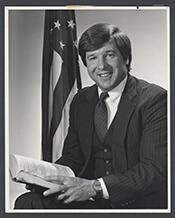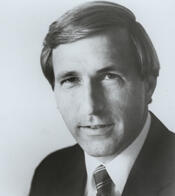
Edwin Van Wyck Zschau (born January 6, 1940) is an American educator, businessman, and former Republican member of the United States House of Representatives who represented California’s 12th Congressional District from January 3, 1983, to January 3, 1987. His two terms in Congress coincided with a significant period in late Cold War American politics, during which he participated in the legislative process and represented the interests of his Silicon Valley–area constituents.
Zschau was born in Omaha, Nebraska, and distinguished himself early in life as a figure skating champion in his teenage years. He went on to attend Princeton University, where he graduated cum laude with an A.B. in philosophy in 1961. At Princeton he completed a senior thesis titled “Space Time and Geometry from Kant to Einstein,” reflecting an early interest in the intersection of philosophy and science. He subsequently pursued graduate study at Stanford University, earning an M.B.A., an M.S. in statistics, and a Ph.D., credentials that would underpin his later careers in academia, technology, and public service.
During the 1960s, Zschau embarked on an academic career at the Stanford Graduate School of Business, where for five years he served as an assistant professor. At Stanford he taught courses in computer systems, management science, and business policy, fields that were emerging as central to the modern technology-driven economy. In 1967–1968 he was a visiting assistant professor at Harvard Business School, where he taught the required first-year M.B.A. course in managerial economics. These early academic appointments established his reputation as a scholar and educator in management and technology.
In 1968, Zschau moved into the private sector by founding System Industries, a computer company focused on data storage and related technologies. One of his collaborators in founding the company was Henry B. Eyring, who would later become a prominent academic and religious leader. Zschau served as chief executive officer of System Industries from 1968 to 1981, guiding the firm through a formative period in the computer industry. His leadership at System Industries, based in the heart of what would become Silicon Valley, positioned him at the intersection of technology, entrepreneurship, and regional economic growth.
Zschau entered electoral politics as a Republican and was elected to the U.S. House of Representatives from California’s 12th District in 1982, taking office on January 3, 1983. He served two consecutive terms, from 1983 to 1987. As a member of the House of Representatives, he participated in the democratic process during the Reagan administration, contributing to legislative deliberations on economic, technological, and national policy issues while representing a district that included key technology and innovation centers. Known for his interest in science and technology policy, he brought his business and academic experience to bear on questions of competitiveness and innovation. He was sometimes informally known as the “singing congressman” for his skill in playing the ukulele, a personal trait that distinguished him among his colleagues.
In 1986, while still serving in the House, Zschau sought higher office as the Republican candidate for the United States Senate from California. He prevailed in a crowded Republican primary field that included conservative commentator Bruce Herschensohn, Los Angeles County Supervisor Michael D. Antonovich, and Congresswoman Bobbi Fiedler. In the general election he faced incumbent Democratic Senator Alan Cranston. The race was closely contested, and although Zschau lost, it was by a relatively narrow margin in a high-profile statewide campaign. He left the House of Representatives at the conclusion of his second term on January 3, 1987.
After leaving Congress, Zschau returned to the private sector and to investment and technology leadership roles. In 1987 he became a general partner of Brentwood Associates, a Los Angeles-based venture capital firm. The following year, in 1988, he was elected chairman and chief executive officer of Censtor Corporation, a company founded by Brentwood to develop advanced magnetic recording components for disk drives. In 1993 he was recruited to serve as chairman and CEO of AdStar, the IBM Storage Systems Division, further cementing his role as an executive in the data storage and information technology industries. In addition to these posts, he became the founding chairman, emeritus, and a member of the National Advisory Board of The Tech Museum of Innovation in San Jose, California, reflecting his long-standing commitment to public understanding of science and technology. He also served on the board of scholars of the ACCF Center for Policy Research in Washington, D.C., and was named a fellow of the California Council on Science and Technology.
Zschau’s later business and advisory activities extended across multiple technology and media enterprises. He has served as chairman of the board of NanoOpto Corporation, Princeton Power Systems, and StarTek, Inc. (NYSE), and as president of Polyera Corporation. He has also been a director of The Reader’s Digest Association, Inc. (NYSE) and Washington Live, Inc. These roles reflected his continued engagement with emerging technologies, energy systems, telecommunications, and media, as well as his expertise in corporate governance and strategic management.
Zschau also maintained a significant presence in higher education following his congressional service. From 1997 to 2000, he was a professor of management at Harvard Business School and simultaneously a visiting professor at Princeton University. He later became a visiting lecturer with the rank of professor at Princeton in the Departments of Electrical Engineering and Operations Research and Financial Engineering, and in the Keller Center for Innovation in Engineering Education. In these roles he taught and mentored students at the intersection of engineering, entrepreneurship, and public policy; among his students at Princeton was author and entrepreneur Tim Ferriss. His academic work during this period underscored his long-standing interest in innovation, technology management, and the training of future leaders.
Zschau briefly re-entered the political arena in 1996 when he became the vice-presidential running mate to former Colorado Governor Dick Lamm, a Democrat, who challenged Ross Perot for the Reform Party presidential nomination. Although the Lamm–Zschau ticket did not secure the nomination, his participation illustrated his continuing interest in national policy debates and in political reform beyond traditional party lines. Later, on May 26, 2019, he accepted a pro bono appointment as Interim President of Sierra Nevada College (also referred to as Sierra Nevada University) in Incline Village, Nevada. He served in that capacity until the appointment of his successor the following year, providing transitional leadership to the institution during a period of change.
In his personal life, Zschau and his wife, Jo, have divided their time between Nantucket, Massachusetts, and Los Altos, California. They have one son and two daughters. Known for his musical ability on the ukulele as well as his professional accomplishments in academia, business, and public service, Edwin Van Wyck Zschau has combined careers in technology, education, and politics over several decades of public and private leadership.
Congressional Record