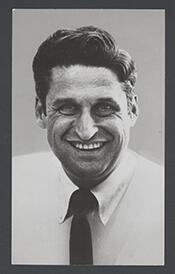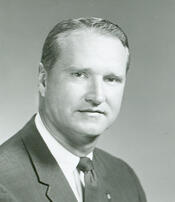
Edward Lawrence Winn Jr. (August 22, 1919 – December 31, 2017) was an American politician and businessman who represented Kansas’s 3rd congressional district in the U.S. House of Representatives from 1967 to 1985. A member of the Republican Party, he served nine consecutive terms in Congress and played an active role in the legislative process during a significant period in American political history, representing the interests of constituents in Wyandotte and Johnson Counties.
Winn was born in Kansas City, Missouri, and grew up in the area, attending Southwest High School. An active athlete in his youth, he participated in school sports until a boating accident at Lake Lotawana, Missouri, when he was sixteen years old resulted in the loss of one of his legs. Despite this life-altering injury, he continued his education and went on to attend the University of Kansas. While in college he met Joan Elliott, whom he would later marry, beginning a partnership that would last for seventy-three years.
In 1941 Winn earned a Bachelor of Arts degree in journalism from the University of Kansas. Following his graduation, he worked for a Kansas City radio station for two years, gaining early experience in communications and public outreach. During World War II he contributed to the war effort on the home front by working for North American Aviation at Fairfax Field, north of Kansas City, Kansas, where the B-25 Mitchell bomber was manufactured. This period exposed him to large-scale industrial operations and the defense sector at a time of national mobilization.
After the war, Winn transitioned into the home-building industry, a field in which he would establish his professional reputation before entering public office. He became vice president of the Winn-Rau Corporation in 1950, a position he held until his election to Congress. In addition to his corporate responsibilities, he was active in industry organizations, serving as a director of the National Association of Home Builders for fourteen years and as president of the Home Builders Association of Kansas. These roles gave him a prominent profile in regional and national housing policy and business circles and helped shape his later legislative interests.
Winn entered electoral politics in the mid-1960s. In 1966 he was first elected to the U.S. House of Representatives as a Republican from Kansas’s 3rd congressional district, based in Wyandotte and Johnson Counties, succeeding three-term Representative Robert Ellsworth. He took office in January 1967 and would be reelected eight more times, serving continuously until his retirement in 1985. Over the course of his nine terms, he participated fully in the democratic process, contributing to debates and legislation during a period marked by the Vietnam War, the civil rights movement, the Watergate era, and the economic and foreign policy challenges of the 1970s and early 1980s.
During his congressional service, Winn served on the House Committee on Foreign Affairs, where he engaged with issues of international relations, national security, and U.S. diplomatic policy. His work on this committee included service as a congressional representative to the United Nations, a role that extended his influence beyond domestic affairs and into the global arena. Through these assignments he helped shape aspects of U.S. foreign policy while continuing to advocate for the needs and priorities of his Kansas constituents. After deciding not to seek reelection in 1984, he left office at the conclusion of the 98th Congress and was succeeded by fellow Republican Jan Meyers.
Winn’s family life was closely intertwined with his public career. He and Joan Elliott, whom he had met during their college years, raised five children together. The death of their son Robert in 1983 was a profound personal loss and played a part in Winn’s decision to retire from Congress rather than pursue a tenth term. Following his departure from public office, he remained a respected figure in his community, drawing on his long experience in business and government.
In his later years, Winn resided in Prairie Village, Kansas, maintaining ties to the region he had represented in Congress. His marriage to Joan endured until her death in 2015, marking more than seven decades of partnership. Edward Lawrence Winn Jr. died in Prairie Village on December 31, 2017, at the age of 98, closing a life that spanned nearly a century and encompassed service in industry, civic leadership, and nine terms in the U.S. House of Representatives.
Congressional Record