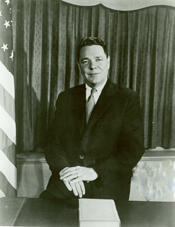
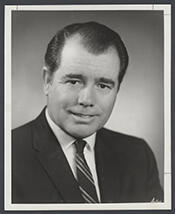
Edward Douglass White Jr. (November 3, 1845 – May 19, 1921) was an American politician and jurist who served on the Supreme Court of the United States for 27 years, first as an associate justice from March 12, 1894, to December 18, 1910, and then as the ninth chief justice from December 19, 1910, until his death in 1921. A native of Louisiana and a lifelong Democrat, he was one of three former Confederate soldiers to sit on the Court and the first incumbent associate justice to be elevated to chief justice. His long judicial career encompassed landmark decisions on race, federal power, labor, and the status of U.S. territories.
White was born on November 3, 1845, on his family’s sugar plantation near Thibodaux in Lafourche Parish, Louisiana, about thirty miles west of New Orleans. His father, Edward Douglass White Sr., of Irish Catholic descent, was a lawyer and judge who served as a Whig U.S. Representative and as the 10th Governor of Louisiana before retiring from Congress in 1843; his plantation was worked by dozens of enslaved people. His mother, Catherine Sidney Lee Ringgold, was the daughter of influential Washington, D.C., businessman and politician Tench Ringgold and a descendant of the Lee family, making the future chief justice distantly related to Confederate General Robert E. Lee. White was the youngest son among five children. His father died in April 1847, before White reached his third birthday, and in 1850 his mother married French-Canadian immigrant merchant André Brousseau. The family moved to New Orleans the following year, where White was raised as a Roman Catholic, a faith he maintained throughout his life.
White’s formal education began at a Jesuit school in New Orleans when he was six. He later attended the College of the Immaculate Conception—present-day Jesuit High School in New Orleans—where he was a member of the class of 1865. Beginning in 1856, he and a brother studied at Mount St. Mary’s College near Emmitsburg, Maryland. In 1858 he enrolled at Georgetown University, then regarded as one of the leading Catholic institutions of higher learning in the United States and strongly influenced by Jesuit pedagogy under President John Early and a largely Jesuit faculty. At Georgetown he studied the classics, played the flute and violin, and participated in the cadet corps. His Jesuit training, emphasizing formal logical reasoning, later shaped his legal thought. The outbreak of the American Civil War interrupted his studies, and he left Georgetown without taking a degree, returning to Louisiana.
White’s Civil War service, though imperfectly documented in its early phases, became a significant part of his public identity. He enlisted in the Confederate States Army and served under General Richard Taylor, eventually attaining the rank of lieutenant. Various accounts—some of doubtful reliability—place him with militia forces in Lafourche Parish, hiding from Union troops in a hay-filled barn in 1862, or serving as an aide to General William Beall at the besieged Confederate stronghold of Port Hudson in 1863. The only fully documented record of his service appears in the Official Records of the American Civil War and in his service file in the National Archives, which show that he served as a lieutenant in Captain W. B. Barrow’s company of a Louisiana cavalry regiment, sometimes referred to as “Barrow’s Regiment” or the 9th Louisiana Cavalry Regiment, a loosely organized band of irregulars or “scouts.” He was captured on March 12, 1865, in an action at Morganza in Pointe Coupee Parish, imprisoned in New Orleans, and paroled in April 1865. According to later accounts, he returned on foot, in tattered clothing, to a comrade’s home in Livonia, Pointe Coupee Parish, and then to find his family plantation abandoned and its cane fields barren. His Confederate service was widely accepted as common knowledge at the time of his Supreme Court nomination and was celebrated in the periodical Confederate Veteran. He was one of three ex-Confederate soldiers to serve on the Court, along with Lucius Q. C. Lamar and Horace H. Lurton; Howell E. Jackson, another justice, had held a civil post in the Confederate government. Allegations that White was a Reconstruction-era member of the Ku Klux Klan have been advanced by some authors but remain disputed; biographer Paul Finkelman and others note that there is no conclusive evidence, and filmmaker D. W. Griffith’s claim that White both endorsed his film “The Birth of a Nation” and acknowledged Klan membership is unsupported by independent documentation, though Griffith later recounted that White told him, “I was a member of the Klan, sir,” before Griffith arranged a screening of the film for the justices and members of Congress.
After the war, while living on the family’s diminished plantation, White began reading law. He enrolled at the University of Louisiana in New Orleans, now Tulane University, to complete his legal studies, and was mentored by New Orleans attorney Edouard Bermudez, who would later become chief justice of the Louisiana Supreme Court. White was admitted to the bar in 1868 and commenced practice in New Orleans. He quickly entered public life, winning election to the Louisiana State Senate in 1874, a year marked by intense interracial violence and political turmoil during Reconstruction. In 1877 he served on the Reception Committee of the Knights of Momus in New Orleans; that year’s Mardi Gras parade, sharply attacking Reconstruction, was so extreme in its political content that it drew widespread condemnation, even from the Krewe of Rex. White served as an associate justice of the Louisiana Supreme Court from 1878 to 1880. In state politics he was closely allied with Francis T. Nicholls, a former Confederate general and two-time governor of Louisiana (1876–1880; 1888–1892). White managed Nicholls’s 1888 gubernatorial campaign, which was marred by electoral fraud and the intimidation of African American voters to secure Nicholls’s election.
In 1891, the Louisiana legislature elected White, a Democrat, to the United States Senate to succeed James B. Eustis. He represented Louisiana in the Senate from 1891 to 1894. During his Senate service he aligned with the conservative, pro–states’ rights wing of the Democratic Party while also supporting measures favorable to his state’s agricultural and commercial interests. His tenure in the Senate was relatively brief, as President Grover Cleveland, a Democrat, turned to him to fill a vacancy on the Supreme Court. On February 19, 1894, Cleveland nominated White as an associate justice after the Senate had rejected two earlier nominees, William B. Hornblower and Wheeler Hazard Peckham. In contrast to those contentious nominations, the Senate confirmed White the same day on a voice vote, and he took the judicial oath on March 12, 1894.
As an associate justice, White quickly emerged as one of the Court’s more conservative members, particularly on questions of race and federal authority, though his jurisprudence also contained notable nationalist elements. In 1896 he joined the 7–1 majority in Plessy v. Ferguson, which upheld the constitutionality of state racial segregation laws for public facilities under the “separate but equal” doctrine, thereby providing legal sanction for Jim Crow segregation. He participated in the Insular Cases arising from the Spanish–American War, concurring in the 5–4 decision in Downes v. Bidwell (1901), which held that newly acquired territories were not fully incorporated into the United States for all constitutional purposes. At the same time, he wrote that constitutional guarantees of liberty and property applied to all persons and “cannot be under any circumstances transcended.” White also took part in cases involving Native American sovereignty and federal power, including Talton v. Mayes and Lone Wolf v. Hitchcock, and wrote opinions in cases such as Guinn v. United States and the Selective Draft Law Cases that would later define key aspects of his legacy.
On December 12, 1910, following the death of Chief Justice Melville W. Fuller, President William Howard Taft, a Republican and former federal judge, nominated White to be chief justice of the United States. The choice surprised many contemporaries because of White’s Democratic affiliation and Confederate past, and because it broke with the long-standing practice of appointing an outsider rather than elevating a sitting associate justice. White was the first associate justice formally promoted to chief justice, John Rutledge’s 1795 recess appointment notwithstanding. The Senate again confirmed him on the day of his nomination, by voice vote, and he assumed the office on December 19, 1910. As chief justice, he presided over a Court inundated with more than 8,000 filings annually, assisted by only a small number of law clerks. White held weekly conferences with his colleagues, assigned cases, and personally authored the majority opinions in 711 cases and 155 dissenting opinions during his tenure.
White’s chief justiceship, often referred to as the White Court, was marked by a blend of conservatism and nationalism. He originated the influential “Rule of Reason” in antitrust jurisprudence, under which only unreasonable restraints of trade violated the Sherman Antitrust Act, thereby shaping the enforcement of federal antitrust law. He joined the majority in Hammer v. Dagenhart, which held that Congress lacked authority under the Commerce Clause to prohibit the interstate shipment of goods produced by child labor, reflecting a restrictive view of federal power in that context. Yet he also wrote the 1916 opinion upholding the Adamson Act, which mandated an eight-hour workday for railroad employees engaged in interstate commerce, recognizing broad congressional authority to regulate labor conditions affecting transportation. In Guinn v. United States (1915), he wrote for a unanimous Court striking down Oklahoma and Maryland “grandfather clauses” that effectively disenfranchised African American voters, declaring such provisions “repugnant to the Fifteenth Amendment and therefore null and void,” though Southern states soon devised other means to suppress Black and, in some instances, poor white suffrage. In the Selective Draft Law Cases (1918), the Court under his leadership upheld the Selective Service Act of 1917 and the constitutionality of conscription, a decision former President Taft later praised as one of White’s great opinions. White was generally regarded as conservative on racial issues, in line with most of his contemporaries on the bench, but he also authored several opinions that advanced civil rights within the constraints of the era. Late in life, he reportedly expressed regret over the Civil War and his role in it.
During his years as chief justice, White administered the presidential oaths of office to Woodrow Wilson in 1913 and 1917 and to Warren G. Harding in 1921. He continued to serve actively despite declining health. White married Leita Montgomery Kent, the widow of Linden Kent, on November 6, 1894, in New York City. He had first proposed to her before her initial marriage and renewed his proposal after her husband’s death in 1892. She was the daughter of Romonzo and Virginia High Montgomery. White’s standing as a prominent American Catholic was recognized in 1914 when the University of Notre Dame awarded him the Laetare Medal, the oldest and most prestigious honor for American Catholics.
White died in Washington, D.C., from a sudden heart attack on May 19, 1921, at the age of 75, after an operation. At the time of his death, he had served on the Supreme Court for 27 years, including more than a decade as chief justice. He was buried in Oak Hill Cemetery in Washington, D.C. He was succeeded as chief justice by former President Taft, who had originally elevated him to that position and had long aspired to the office himself. White’s memory has been commemorated in numerous ways: a statue of him, created by sculptor Bryant Baker and dedicated on April 8, 1926, once stood in front of the Louisiana Supreme Court building in New Orleans and was a local landmark until its removal in December 2020; another statue represents Louisiana in the National Statuary Hall Collection in the U.S. Capitol. The Louisiana State University Law Center established the annual Edward Douglass White Lectures in his honor, featuring such speakers as Chief Justices Warren E. Burger and William H. Rehnquist, and Paul Baier of LSU Law Center wrote the play “Father Chief Justice: Edward Douglass White and the Constitution” based on his life. He was posthumously inducted into the Louisiana Political Museum and Hall of Fame in Winnfield in 1995. Several institutions and organizations were named for him, including Edward Douglas White Catholic High School in Thibodaux, Louisiana, and councils of the Knights of Columbus in Arlington, Virginia, and in Bogota and Teaneck, New Jersey, though the latter bodies later removed his name in light of contemporary views on slavery and race. During World War II, the Liberty ship SS Edward D. White was built in Brunswick, Georgia, and named in his honor.
Congressional Record