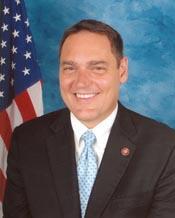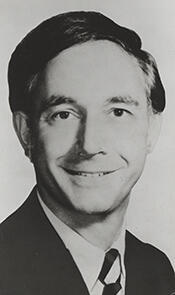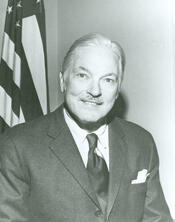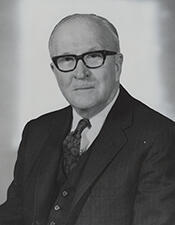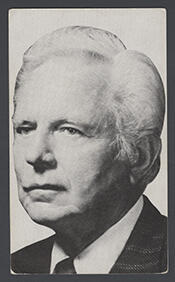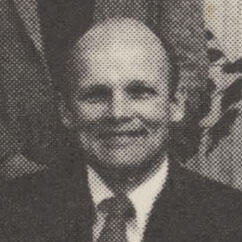
Edward Ford Weber (July 26, 1931 – February 27, 2023) was an American lawyer, military veteran, law professor, and Republican politician from Ohio who served one term in the United States House of Representatives from 1981 to 1983. Over the course of his career, he combined legal practice, academic work, and public service, representing Ohio’s 9th congressional district during a pivotal period in late twentieth-century American politics.
Weber was born on July 26, 1931, in Toledo, Ohio. He grew up in the Toledo area and later pursued higher education in the liberal arts and law. He earned a Bachelor of Arts degree from Denison University, a private liberal arts college in Granville, Ohio. Demonstrating strong academic ability, he went on to attend Harvard Law School, where he received a Bachelor of Laws (LL.B.) degree. When Harvard later offered to convert his LL.B. to a Juris Doctor (J.D.), Weber declined, choosing to retain the original form of his law degree.
Following his graduation from Harvard Law School, Weber entered military service. He served two years in the United States Army, completing his active duty before returning to Ohio. After his discharge in 1958, he began to practice law, establishing himself as an attorney in his native state. His legal career developed alongside growing involvement in public affairs, and he became known in the Toledo legal community for his professional work and expertise.
In 1966, Weber expanded his career into academia when the University of Toledo College of Law hired him as a professor. In this role, he taught law and contributed to the education and training of future attorneys. His combined experience in private practice and teaching gave him a broad perspective on legal and public policy issues, and it helped lay the groundwork for his later entry into electoral politics as a member of the Republican Party.
Weber’s major foray into national politics came in 1980, when he ran as a Republican candidate for the United States House of Representatives from Ohio’s 9th congressional district. In that election, he defeated 26-year Democratic incumbent Thomas L. Ashley, who was then chairman of the House Committee on Merchant Marine and Fisheries. Weber’s victory occurred in the context of the 1980 national elections, in which Ronald Reagan won the presidency; Reagan’s strong performance in Lucas County, which includes Toledo and forms the core of the district, was an important factor in Weber’s upset win.
As a member of the House of Representatives from 1981 to 1983, Weber participated in the legislative process during a significant period in American history marked by the beginning of the Reagan administration and a shift in federal economic policy. He represented the interests of his constituents in Ohio’s 9th district and took part in key economic votes. Weber voted for the Economic Recovery Tax Act of 1981, landmark legislation intended to stimulate economic growth by significantly reducing federal income tax rates. The act passed the House of Representatives by a vote of 323–107, was approved by the Senate via a voice vote, and was signed into law by President Ronald Reagan on August 13, 1981. He also voted for the Omnibus Budget Reconciliation Act of 1981, which reduced federal domestic spending while increasing military funding; this measure passed the House by a vote of 232–193, was approved by the Senate via a voice vote, and was likewise signed by President Reagan on August 13, 1981.
Weber’s tenure in Congress lasted one term. In the 1982 election, he sought reelection to represent Ohio’s 9th congressional district but was defeated by Democrat Marcy Kaptur, who would go on to serve for many subsequent terms. After leaving Congress in January 1983, Weber returned to private life, drawing on his background as an attorney and law professor and remaining part of the broader legal and civic community in Ohio.
Edward Ford Weber died on February 27, 2023, at the age of 91. His life encompassed service in the United States Army, a substantial legal and academic career, and a term in the U.S. House of Representatives during a transformative era in national economic and political policy.
Congressional Record