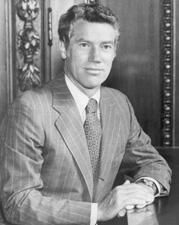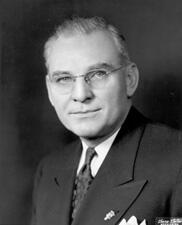
Edward John Thye (April 26, 1896 – August 28, 1969) was an American politician who served as the 26th governor of Minnesota from 1943 to 1947 and as a United States Senator from Minnesota from 1947 to 1959. A member of the Republican Party, he played a significant role in state and national politics during a transformative period in American history, contributing to the legislative process during two terms in the Senate and representing the interests of his Minnesota constituents.
Thye was born on April 26, 1896, in Frederick, South Dakota, to Norwegian immigrant parents. He grew up in a rural, agricultural setting and moved with his family to Minnesota as a child, settling near the town of Northfield. Raised on a farm, he became familiar early in life with the concerns of rural communities and agricultural producers, experiences that would later shape his political priorities. His upbringing in a Norwegian-American household and in the Upper Midwest’s farming culture helped ground his public life in the values of hard work, frugality, and community service.
Thye attended local public schools in Minnesota and completed his education at the high school level before entering the workforce. As a young man, he worked in farming and related agricultural pursuits, gaining practical experience that would later inform his public service, particularly in areas related to rural development and agricultural policy. Although he did not pursue a formal college education, his practical background and familiarity with local issues contributed to his credibility among Minnesota voters.
During World War I, Thye served in the United States Army, reflecting the broader national mobilization of his generation. His military service, combined with his agricultural background, positioned him as a representative figure of Midwestern citizen-soldiers who returned from the war to build careers in farming, business, and public life. After the war, he resumed work in agriculture and became increasingly involved in civic affairs and Republican Party activities in Minnesota, gradually building a reputation as a capable and reliable public servant.
Thye’s political career advanced through state-level executive responsibilities before he reached the governorship. He first gained statewide prominence as Minnesota’s lieutenant governor, serving under Governor Harold Stassen. When Stassen resigned to enter military service during World War II, Thye succeeded him and became the 26th governor of Minnesota in 1943. As governor, he led the state through the final years of the war and the beginning of the postwar transition, overseeing issues related to wartime mobilization, veterans’ readjustment, and the management of state resources. His administration emphasized efficient government, support for returning veterans, and attention to the needs of farmers and small communities.
In 1947, Thye entered national office as a United States Senator from Minnesota, beginning a congressional career that lasted until 1959. Serving two terms in the Senate, he participated in the democratic process during a significant period in American history that encompassed the early Cold War, the beginning of the postwar economic boom, and the initial stages of the modern civil rights era. As a Republican senator, he worked on legislation affecting agriculture, rural development, and national defense, reflecting both his constituency’s priorities and the broader concerns of the time. He represented Minnesota’s interests in debates over federal spending, foreign policy, and domestic economic policy, and contributed to the legislative process through committee work and floor deliberations.
After leaving the Senate in 1959, Thye remained a respected figure in Minnesota public life. He continued to be associated with civic and political activities, drawing on his long experience in both state and national government. In his later years, he lived in Minnesota and maintained close ties to the communities he had represented for decades. Edward John Thye died on August 28, 1969, leaving a legacy as a farmer-turned-public-servant who rose to the governorship and the United States Senate, and who helped guide Minnesota and the nation through war, postwar adjustment, and the early Cold War era.
Congressional Record